


4-3-050 CRITICAL AREAS REGULATIONS:
4-3-050A PURPOSE
4-3-050B APPLICABILITY
4-3-050C EXEMPT, PROHIBITED AND NONCONFORMING ACTIVITIES
4-3-050D ADMINISTRATION AND INTERPRETATION
4-3-050E MAPS
4-3-050F SUBMITTAL REQUIREMENTS AND FEES
4-3-050G DEVELOPMENT STANDARDS
4-3-050H ALTERATIONS TO CRITICAL AREAS AND/OR BUFFERS – GENERAL REQUIREMENTS
4-3-050I ALTERATIONS TO CRITICAL AREAS BUFFERS
4-3-050J ALTERATIONS TO CRITICAL AREAS
4-3-050K VARIANCES
4-3-050L MITIGATION, MAINTENANCE AND MONITORING
4-3-050M APPEALS
4-3-050N UNAUTHORIZED ALTERATIONS AND ENFORCEMENT
4-3-050A PURPOSE:
The purposes of this Section are to:
1. Manage development activities to protect environmental quality, promote diversity of species, and habitat within the City;
2. Ensure that activities in or affecting critical areas do not threaten public safety, cause nuisances, or destroy or degrade critical area functions and values;
3. Prevent the loss of critical area acreage and functions and strive for a net gain over present conditions through restoration where feasible;
4. Assist or further the implementation of the policies of the Growth Management Act, the State Environmental Policy Act, and the City Comprehensive Plan;
5. Provide City officials with information to evaluate, approve, condition or deny public or private development proposals with regard to critical area impacts;
6. Protect the public life, health, safety, welfare, and property by minimizing and managing the adverse environmental impacts of development within and abutting critical areas;
7. Protect the public from:
a. Avoidable monetary losses due to maintenance and replacement of public facilities and utilities, property damage, public mitigation of avoidable impacts, and public emergency rescue and relief operations; and
b. Potential litigation on improper construction practices occurring in critical areas;
8. Reduce the potential for damage to life and property from abandoned coal mines, and return the land to productive uses;
9. Maintain, to the extent practicable, a stable tax base by providing for the sound use and development of areas of flood hazard areas so as to minimize future flood blight areas; and
10. Protect riparian habitat in order to provide for bank and channel stability, sustained water supply, flood storage, recruitment of woody debris, leaf litter, nutrients, sediment and pollutant filtering, shade, shelter, and other functions that are important to both fish and wildlife.
4-3-050B APPLICABILITY:
1. Lands to Which These Regulations Apply and Non-regulated Lands: The following critical areas are regulated by this Section. Multiple development standards may apply to a site feature based upon overlapping critical area(s) and/or critical area classifications:
a. Flood hazard areas.
b. Steep slopes (must have a minimum vertical rise of fifteen feet (15')), landslide hazards, erosion hazards, seismic hazards, and/or coal mine hazards or on sites within fifty feet (50') of steep slopes, landslide hazards, erosion hazards, seismic hazards, and/or coal mine hazards classified under RMC 4-3-050G5a which are located on abutting or adjacent sites.
c. Habitat Conservation Areas.
d. Streams and Lakes. All applicable requirements of this Section apply to Class F, Np, and Ns water bodies, as defined in subsection G7 of this Section or on sites within one hundred feet (100') of Class F, Np, and Ns water bodies, except Type S water bodies, inventoried as “Shorelines of the State,” are not subject to this Section, and are regulated in RMC 4-3-090, Shoreline Master Program Regulations, and RMC 4-9-190, Shoreline Permits.
e. Wellhead Protection Areas.
f. Wetlands, Categories I, II, III, and IV or on sites within two hundred feet (200') of Category I, II, III, and IV wetlands.
Wetlands created or restored as a part of a mitigation project are regulated wetlands. Regulated wetlands do not include those artificial wetlands intentionally created from nonwetland sites, including, but not limited to, irrigation and drainage ditches, grass-lined swales, canals, detention facilities, wastewater treatment facilities, farm ponds, and landscape amenities, or those wetlands created after July 1, 1990, that were unintentionally created as a result of the construction of a road, street, or highway.
g. Sites Separated from Critical Areas, Nonregulated: As determined by the Administrator, these regulations may not apply to development proposed on sites that are separated from critical areas by pre-existing, intervening, and lawfully created structures, roads, or other substantial existing improvements. For the purposes of this Section, the intervening lots/parcels, roads, or other substantial improvements shall be found to:
i. Separate the subject upland property from the critical area due to their height or width; and
ii. Substantially prevent or impair delivery of most functions from the subject upland property to the critical area. Such determination and evidence shall be included in the application file. Public notification shall be given as follows:
(a) For applications that are not subject to notices of application pursuant to Chapter 4-8 RMC, notice of the buffer determination shall be given by posting the site and notifying parties of record, if any, in accordance with Chapter 4-8 RMC.
(b) For applications that are subject to notices of application, the buffer determination or request for determination shall be included with notice of application. Upon determination, notification of parties of record, if any, shall be made.
2. Activities to Which These Regulations Apply: The provisions of this Section shall apply to any regulated activity that potentially affects a critical area or its buffer unless otherwise exempted by these regulations. Where a regulated activity would be partly within and partly outside a critical area or its buffer, the entire activity shall be reviewed pursuant to the requirements of this Section. Applicable activities are as follows:
a. Removing, excavating, disturbing, or dredging soil, sand, gravel, minerals, organic matter or materials of any kind.
b. Dumping, discharging, or filling with any material.
c. Draining, flooding, or disturbing the water level or water table, or diverting or impeding water flow.
d. Driving pilings or placing obstructions.
e. Constructing, substantially reconstructing, demolishing, or altering the size of any structure or infrastructure.
f. Destroying or altering vegetation through clearing, grading, harvesting, shading, or planting vegetation that would negatively affect the character of a critical area.
g. Changing, significantly, water temperature, physical or chemical characteristics of water sources, including quantity and pollutants by any activity.
h. Affecting, potentially, a critical area or buffer by any other activity not otherwise exempt from the provisions of this Section as determined by the department.
4-3-050C EXEMPT, PROHIBITED AND NONCONFORMING ACTIVITIES:
1. Permit Required:
a. Development or Alteration: Prior to any development or alteration of a property containing a critical area as defined in subsection B of this Section, entitled Applicability, the owner or designee must obtain a development permit, critical area permit, and/or letter of exemption. No separate critical area permit is required for a development proposal which requires development permits or which has received a letter of exemption.
b. Operating and Closure Permits – Wellhead Protection Areas: Wellhead Protection Areas operating permit and closure permit requirements are contained in RMC 4-9-015, Aquifer Protection Areas Permits.
2. Letter of Exemption:
a. Flood Hazard Areas, Geologically Hazardous Areas, Habitat Conservation Areas, Streams and Lakes, Wellhead Protection Areas, Wetlands: Except in the case of public emergencies, all other exemptions in this subsection C may require that a letter of exemption be obtained from the Administrator prior to construction or initiation of activities.
b. Applicability of Requirements to Exempt Activities: Exempt activities provided with a letter of exemption may intrude into the critical area or required buffer subject to any listed conditions or requirements. Exempt activities do not need to comply with mitigation ratios of subsection J of this Section unless required in exemption criteria.
c. Reports and Mitigation Plans Required: A critical area report, and/or enhancement or mitigation plan shall be required pursuant to subsections F and L of this Section, unless otherwise waived by the Administrator.
d. Administrator Findings: In determining whether to issue a letter of exemption for activities listed in this subsection C, the Administrator shall find that:
i. The activity is not prohibited by this or any other provision of the Renton Municipal Code or State or Federal law or regulation;
ii. The activity will be conducted using best management practices as specified by industry standards or applicable Federal agencies or scientific principles;
iii. Impacts are minimized and, where applicable, disturbed areas are immediately restored;
iv. Where water body or buffer disturbance has occurred in accordance with an exemption during construction or other activities, revegetation with native vegetation shall be required;
v. If a hazardous material, activity, and/or facility that is exempt pursuant to this Section has a significant or substantial potential to degrade groundwater quality, then the Administrator may require compliance with the Wellhead Protection Area requirements of this Section otherwise relevant to that hazardous material, activity, and/or facility. Such determinations will be based upon site and/or chemical-specific data.
3. Exemptions – Critical Areas and Buffers: Exempt activities are listed in the following table. If an “X” appears in a box, the listed exemption applies in the specified critical area and required buffer. If an “X” does not appear in a box, then the exemption does not apply in the particular critical area or required buffer. Where utilized in the following table the term “restoration” means returning the subject area back to its original state or better following the performance of the exempt activity. Activities taking place in critical areas and their associated buffers and listed in the following table are exempt from the applicable provisions of this Section, provided a letter of exemption has been issued. Whether the exempted activities are also exempt from permits will be determined based upon application of chapters 4-8 and 4-9 RMC, or other applicable sections of the Renton Municipal Code. All activities within shoreline jurisdiction are subject to Shoreline Master Program Regulations in RMC 4-3-090 and 4-10-095.
|
EXEMPT ACTIVITIES – PERMITTED WITHIN CRITICAL AREAS AND ASSOCIATED BUFFERS |
||||||
|---|---|---|---|---|---|---|
|
EXEMPT ACTIVITY |
Flood Hazard Areas |
Geologic Hazard Area |
Habitat Conservation Area |
Streams and Lakes: Type F, Np, & Ns |
Wellhead Protection Areas |
Wetlands |
|
a. Conservation, Enhancement, Education and Related Activities: |
||||||
|
i. Natural Resource/Habitat Conservation or Preservation2 |
X |
X |
X |
X |
X1 |
X |
|
ii. Enhancement activities as defined in chapter 4-11 RMC |
X |
X |
X |
X |
|
X |
|
iii. Approved Restoration/Mitigation3 |
X |
X |
X |
X |
X1 |
X |
|
b. Research and Site Investigation: |
||||||
|
i. Nondestructive Education and Research |
X |
X |
X |
X |
X1 |
X |
|
ii. Site Investigative Work4 |
X |
X |
X |
X |
X1 |
X |
|
c. Agricultural, Harvesting, Vegetation Management: |
||||||
|
i. Harvesting Wild Foods5 |
X |
X |
X |
X |
X1 |
X |
|
ii. Existing/Ongoing Agricultural Activities6 |
X |
X |
X |
X |
|
X |
|
iii. Dangerous Trees7 |
X |
X |
X |
X8 |
X1 |
X8 |
|
d. Surface Water: |
||||||
|
i. New Surface Water Discharges9 |
|
|
X |
X |
|
X |
|
ii. Modification of existing Regional Stormwater Facilities10 |
|
|
|
|
|
X |
|
iii. Flood Hazard Areas Reduction11 |
X |
|
|
X |
|
|
|
iv. Storm Drainage Piping12 |
|
X |
|
|
|
|
|
e. Roads, Parks, Public and Private Utilities18: |
||||||
|
i. Relocation of Existing Utilities out of Critical Area and Buffer13 |
X |
X |
X |
X |
X1 |
X |
|
ii. Maintenance, Operation, and Repair of existing Parks, Trails, Roads, Facilities, and Utilities, and the Construction of New Trails14 |
|
X |
X |
X |
|
X |
|
iii. Utilities, Traffic Control, Walkways, Bikeways Within Existing, Improved Right-of-Way or Easements15 |
|
X |
X |
X |
|
X |
|
iv. Modification of Existing Utilities and Streets by Ten Percent (10%) or Less16 |
|
X |
X17 |
|
|
X17 |
|
f. Temporary Wetland Impacts: |
||||||
|
i. Temporary Wetland Impacts19 |
|
|
X |
|
|
X |
|
g. Maintenance and Construction – Existing Uses and Facilities: |
||||||
|
i. Remodeling, Replacing, Removing Existing Structures, Facilities, and Improvements20 |
|
X |
X |
X |
|
X |
|
ii. Maintenance and Repair – Any Existing Public or Private Use21 |
|
X |
X |
X |
|
X |
|
iii. Modification of an Existing Single Family Dwelling22 |
|
X |
X |
X |
|
X |
|
iv. Existing Activities23 |
X |
X |
X |
X |
|
X |
|
h. Emergency Activities: |
||||||
|
i. Emergency Activities24, 25, 26, 27 |
X |
X |
X |
X |
X1 |
X |
|
i. Hazardous Materials: |
||||||
|
i. Federal or State Preemption28 |
|
|
|
|
X1 |
|
|
ii. Use of Materials with No Risk29 |
|
|
|
|
X1 |
|
Footnotes:
1. If a hazardous material, activity, and/or facility that is exempt pursuant to this Section has a significant or substantial potential to degrade groundwater quality, then the Administrator may require compliance with the Wellhead Protection Area requirements of this Section otherwise relevant to that hazardous material activity and/or facility.
2. Conservation or preservation of soil, water, vegetation, fish and other wildlife. Within shoreline jurisdiction this includes watershed restoration projects as defined in WAC 173-27-040(2)(o) or projects to improve fish or wildlife habitat or fish passage approved by the Washington State Department of Fish and Wildlife as described in WAC 173-27-040(2)(p).
3. Any critical area and/or buffer restoration or other mitigation activities which have been approved by the City. Within shoreline jurisdiction this includes watershed restoration projects as defined in WAC 173-27-040(2)(o) or projects to improve fish or wildlife habitat or fish passage approved by the Washington State Department of Fish and Wildlife as described in WAC 173-27-040(2)(p).
4. Site investigative work necessary for land use application submittals such as surveys, soil logs, percolation tests and other related activities. Investigative work shall not disturb any more than five percent (5%) of the critical area and required buffer. In every case, impacts shall be minimized and disturbed areas shall be immediately restored at a one-to-one (1:1) ratio. Within shoreline jurisdiction, this includes the marking of property lines or corners on state-owned lands, when such marking does not significantly interfere with the normal public use of the surface water. Limitations on site exploration and investigative activities are defined in WAC 173-27-040(2)(m) for properties within shoreline jurisdiction.
5. The harvesting of wild foods in a manner that is not injurious to natural reproduction of such foods and provided the harvesting does not require tilling of soil, planting of crops or alteration of the critical area.
6. Existing and ongoing agricultural activities including farming, horticulture, aquaculture and/or maintenance of existing irrigation systems. Activities on areas lying fallow as part of a conventional rotational cycle are part of an ongoing operation; provided, that the agricultural activity must have been conducted within the last five (5) years. Activities that bring a critical area into agricultural use are not part of an ongoing operation. Maintenance of existing legally installed irrigation, ditch and pipe systems is allowed; new or expanded irrigation, ditch, outfall or other systems are not exempt. If it is necessary to reduce the impacts of agricultural practices to critical areas, a farm management plan may be required based on the King County Conservation District’s Farm Conservation and Practice Standards, or other best management practices. Within shoreline jurisdiction practices normal or necessary for farming are defined in WAC 173-27-040(2)(e).
7. Removal of non-native invasive ground cover or weeds listed by King County Noxious Weed Board or other government agency or dangerous trees, as defined in chapter 4-11 RMC, which have been approved by the City and certified dangerous by a licensed landscape architect, or certified arborist, selection of whom to be approved by the City based on the type of information required.
8. Limited to cutting of dangerous trees; such hazardous trees shall be retained as large woody debris in critical areas and/or associated buffers, where feasible.
9. New surface water discharges in the form of dispersion trenches, outfalls and bioswales are allowed within the outer twenty five percent (25%) of the buffer of a Category III or IV wetland only provided that: the discharge meets the requirements of the Drainage (Surface Water) Standards (RMC 4-6-030); no other location is feasible; and will not degrade the functions or values of the wetland or stream. Where differences exist between these regulations and RMC 4-6-030, these regulations will take precedence.
10. Modifications to existing regional stormwater management facilities operated and maintained under the direction of the City Surface Water Utility that are designed consistent with the current version of the Washington State Department of Ecology Stormwater Management Manual or meeting equivalent objectives.
11. Implementation of public flood hazard areas reduction and public surface water projects, where habitat enhancement and restoration at a one-to-one (1:1) ratio are provided, and appropriate Federal and/or State authorization has been received.
12. Installation of new storm drainage lines in any geologic hazard area when a geotechnical report clearly demonstrates that the installation would comply with the criteria listed in RMC 4-3-050.J.1 and that the installation would be consistent with each of the purposes of the critical area regulations listed in RMC 4-3-050.A. Also, to qualify for the exemption, the report must propose appropriate mitigation for any potential impacts identified in the report.
13. Relocation out of critical areas and required buffers of natural gas, cable, communication, telephone and electric facilities, lines, pipes, mains, equipment and appurtenances (not including substations), with an associated voltage of fifty five thousand (55,000) volts or less, only when required by a local governmental agency, and with the approval of the City. Disturbed areas shall be restored.
14. Normal and routine maintenance, operation and repair of existing parks, trails, streets, roads, rights-of-way and associated appurtenances, facilities and utilities where no alteration or additional fill materials will be placed other than the minimum alteration and/or fill needed to restore those facilities or to construct new trails to meet established safety standards. The use of heavy construction equipment shall be limited to utilities and public agencies that require this type of equipment for normal and routine maintenance and repair of existing utility structures and rights-of-way. In every case, critical area and required buffer impacts shall be minimized and disturbed areas shall be restored during and immediately after the use of construction equipment.
15. Within existing and improved public road rights-of-way or easements, installation, construction, replacement, operation, overbuilding or alteration of all natural gas, cable, communication, telephone and electric facilities, lines, pipes, mains, equipment or appurtenances, traffic control devices, illumination, walkways and bikeways. If activities exceed the existing improved area or the public right-of-way, this exemption does not apply. Where applicable, restoration of disturbed areas shall be completed. Within shoreline jurisdiction the exemption also applies to any project with a certification from the Governor pursuant to chapter 80.50 RCW.
16. Overbuilding (enlargement beyond existing project needs) or replacement of existing utility systems and replacement and/or rehabilitation of existing streets, provided:
a. The work does not increase the footprint of the structure, line or street by more than ten percent (10%) within the critical area and/or buffer areas, and occurs in the existing right-of-way boundary or easement boundary.
b. Restoration shall be conducted where feasible. Compensation for impacts to buffers shall include enhancement of the remaining buffer area along the impacted area where there is enhancement opportunity.
c. The Administrator determines that, based on best judgment, a person would not: (i) be able to meaningfully measure, detect, or evaluate insignificant effects; or (ii) expect discountable effects to occur.
d. This exemption allows for ten percent (10%) maximum expansion total, life of the project. After the ten percent (10%) expansion cap is reached, future improvements are subject to all applicable provisions of this Section.
17. Exemption is not allowed in Category I wetlands.
18. Maintenance activities, including routine vegetation management and essential tree removal, and removal of non-native invasive vegetation or weeds listed by the King County Noxious Weed Board or other government agency, for public and private utilities, road rights-of-way and easements, and parks.
19. Temporary disturbances of a wetland due to construction activities that do not include permanent filling may be permitted; provided, that there are no permanent adverse impacts to the critical area or required buffer, and areas temporarily disturbed are restored at a one-to-one (1:1) ratio. Category I wetlands and Category II forested wetlands shall be enhanced at a two-to-one (2:1) ratio in addition to being restored. For Habitat Conservation Areas, this exemption applies only to Category I wetlands.
20. Remodeling, restoring, replacing or removing structures, facilities and other improvements in existence or vested on the date this Section becomes effective and that do not meet the setback or buffer requirements of this Section provided the work complies with the criteria in RMC 4-10-090.
21. Normal and routine maintenance and repair of any existing public or private uses and facilities where no alteration of the critical area and required buffer or additional fill materials will be placed. The use of heavy construction equipment shall be limited to utilities and public agencies that require this type of equipment for normal and routine maintenance and repair of existing utility or public structures and rights-of-way. In every case, critical area and required buffer impacts shall be minimized and disturbed areas shall be restored during and immediately after the use of construction equipment. Normal maintenance and repair for structures within shoreline jurisdiction is defined by WAC 173-27-040(2)(b).
22. Additions and alterations of an existing single family residence and/or garage (attached or detached); provided, that the addition/alteration does not increase the footprint of the structure lying within the critical area or buffer; and provided, that no portion of the addition/alteration occurs closer to the critical area or required buffers than the existing structure unless the structure or addition can meet required buffers. Existing or rebuilt accessory structures associated with single family dwelling and rebuilt with the same footprint such as fences, gazebos, storage sheds, and play houses are exempt from this Section. New accessory structures may be allowed when associated with single-family dwellings such as fences, gazebos, storage sheds, play houses and when built on and located in a previously legally altered area.
23. Existing activities which have not been changed, expanded or altered, provided they comply with the applicable requirements of chapter 4-10 RMC.
24. Emergency activities are those which are undertaken to correct emergencies that threaten the public health, safety and welfare. An emergency means that an action must be undertaken immediately or within a time frame too short to allow full compliance with this Section, to avoid an immediate threat to public health or safety, to prevent an imminent danger to public or private property, or to prevent an imminent threat of serious environmental degradation. Within shoreline jurisdiction, emergency activities are defined by WAC 173-27-040(2)(d).
25. Emergency tree and/or ground cover removal by any City department or agency and/or public or private utility involving immediate danger to life or property, substantial fire hazards, or interruption of services provided by a utility.
26. Emergency activities in Wellhead Protection Areas: Public interest emergency use, storage, and handling of hazardous materials by governmental organizations.
27. Temporary emergency exemptions shall be used only in extreme cases and not to justify poor planning by an agency or applicant. Issuance of an emergency permit by the City does not preclude the necessity to obtain necessary approvals from appropriate Federal and State authorities. Notwithstanding the provisions of this Section or any other City laws to the contrary, the Administrator may issue a temporary emergency exemption letter if the action meets the requirements:
a. An unacceptable threat to life or severe loss of property will occur if an emergency permit is not granted;
b. The anticipated threat or loss may occur before a permit can be issued or modified under the procedures otherwise required by this Section and other applicable laws;
c. Any emergency exemption letter granted shall incorporate, to the greatest extent practicable and feasible but not inconsistent with the emergency situation, the standards and criteria required for nonemergency activities under this Section.
d. The emergency exemption shall be consistent with the following procedural and time requirements:
i. The emergency shall be limited in duration to the time required to complete the authorized emergency activity; provided, that no emergency permit be granted for a period exceeding ninety (90) days except as specified in RMC 4-3-050C.
ii. Any critical area altered as a result of the emergency activity must be restored within the ninety (90) day period, except that if more than ninety (90) days from the issuance of the emergency permit is required to complete restoration, the emergency permit may be extended to complete this restoration. For the purposes of this subsection, “restoration” means returning the affected area to its state prior to the performance of the emergency activity.
iii. Notice of the issuance of the emergency permit and request for public comments shall be posted at the affected site(s) and City Hall no later than ten (10) days after the issuance of the emergency permit. If significant comments are received, the City may reconsider the permit.
iv. Expiration of Exemption Authorization: The emergency exemption authorization may be terminated at any time without process upon a determination by the Administrator that the action was not or is no longer necessary to protect human health or the environment.
28. Cleanups, monitoring and/or studies undertaken under supervision of the Washington Department of Ecology or the U.S. Environmental Protection Agency.
29. Use, storage, and handling of specific hazardous materials that do not present a risk to the aquifer as determined and listed by the Department.
(Ord. 5976, 8-3-2020; Ord. 6128 (Att. E), 12-11-2023)
4. Exemptions – In Buffers Only: The activities listed in the following table are allowed within critical area buffers, and are exempt from the applicable provisions of this Section, provided a letter of exemption has been issued pursuant to this subsection C. If an “X” appears in a box, the listed exemption applies in the specified buffer. If an “X” does not appear in a box, then the exemption does not apply in the required buffer. Whether the exempted activities are also exempt from permits will be determined based upon application of chapters 4-8 and 4-9 RMC, or other applicable sections of the Renton Municipal Code. All activities within shoreline jurisdiction are subject to Shoreline Master Program Regulations in RMC 4-3-090 and 4-10-095.
|
EXEMPTIONS WITHIN CRITICAL AREA BUFFERS |
||||||
|---|---|---|---|---|---|---|
|
EXEMPT ACTIVITY |
Flood Hazard Areas |
Geologic Hazard Area |
Habitat Conservation Areas |
Streams and Lakes: Types F, Np, & Ns |
Wellhead Protection Areas |
Wetlands |
|
a. Activities in Critical Area Buffers: |
||||||
|
i. Trails and Open Space1 |
|
X |
X |
X |
|
X |
|
ii. Stormwater Treatment and Flow Control Facilities in Buffer2 |
|
|
|
|
|
X |
|
iii. Stormwater Conveyance in Buffer3 |
|
|
X |
X |
|
X |
Footnotes:
1. Walkways and trails, and associated open space in critical area buffers located on public property, or where easements or agreements have been granted for such purposes on private property. All of the following criteria shall be met:
a. The trail, walkway, and associated open space shall be consistent with the Parks, Recreation, and Natural Areas Plan. The City may allow private trails as part of the approval of a site plan, subdivision or other land use permit approvals.
b. Trails and walkways shall be located in the outer twenty five percent (25%) of the buffer, i.e., the portion of the buffer that is farther away from the critical area. Exceptions to this requirement may be made for:
i. Trail segments connecting to existing trails where an alternate alignment is not practical.
ii. Public access points to water bodies spaced periodically along the trail.
c. Enhancement of the buffer area is required where trails are located in the buffer. Where enhancement of the buffer area abutting a trail is not feasible due to existing high quality vegetation, additional buffer area or other mitigation may be required.
d. Trail widths shall be a maximum width of twelve feet (12'). Trails shall be constructed of permeable materials which protect water quality, allow adequate surface water and ground water movements, do not contribute to erosion, are located where they do not disturb nesting, breeding, and rearing areas, and designed to avoid or reduce the removal of trees. Impervious materials may be allowed if pavement is required for handicapped or emergency access, or safety, or is a designated nonmotorized transportation route or makes a connection to an already dedicated trail, or reduces potential for other environmental impacts.
e. Any crossing over a stream or wetland shall be generally perpendicular to the critical area and shall be accomplished by bridging or other technique designed to minimize critical area disturbance. It shall also be the minimum width necessary to accommodate the intended function or objective.
2. Stormwater management facilities shall not be built within a critical area buffer except as allowed in Reference 5, Wetlands Protection Guidelines of the City’s Surface Water Design Manual and shall require buffer enhancement or buffer averaging when they are sited in areas of forest vegetation, provided the standard buffer zone area associated with the critical area classification is retained pursuant to RMC 4-3-050G2, and is sited to reduce impacts between the critical area and surrounding activities.
3. Necessary conveyance systems including stormwater dispersion outfall systems designed to minimize impacts to the buffer and critical area, where the site topography requires their location within the buffer to allow hydraulic function, provided the standard buffer zone area associated with the critical area classification is retained pursuant to RMC 4-3-050G2, and is sited to reduce impacts between the critical area and surrounding activities.
4. WAC 173-27-040(2)(g) defines and identifies the limitations on the construction of a single family home and appurtenances. Single family residences and appurtenances must be located landward of the ordinary high water mark and the perimeter of a wetland. Based on the results of a critical area report, and/or enhancement or mitigation plan, the City shall condition development to require buffer enhancement or buffer averaging, site design that reduces impacts between the critical area and surrounding activities, and a building setback.
(Ord. 5976, 8-3-2020)
5. Prohibited Activities: Prohibited activities are identified below for each critical area governed by this Section. No action shall be taken by any person, company, agency, or applicant which results in any alteration of a critical area except as consistent with the purpose, objectives, and requirements of this Section.
a. Floodways: Encroachments, including fill, new construction, substantial improvements, and construction or reconstruction of residential structures is prohibited within designated floodways, unless it meets the provisions of subsection G4e of this Section, Additional Restrictions within Floodways.
b. Streams/Lakes and Wetlands: Grazing of animals is not allowed within a stream, lake, wetland or their associated buffers.
c. Wellhead Protection Areas:
i. All Wellhead Protection Areas – Pesticides and Fertilizers: The application of hazardous materials such as pesticides or fertilizers containing nitrates within one hundred feet (100') of a well or two hundred feet (200') of a spring.
ii. Zone 1, as identified in subsection G8 of this Section:
(a) Changes in land use and types of new facilities in which any of the following will be on the premises:
(1) More than five hundred (500) gallons of hazardous material;
(2) More than one hundred fifty (150) gallons of hazardous material in containers that are opened and handled;
(3) Containers exceeding five (5) gallons in size; or
(4) Tetrachloroethylene (e.g., dry-cleaning fluid);
(b) Surface impoundments (as defined in Chapters 173-303 and 173-304 WAC);
(c) Hazardous waste treatment, storage, and disposal facilities;
(d) All types of landfills, including solid waste landfills;
(e) Transfer stations;
(f) Septic systems;
(g) Recycling facilities that handle hazardous materials;
(h) Underground hazardous material storage and/or distribution facilities;
(i) New heating systems using fuel oil except for commercial uses when the source of fuel oil is an existing above-ground waste oil storage tank;
(j) Petroleum product pipelines;
(k) Hazardous materials use on the site in quantities greater than that allowed for new facilities as provided in subsection C5ciia of this Section, changes in land use and types of new facilities, of this subsection, once a facility is closed, relocated, or the use of hazardous materials is terminated, reinstatement of the use of hazardous materials shall be prohibited;
(l) Facility closure, sale, transfer or temporary or permanent abandonment in a Wellhead Protection Area without complying with the requirements of RMC 4-9-015F, Closure Permit, and permit conditions of this Section; and
(m) Facility changes in operations that increase the aggregate quantity of hazardous materials stored, handled, treated, used, or produced with the following exception: An increase in the quantity of hazardous materials is allowed up to the amount allowed for a new facility as provided by subsection C5ciia of this Section, changes in land use and types of new facilities, of this Section.
iii. Zone 2, as identified in subsection G8 of this Section:
(a) Surface impoundments (as defined in Chapters 173-303 and 173-304 WAC);
(b) Recycling facilities that handle hazardous materials;
(c) Hazardous waste treatment, storage, and disposal facilities;
(d) Solid waste landfills;
(e) Transfer stations;
(f) New heating systems using fuel oil stored in underground storage tanks; and
(g) Petroleum product pipelines.
iv. Zone 1 Modified, as identified in subsection G8 of this Section: The prohibitions of Zone 1 Modified are the same as Zone 1 with the exceptions as follows:
(a) Hazardous Materials Inventory: Existing facilities are not subject to the five hundred (500) gallons maximum hazardous material quantity limitation in Zone 1 and therefore don’t have to reduce inventory or relocate. Proposed facilities are subject to the maximum quantity.
(b) Septic Tanks: Existing septic tanks are allowed to remain and new septic tanks are allowed if City sewers are not available.
(c) Surface Water Management: Infiltration of runoff is allowed and pipe materials are not subject to Zone 1 specifications.
(d) Site Improvements: An existing facility that was in compliance with improvements required at the installation of the facility is not subject to new site improvements (groundwater monitoring, paving, runoff control, etc.).
6. Nonconforming Activities or Structures: Regulated activities legally in existence prior to the passage of this Section, but which are not in conformity with the provisions of this Section, are subject to the provisions of RMC 4-10-090, Critical Areas Regulations – Nonconforming Activities and Structures.
4-3-050D ADMINISTRATION AND INTERPRETATION:
1. Interpretation: The Administrator shall have the power to render interpretations of this Section and to adopt and enforce rules and regulations supplemental to this Section as he/she may deem necessary in order to clarify the application of the provisions of this code. Such interpretations, rules and regulations shall be in conformity with the intent and purpose of this Section. Provisions contained within this Section are considered the minimum requirements and will not limit or repeal other provisions under State statute.
a. Relationship to Other Agencies and Regulations:
i. These critical areas regulations shall be in addition to zoning and other regulations adopted by the City. Compliance with other regulations does not exempt the applicant from critical areas regulations. In the event of any conflict between these regulations and any other City regulations, those regulations which provide the greater protection to critical areas shall apply.
ii. Any individual critical area adjoined by another type of critical area shall have the buffer and meet the requirements that provide the most protection to the critical areas involved. When any provision of this Section or any existing regulation, or easement, covenant, or deed restriction granted to any governmental body conflicts with this Section, that which provides more protection to the critical areas shall apply.
iii. Compliance with the provisions of this Section does not constitute compliance with other Federal, State, and local regulations and permit requirements that may be required (for example, shoreline substantial development or conditional use permits, shoreline variances, the Washington State Department of Fish and Wildlife hydraulic project approval (HPA), Army Corps of Engineers Section 404 permits, Department of Ecology 401 Water Quality Certifications and National Pollution Discharge Elimination System (NPDES) permits). The applicant is responsible for complying with these requirements, apart from the process established in this Section.
2. Duties of Administrator: The Administrator shall have the power and authority to issue decisions relative to and enforce the provisions of this Section.
a. Compliance: The City shall not grant any approval or permit any regulated activity in a critical area or associated buffer prior to fulfilling the requirements of this Section.
b. Review: The Administrator shall review all development permits to determine that the requirements of this Section have been satisfied.
c. Finding of Conformance Required: Conformance with these critical area regulations shall be a finding in any approval of a development permit or aquifer protection area permit, and such finding shall be documented in writing in the project file.
3. Flood Hazard Areas:
a. Designation of the Floodplain Administrator: The Administrator is hereby appointed to administer, implement, and enforce the provisions of this Section by granting or denying development permits in accordance with its provisions. The Floodplain Administrator may delegate authority to implement these provisions.
b. Enforcement: All development within special flood hazard areas is subject to the terms of this Section and other applicable regulations. The standards of this Section are not intended to repeal, abrogate, or impair any existing easements, covenants, or deed restrictions. However, where the standards of this Section and any other applicable regulation, easement, covenant, or deed restriction conflict or overlap, whichever imposes the more stringent restrictions shall prevail. These regulations, and the various parts thereof, are hereby declared to be severable. Should any standard of this Section be declared by the courts to be unconstitutional or invalid, such decision shall not affect the validity of this Section as a whole, or any portion thereof, other than the section so declared to be unconstitutional or invalid.
c. Basis for Establishing the Areas of Special Flood Hazard: The special flood hazard areas identified by the Federal Insurance Administrator in a scientific and engineering report entitled “The Flood Insurance Study (FIS) for King County, Washington and Incorporated Areas” dated August 19, 2020, and any revisions thereto, with accompanying Flood Insurance Rate Maps (FIRMs), and any revisions thereto, are hereby adopted by reference and declared to be a part of this Section. The FIS and the FIRM are on file at City of Renton, 1055 South Grady Way, Renton, WA 98057. The best available information for flood hazard area identification as outlined in subsection D3f of this Section shall be the basis for regulation until a new FIRM is issued that incorporates data utilized under subsection D3f of this Section.
d. Information to be Provided by Applicant: The applicant shall provide the Administrator the following information:
i. The actual elevation, in relation to mean sea level, the North American Vertical Datum of 1988 (NAVD 88), of the lowest floor (including basement) of all new or substantially improved structures, and whether or not the structure contains a basement where base flood elevation data is provided through the flood insurance study or required.
ii. For all new or substantially improved flood proofed structures:
(a) The applicant shall verify and have recorded the actual elevation in relation to mean sea level, the North American Vertical Datum of 1988 (NAVD 88); and
(b) Flood elevation certificates shall be submitted by an applicant to the Development Services Division prior to the building’s finished floor construction. Finished floor elevation should be verified by a preconstruction elevation certificate at the time of construction of a substantial structural element of the finished floor (i.e., foundation form for the concrete floor). An as-built elevation certificate will be provided prior to issuance of final occupancy.
iii. Where a structure is to be flood proofed, certification by a registered professional engineer or architect that the flood proofing methods for any nonresidential structure meet flood proofing criteria in subsection G4diii(b) of this Section;
iv. Description of the extent to which a watercourse will be altered or relocated as a result of proposed development;
v. Where a structure is proposed in a V, V1-30, or VE zone, a V-zone design certificate;
vi. Where development is proposed in a floodway, an engineering analysis indicating no rise of the Base Flood Elevation; and
vii. Any other such information that may be reasonably required by the Floodplain Administrator in order to review the application.
e. Information to be Obtained and Maintained:
i. Where base flood elevation data is provided through the FIS, FIRM, or required as in subsection D3f of this Section, obtain and maintain a record of the actual (as-built) elevation (in relation to mean sea level) of the lowest floor (including basement) of all new or substantially improved structures, and whether or not the structure contains a basement.
ii. For all new or substantially improved flood proofed nonresidential structures where base flood elevation data is provided through the FIS, FIRM, or as required in subsection D3f of this Section:
(a) Obtain and maintain a record of the elevation (in relation to mean sea level) to which the structure was flood proofed.
(b) Maintain the flood proofing certifications required in subsection G4diii of this Section.
iii. Certification required by subsection G4ei of this Section.
iv. Records of all variance actions, including justification for their issuance.
v. Improvement and damage calculations.
vi. Maintain for public inspection all records pertaining to the provisions of this Section.
f. Use of Other Base Flood Data (in A and V Zones): When base flood elevation data has not been provided (in A or V zones) in accordance with subsection D3c of this Section, Basis for Establishing the Areas of Special Flood Hazard, the Floodplain Administrator shall obtain, review, and reasonably utilize any base flood elevation and floodway data available from a federal, state, or other source, in order to administer subsection G4d of this Section, Specific Standards, and subsection G4e of this Section, Additional Restrictions within Floodways. (Ord. 5977, 8-10-2020)
4. Wellhead Protection Areas:
a. Annual Inspections: All permitted facilities in a Wellhead Protection Area will be subject to a minimum of one inspection per year by a Department inspector.
b. Potential to Degrade Groundwater – Zone 2:
i. Potential for Impacts Equal to Facility in Zone 1: If the Administrator determines that an existing or proposed facility located in Zone 2 of a Wellhead Protection Area has a potential to degrade groundwater quality which equals or exceeds that of a permitted facility in Zone 1, then the Administrator may require that facility to fully comply with requirements for Zone 1 contained in RMC 4-3-050C5c and 4-3-050G8.
ii. Criteria: Criteria used to make the determination in this subsection D4 shall include but not be limited to the present and past activities conducted at the facility; types and quantities of hazardous materials stored, handled, treated, used or produced; the potential for the activities or hazardous materials to degrade groundwater quality; history of spills at the site, and presence of contamination on site.
c. Finding of Conformance Required – Wellhead Protection Areas: No changes in land use shall be allowed nor shall permits for development be issued if the Department finds that the proposed land use, activity, or business is likely to impact the long-term, short-term or cumulative quality of the aquifer. The finding shall be based on the present or past activities conducted at the site; hazardous materials that will be stored, handled, treated, used or produced; and the potential for the land use, activity, or business to degrade groundwater quality.
5. Review Authority: The Administrator shall have the authority to interpret, apply, and enforce this Section to accomplish the stated purpose. Based upon site-specific review and analysis, the City may withhold, condition, or deny development permits or activity approvals to ensure that the proposed action is consistent with this Section.
a. General: The Administrator is authorized to make the following administrative allowances and determinations:
i. Issue a critical areas permit for proposals not otherwise requiring a development permit.
ii. Issue written letters of exemption.
iii. Allow temporary emergency exemptions.
iv. Interpret critical areas regulations.
v. Approve the use of alternates in accordance with RMC 4-9-250E.
vi. Waive report content or submittal requirements provided criteria to waive studies are met.
vii. Grant administrative variances to those specified code sections listed in RMC 4-9-250B.
viii. Require tests for proof of compliance.
ix. Grant modifications pursuant to RMC 4-9-250D.
b. Conditions of Approval: The Administrator is authorized, through conditions of approval, to modify the proposal, including, but not limited to, construction techniques, design, drainage, project size/configuration, or seasonal constraints on development. Upon review of a special study, the development permit shall be conditioned to mitigate adverse environmental impacts and to assure that the development can be safely accommodated on the site and is consistent with the purposes of this Section. A mitigation plan may be required consistent with subsection L1 of this Section.
c. Geologically Hazardous Areas, Habitat Conservation Areas, Streams and Lakes, and Wetlands: The Administrator is authorized, pursuant to subsection H of this Section, entitled Alterations To Critical Areas And/Or Buffers – General Requirements, to make the following administrative allowances and determinations:
i. Geologically Hazardous Areas:
(a) Waive independent review of geotechnical reports.
(b) Increase or decrease required buffer for very high landslide hazard areas.
(c) Grant a modification for created slopes.
ii. Streams and Lakes:
(a) Approve proposals for buffer width reductions.
(b) Approve proposals for buffer width averaging.
iii. Wellhead Protection Areas:
(a) Issue operating and closure permits.
(b) Determine pipeline requirements.
(c) Determine if Zone 1 requirements should apply in Zone 2 of a Wellhead Protection Area.
iv. Wetlands:
(a) Determine whether wetlands are unregulated.
(b) Extend the valid period of a wetland delineation.
(c) Approve proposals for buffer width reductions of up to twenty five percent (25%).
(d) Approve proposals for buffer width averaging.
(e) Authorize other category level for created or restored wetlands.
(f) Waive requirements of this Section upon determination that all impacts on wetlands would be mitigated as part of an approved area-wide wetlands plan that, when taken as a whole over an approved schedule or staging of plan implementation, will meet or exceed the requirements of this Section.
4-3-050E MAPS:
1. Maps Show Approximate Location of Critical Areas: The approximate location and extent of critical areas within the City are shown on the critical areas inventory maps. The City supports a website, Maps and GIS Data, which supports mapping applications, a map gallery, and downloadable GIS data. These maps shall be used for informational purposes and as a general guide only, for the assistance of property owners and other interested parties; the boundaries and locations shown are generalized. The actual presence or absence, type, extent, boundaries, and classification of critical areas on a specific site shall be identified in the field by a qualified consultant and confirmed by the Department, according to the procedures, definitions, and criteria established by this Section. In the event of any conflict between the critical area location or designation shown on the City’s maps and the criteria or standards of this Section, the criteria and standards shall prevail.
2. Map Updates: The Department updates critical area maps based on critical area reports prepared for permit applications.
3. Flood Hazard Areas:
a. Basic Map and Documentation Identifying Hazards: Flood hazard areas are identified by the Federal Insurance Administration in a scientific and engineering report entitled the Flood Insurance Study for the City of Renton, dated September 29, 1989, and any subsequent revision, with accompanying flood insurance maps which are hereby adopted by reference and declared to be a part of this Section. The flood insurance study is on file at the Public Works Department.
b. When Federal Insurance Study is Not Available: The Applicant shall obtain, for City review, and reasonably utilization any base flood elevation and floodway data available from a Federal, State or other source, in the following instances:
i. To administer subsection G of this Section when base flood elevation data has not been provided in accordance with this subsection E.
ii. To identify flood hazard areas that will be regulated; until a new Flood Insurance Rate Map is issued which incorporates the data utilized under subsection D of this Section.
4. Steep Slope Delineation Procedure: The boundaries of a regulated steep sensitive or protected slope are determined to be in the location identified on the City of Renton’s COR Maps, the City’s online interactive mapping application available through the City’s website. An applicant’s qualified professional may substitute boundaries independently derived from survey data for the City’s consideration in determining the boundaries of sensitive or protected steep slopes. All topographic maps shall utilize two foot (2') contour intervals or the standard utilized in the City of Renton Steep Slope Atlas.
5. Streams and Lakes: Water class shall be determined in accordance with subsection G7a of this Section.
a. Reclassification: The reclassification of a water body to a lower class (i.e., F to Np, or Np to Ns, etc.) requires Administrator acceptance of a stream or lake study, followed by a legislative amendment to the map in this subsection E prior to its effect. The reclassification of a water body to a higher class (i.e., Ns to Np, Np to F, or F to S) requires either: Administrator acceptance of a stream or lake study or consultation with the Washington Department of Fish and Wildlife, followed by a legislative amendment to the map in this Section.
b. Salmonid Migration Barriers: For the purposes of classifying or reclassifying water bodies, features determined by the Administrator to be salmonid migration barriers pursuant to the definition in RMC 4-11-190 shall be mapped. The Administrator shall prepare and update the map as appropriate.
6. Wetlands: Categorization of wetlands shall be determined in accordance with subsection G9 of this Section, and also refer to the City of Renton Wetland and Stream Corridors Critical Areas Inventory.
4-3-050F SUBMITTAL REQUIREMENTS AND FEES:
1. Preapplication Consultation: Any person intending to develop properties known or suspected to have critical areas present is strongly encouraged to meet with the appropriate City department representative during the earliest possible stages of project planning before major commitments have been made to a particular land use and/or project design. Effort put into a preapplication consultation and planning will help applicants create projects which will be more quickly and easily processed due to a better understanding on the part of applicants of regulatory requirements.
2. Plans and Studies Required: When an application is submitted for any building permit or land use review and/or to obtain approval of a use, development or construction, the location of the critical areas and buffers on the site shall be indicated on the plans submitted based upon an inventory provided by a qualified specialist.
a. Geologically Hazardous Areas:
i. Whenever a proposed development requires a development permit and a geologic hazard is present on the site of the proposed development or on abutting or adjacent sites within fifty feet (50') of the subject site, geotechnical studies by licensed professionals, such as a geotechnical engineer and/or engineering geologist, shall be required. Specifically, geotechnical studies are required for developments proposed on sites with any of the following geologically hazardous areas:
(a) Sensitive and protected slopes;
(b) Medium, high, or very high landslide hazards;
(c) High erosion hazards;
(d) High seismic hazards;
(e) Medium or high coal mine hazards.
ii. The required studies shall demonstrate the following review criteria can be met:
(a) The proposal will not increase the threat of the geological hazard to adjacent or abutting properties beyond pre-development conditions; and
(b) The proposal will not adversely impact other critical areas; and
(c) The development can be safely accommodated on the site.
iii. A mitigation plan may be required consistent with subsection L of this Section.
iv. Sensitive Slopes – Medium, High and Very High Landslide Hazards – High Erosion Hazards: Development applications shall submit erosion control plans consistent with chapter 4-8 RMC, Permits – General and Appeals.
v. Coal Mine Hazards:
(a) Medium Hazard – Report Required: Reports consistent with chapter 4-8 RMC, Permits – General and Appeals, shall be prepared for development proposed within medium coal mine hazard areas and for development proposed within two hundred feet (200') of a medium coal mine hazard area.
(b) High Hazard – Report Required: Reports consistent with chapter 4-8 RMC, Permits – General and Appeals, shall be prepared for development proposed within high coal mine hazard areas and for development proposed within five hundred feet (500') of a high coal mine hazard area.
b. Habitat Conservation Areas: Based upon subsection G6 of this Section, Habitat Conservation Areas, the City shall require a habitat/wildlife assessment for activities that are located within or abutting a critical habitat, defined in RMC 4-11-030, or that are adjacent to a critical habitat, and have the potential to significantly impact a critical habitat. The assessment shall determine the extent, function and value of the critical habitat and potential for impacts and mitigation consistent with report requirements in RMC 4-8-120D.
c. Streams and Lakes: The applicant shall be required to conduct a stream or lake study pursuant to RMC 4-8-120 if a site contains a water body or buffer area and changes to buffer requirements or alterations of the water body or its associated buffer are proposed, either administratively or via a variance request. A stream or lake study is also required when the project area is within one hundred feet (100') of a water body even if the water body is not located on the subject property.
d. Wellhead Protection Areas: The City may require an applicant to prepare a hydrogeologic study if the proposal has the potential to significantly impact groundwater quantity or quality, and sufficient information is not readily available. Such a report shall be prepared by a qualified professional at the applicant’s expense. Report content requirements may be specified by the City in accordance with State or Federal guidelines or tailored to the particular development application. Peer review of the applicant’s report may be required in accordance with this subsection F.
e. Wetlands:
i. Wetland Categorization: The applicant shall be required to conduct a study to determine the categorization of the wetland if the subject property or project area is within two hundred feet (200') of a wetland even if the wetland is not located on the subject property but it is determined that alterations of the subject property are likely to impact the wetland in question or its buffer. If there is a potential Category I or II wetland within three hundred feet (300') of a proposal, the City may require an applicant to conduct a study even if the wetland is not located on the subject property but it is determined that alterations of the subject property are likely to impact the wetland in question or its buffer.
ii. Wetland Delineation: A wetland delineation using the methods identified in the approved federal delineation manual and applicable regional supplement, as required by WAC 173-22-035, is required for any portion of a wetland on the subject property that will be impacted by the permitted activities.
iii. Wetland Assessment: The applicant shall prepare a wetland assessment pursuant to RMC 4-8-120D23a through j.
f. Period of Validity: Studies submitted and reviewed are valid for five (5) years from date of study completion unless the Administrator determines that conditions have changed significantly. The Administrator may extend the period of validity, provided on-site conditions have not changed.
3. Testing Authorized:
a. Pipeline Requirements – Zone 1, As Identified in Subsection G8 of This Section: If the Department has reason to believe that the operation or proposed operation of an existing non-potable water pipeline, defined in RMC 4-11-160, in Zone 1 of a Wellhead Protection Area, may degrade groundwater quality, the Department may require leakage testing of the existing pipeline in accordance with subsection G of this Section; and installation, sampling, and sample analysis of monitoring wells. Routine leakage testing of existing pipelines in Zone 1 may be required by the Department. Criteria for this determination are specified in subsection D of this Section.
Should pipeline leakage testing reveal any leakage at any level, then the Department shall require immediate repairs to the pipeline to the satisfaction of the Department such that no infiltration of water into the pipeline or exfiltration of substances conveyed in the pipeline shall occur. Any repairs which are made shall be tested for leakage pursuant to subsection G of this Section.
b. Pipeline Requirements – Zone 2, As Identified in Subsection G8 of This Section: If the Department has reason to believe that the operation or proposed operation of an existing pipeline in Zone 2 of a Wellhead Protection Area may degrade groundwater quality, the Department may require leakage testing in accordance with subsection G of this Section; installation, sampling, and sample analysis of groundwater monitoring wells; repair of the pipeline to the satisfaction of the Department such that degradation of groundwater quality is minimized or eliminated. Criteria for this determination are specified under subsection D of this Section.
4. Submittal Requirements: In order to be accepted for review, studies shall include all information as required in chapter 4-8 RMC.
5. Fees: See the currently adopted City of Renton Fee Schedule brochure available at the City’s website or in the City Clerk’s Office.
6. Independent Secondary Review: The City may require independent review of an applicant’s report as follows:
a. All Critical Areas: When appropriate due to the type of critical areas, habitat, or species present, project area conditions, project scope, or potential for negative impacts to critical areas, or lack of substantial documentation of impact avoidance in first study, the applicant may be required to prepare and/or fund analyses or activities, including, but not limited to:
i. An evaluation by an independent qualified professional regarding the applicant’s analysis and the effectiveness of any proposed mitigating measures or programs, to include any recommendations as appropriate. This shall be paid at the applicant’s expense, and the Administrator shall select the third-party review professional; and/or
ii. A request for consultation with the Washington Department of Fish and Wildlife, Washington State Department of Ecology, or the local Native American Tribe or other appropriate agency; and/or
iii. Detailed surface and subsurface hydrologic features both on and abutting the site.
b. Additional Requirements for Geologically Hazardous Areas: Independent secondary review shall be conducted in accordance with the following:
i. Required – Sensitive and Protected Slopes, and Medium, High, or Very High Landslide Hazards: All geotechnical reports submitted in accordance with this subsection F, and chapter 4-8 RMC, Permits – General and Appeals, shall be independently reviewed by qualified specialists selected by the City, at the applicant’s expense. An applicant may request that independent review be waived by the Department Administrator in accordance with subsection D of this Section.
ii. Required for Critical Facilities in High Erosion, High Seismic, Medium Coal Mine, or High Coal Mine Hazards: The City shall require independent review of a geotechnical report addressing a critical facility, defined in RMC 4-11-030, by qualified specialists selected by the City, at the applicant’s expense. An applicant may request that independent review be waived by the Department Administrator in accordance with subsection D of this Section.
iii. At City’s Discretion – High Erosion, High Seismic, Medium Coal Mine, or High Coal Mine Hazards: For any proposal except critical facilities, the City may require independent review of an applicant’s geotechnical report by qualified specialists selected by the City, at the applicant’s expense.
7. Waiver of Submittal Requirements: An applicant may request that the Administrator waive the report requirement pursuant to subsection D of this Section, where it has been determined through field documentation that critical areas are not present or as specified below:
a. Habitat Assessment: In cases where a proposal is not likely to significantly impact the critical habitat and there is sufficient information to determine the effects of a proposal, an applicant may request that this report be waived by the Administrator.
b. Streams and Lakes:
i. Stream or Lake Study: This report may only be waived by the Administrator when the applicant provides satisfactory evidence that:
(a) A road, building or other barrier exists between the water body and the proposed activity, or
(b) The water body or required buffer area does not intrude on the applicant’s lot, and based on evidence submitted, the proposal will not result in significant adverse impacts to nearby water bodies regulated under this Section; or
(c) Applicable data and analysis appropriate to the proposed project exists and an additional study is not necessary.
ii. Stream or Lake Mitigation Plan: This plan may only be waived when no impacts have been identified through a stream or lake study.
c. Wetland Assessment: The wetland assessment shall be waived by the Administrator when the applicant provides satisfactory evidence that a road, building or other barrier exists between the wetland and the proposed activity, when the buffer area, determined with a wetland categorization, needed or required will not intrude on the applicant’s lot, or when applicable data and analysis appropriate to the project proposed exists and an additional report is not necessary.
4-3-050G DEVELOPMENT STANDARDS:
1. General: No proposal shall result in a loss of critical area functions or values. If the application of these provisions would deny all reasonable use of the property, the applicant may apply for a variance as identified in RMC 4-9-250.
2. Critical Area Buffers and Structure Setbacks from Buffers: The following critical area buffers and structure setbacks from buffers are established for each critical area.
|
Critical Area Category or Type |
Critical Area Buffer Width |
Structure Setback beyond Buffer1 |
|||||
|---|---|---|---|---|---|---|---|
|
Flood Hazard Areas |
|||||||
|
|
Flood Hazard Areas |
None |
None |
||||
|
Geologically Hazardous Areas |
|||||||
|
|
Steep Slopes:2 |
||||||
|
|
Sensitive Slopes |
None3 |
None3, 4 |
||||
|
|
Protected Slopes5 |
None3 |
15 ft.1 |
||||
|
Landslide Hazards:2 |
|||||||
|
|
Low |
None3 |
None3, 4 |
||||
|
|
Medium |
None3 |
None3, 4 |
||||
|
|
High |
None3 |
None3, 4 |
||||
|
|
Very High5 |
50 ft. |
15 ft.1 |
||||
|
Erosion Hazards: |
|||||||
|
|
Low |
None |
None |
||||
|
|
High |
None |
None |
||||
|
Seismic Hazards: |
|||||||
|
|
Low |
None |
None |
||||
|
|
High |
None |
None |
||||
|
Coal Mine Hazards: |
|||||||
|
|
Low |
None3 |
None3 |
||||
|
|
Medium |
None3 |
None3 |
||||
|
|
High |
None3 |
None3 |
||||
|
Habitat Conservation Areas |
|||||||
|
|
Critical Habitats |
Established by Administrator per RMC 4-3-050G |
15 ft.1 |
||||
|
Streams and Lakes5 |
|||||||
|
|
Type F |
115 ft. |
15 ft.1 |
||||
|
|
Type Np |
75 ft. |
15 ft.1 |
||||
|
|
Type Ns |
50 ft. |
15 ft.1 |
||||
|
Wellhead Protection Areas |
|||||||
|
|
Zones 1 and 2 |
None |
None |
||||
|
Wetlands6 |
|||||||
|
|
Low Impact Land Uses:7 |
||||||
|
|
|
High Habitat Function (8-9 points) |
Moderate Habitat Function (5-7 points) |
Low Habitat Function (3-4 points) |
All Other Scores |
15 ft.1 |
|
|
|
Category I – Bogs & Natural Heritage Wetlands |
175 ft. |
|||||
|
|
Category I – All Others |
175 ft. |
125 ft. |
75 ft. |
75 ft. |
||
|
|
Category II |
150 ft. |
100 ft. |
75 ft. |
n/a |
||
|
|
Category III |
100 ft. |
75 ft. |
50 ft. |
n/a |
||
|
|
Category IV |
40 ft. |
n/a |
||||
|
|
All Other Land Uses: |
||||||
|
|
|
High Habitat Function (8-9 points) |
Moderate Habitat Function (5-7 points) |
Low Habitat Function (3-4 points) |
All Other Scores |
15 ft.1 |
|
|
|
Category I – Bogs & Natural Heritage Wetlands |
200 ft. |
|||||
|
|
Category I – All Others |
200 ft. |
150 ft. |
115 ft. |
115 ft. |
||
|
|
Category II |
175 ft. |
150 ft. |
100 ft. |
n/a |
||
|
|
Category III |
125 ft. |
100 ft. |
75 ft. |
n/a |
||
|
|
Category IV |
50 ft. |
n/a |
||||
Footnotes:
1. The following may be allowed in the building setback area:
a. Landscaping;
b. Uncovered decks, less than eighteen inches (18") above grade;
c. Building overhangs, if such overhangs do not extend more than twenty four inches (24") into the setback area; and
d. Impervious ground surfaces, such as driveways and patios, provided that such improvements may be subject to water quality regulations and maximum impervious surface limitations.
2. Buffers shall be established from the top, toe, and sides of slopes.
3. Based upon the results of a geotechnical report and/or independent review, conditions of approval for developments may include buffers and/or setbacks from buffers.
4. Unless required pursuant to the adopted building code or Building Official.
5. When a required stream/lake buffer falls within a protected slope or very high landslide hazard area, the stream/lake buffer width shall extend to the boundary of the protected slope of very high landslide hazard area.
6. Areas that are functionally and effectively disconnected from the wetland by a permanent road or other substantially developed surface of sufficient width and with use characteristics such that buffer functions are not provided shall not be counted toward the minimum buffer unless these areas can be feasibly removed, relocated or restored to provide buffer functions.
7. Low intensity land uses include but are not limited to the following: unpaved trails, low intensity open space (hiking, bird-watching, preservation of natural resources, etc.) and utility corridor without a maintenance road and little or no vegetation management.
3. Native Growth Protection Areas:
a. Required: A native growth protection area shall be instituted to protect a critical area from any proposed development for a non-exempt activity as follows:
i. Protected slopes and their associated buffers.
ii. Very high landslide hazard areas and their associated buffers.
iii. Class F, Np, and Ns, as defined in subsection G7 of this Section, streams or lakes and their associated buffers.
iv. Category I, II, III, or IV wetlands, as defined in subsection G9c of this Section, and their associated buffers.
b. May Be Required: Native growth protection areas may be required for high landslide hazard area buffers, or for critical habitats and their buffers.
c. Application as Condition of Approval When Otherwise Not Required: A proposal may be conditioned to provide for native growth protection areas.
d. Standards:
i. Trees, shrubs, and ground cover shall be retained in designated native growth protection areas.
ii. Any activities in native growth protection areas shall be consistent with applicable critical area regulations.
iii. The City may require enhancement of native growth protection areas to improve functions and values, reduce erosion or landslide potential, or to meet another identified purpose of these critical area regulations.
e. Method of Creation: Native growth protection areas shall be established by one of the following methods, in order of preference:
i. Tract and Deed Restriction: The applicant shall create a tract via the subdivision and record a permanent and irrevocable covenant running with the land or deed restriction on the property title of any critical area management tract or tracts created as a condition of a permit. Such covenant or deed restriction(s) shall prohibit development, alteration, or disturbance within the tract except for purposes of habitat enhancement as part of an enhancement project which has received prior written approval from the City, and from any other agency with jurisdiction over such activity. A covenant running with the land shall be placed on the tract restricting its separate sale. Each abutting lot owner or the homeowners’ association shall have an undivided interest in the tract.
ii. Conservation Easement: The applicant shall, subject to the City’s approval, convey to the City or other public or nonprofit entity specified by the City, a recorded easement for the protection of the critical area and/or its buffer.
iii. Protective Easement: The applicant shall establish and record a permanent and irrevocable easement on the property title of a parcel or tract of land containing a critical area and/or its buffer created as a condition of a permit. Such protective easement shall be held by the current and future property owner, shall run with the land, and shall prohibit development, alteration, or disturbance within the easement except for purposes of habitat enhancement as part of an enhancement project which has received prior written approval from the City, and from any other agency with jurisdiction over such activity.
f. Marking Prior to and During Construction: The location of the outer extent of the critical area buffer and areas not to be disturbed pursuant to an approved plan shall be marked with high visibility orange construction fencing and silt fencing in the field to prevent disturbance by individuals and equipment during the development or construction of the approved activity.
g. Permanent Fencing Required: Permanent fencing of the native growth protection area containing critical area and buffers is required, except when studies document to the satisfaction of the reviewing official that such fencing will adversely impact habitat connectivity.
h. Signage Required: The common boundary between a native growth protection area and the abutting land must be permanently identified. This identification shall include permanent wood or metal signs on treated or metal posts. Sign locations and size specifications shall be approved by the City. Suggested wording is as follows: “Protection of this natural area is in your care. Alteration or disturbance is prohibited by law.”
i. Responsibility for Maintenance: Responsibility for maintaining the native growth protection easements or tracts shall be held by a homeowners’ association, abutting lot owners, the permit applicant or designee, or other appropriate entity, as approved by the City.
j. Maintenance Covenant and Note Required: The following note shall appear on the face of all plats, short plats, PUDs, or other approved site plans containing separate native growth protection easements or tracts, and shall also be recorded as a covenant running with the land on the title of record for all affected lots on the title: “MAINTENANCE RESPONSIBILITY: All owners of lots created by or benefiting from this City action, abutting or including a native growth protection easement [tract] are responsible for maintenance and protection of the easement [tract]. Maintenance includes ensuring that no alterations occur within the tract and that all vegetation remains undisturbed unless the express written authorization of the City has been received.”
4. Flood Hazard Areas:
a. Classification: Flood hazard areas are defined as the land in the floodplain subject to one percent (1%) or greater chance of flooding in any given year. Designation on flood maps always includes the letters A or V.
b. Data to Be Used for Existing and Future Flow Conditions: The City shall determine the components of the flood hazard areas after obtaining, reviewing and utilizing base flood elevations and available floodplain data for a flood having a one percent (1%) chance of being equaled or exceeded in any given year, often referred to as the “one hundred (100) year flood.” The City may require projections of future flow conditions for proposals in unmapped potential flood hazard areas.
c. General Standards: In all flood hazard areas, the following standards are required:
i. Anchoring – All New Construction: All new construction and substantial improvements shall be anchored to prevent flotation, collapse, or lateral movement of the structure resulting from hydrodynamic and hydrostatic loads including the effects of buoyancy. (Ord. 5977, 8-10-2020)
ii. Anchoring – Manufactured Homes: All manufactured homes must likewise be anchored to prevent flotation, collapse or lateral movement, and shall be installed using methods and practices that minimize flood damage. Anchoring methods may include, but are not limited to, use of over-the-top or frame ties to ground anchors (reference FEMA’s Manufactured Home Installation in Frequently Flooded Areas guidebook for additional techniques).
iii. Construction Materials and Methods:
(a) All new construction and substantial improvements shall be constructed with materials and utility equipment resistant to flood damage.
(b) All new construction and substantial improvements shall be constructed using methods, statutes, codes, rules, regulations and practices that minimize flood damage.
(c) Electrical, heating, ventilation, plumbing, and air-conditioning equipment and other service facilities shall be designed and/or otherwise elevated or located so as to prevent water from entering or accumulating within the components during conditions of flooding.
iv. Utilities:
(a) All new and replacement water supply systems shall be designed to minimize or eliminate infiltration of flood waters into the system. A proposed water well shall be located on high ground that is not in the floodway (WAC 173-160-171).
(b) New and replacement sanitary sewage systems shall be designed to minimize or eliminate infiltration of flood waters into the systems and discharge from the systems into flood waters.
(c) On-site waste disposal systems shall be located to avoid impairment to them or contamination from them during flooding.
v. Subdivision Proposals:
(a) All subdivision proposals shall be consistent with the need to minimize flood damage;
(b) All subdivision proposals shall have public utilities and facilities such as sewer, gas, electrical, and water systems located and constructed to minimize flood damage;
(c) All subdivision proposals shall have adequate drainage provided to reduce exposure to flood damage; and
(d) All subdivision proposals shall show the flood hazard areas information and boundary on the subdivision drawing including the nature, location, dimensions, and elevations of the subdivided area.
vi. Project Review:
(a) A development permit shall be obtained before construction or development begins within any area of special flood hazard established in subsection D3c of this Section. The permit shall be for all structures including manufactured homes, as set forth in chapter 4-11 RMC, Definitions, and for all development including fill and other activities, also as set forth in the chapter 4-11 RMC, Definitions.
(b) Where elevation data is not available, either through the flood insurance study (FIS), Flood Insurance Rate Map (FIRM), or from another authoritative source (subsection D3f of this Section), applications for floodplain development shall be reviewed to assure that proposed construction will be reasonably safe from flooding. The test of reasonableness is a local judgment and includes use of historical data, high water marks, photographs of past flooding, etc., where available. Failure to elevate at least two feet (2') above the highest adjacent grade in these zones may result in higher insurance rates.
(c) Where base flood elevation data has not been provided or is not available from another authoritative source, it shall be generated by the applicant.
(d) Review all development permits to determine that:
(1) The permit requirements of this Section have been satisfied;
(2) All other required state and federal permits have been obtained;
(3) The site is reasonably safe from flooding;
(4) The proposed development is not located in the floodway. If located in the floodway, assure the encroachment provisions of subsection G4ei of this Section are met.
(5) Notify FEMA when annexations occur in the Special Flood Hazard Area. (Ord. 5977, 8-10-2020)
d. Specific Standards: In all flood hazard areas, the following provisions are required:
i. Residential Construction:
(a) In AE and A1-30 zones or other A zoned areas where the base flood elevation has been determined or can be reasonably obtained, new construction and substantial improvement of any residential structure shall have the lowest floor, which for the purposes of this Section includes basement or attached garage as described in subsection G4di(e)(4) of this Section, elevated one foot (1') or more above the base flood elevation. Mechanical equipment, ductwork, and utilities shall be elevated at least one foot (1') above the base flood elevation.
(b) New construction and substantial improvement of any residential structure in an AO zone shall meet the requirements in Appendix A, attached to Ordinance 5977, or superseding ordinances.
(c) New construction and substantial improvement of any residential structure in an Unnumbered A zone, for which a base flood elevation is not available and cannot be reasonably obtained, shall be reasonably safe from flooding, but in all cases the lowest floor and any attached garage floor shall be at least two feet (2') above the highest adjacent grade.
(d) If buildings or manufactured homes are constructed or substantially improved with fully enclosed areas below the lowest floor, the areas shall be used solely for parking of vehicles, building access, or storage.
(e) Fully enclosed areas below the lowest floor that are subject to flooding are prohibited, or shall be designed to automatically equalize hydrostatic flood forces on exterior walls by allowing for the entry and exit of floodwaters. Designs for meeting this requirement must meet or exceed the following minimum criteria:
(1) Have a minimum of two (2) openings with a total net area of not less than one (1) square inch for every square foot of enclosed area subject to flooding; and
(2) The bottom of all openings shall be no higher than one foot (1') above grade; and
(3) Openings may be equipped with screens, louvers, valves, or other coverings or devices provided that they permit the automatic entry and exit of floodwater; and
(4) A garage attached to a residential structure, constructed with the garage floor slab below the base flood elevation, must be designed to allow for the automatic entry and exit of floodwaters.
Alternatively, a registered engineer or architect may design and certify engineered openings.
ii. Manufactured Homes:
(a) All manufactured homes to be placed or substantially improved within Zones A1-A30, AH, and AE on the community’s Flood Insurance Rate Map (FIRM), shall be elevated on a permanent foundation such that the lowest floor of the manufactured home is elevated a minimum of one foot (1') above the base flood elevation and be secured to an adequately anchored foundation system to resist flotation, collapse and lateral movement. Mechanical equipment, ductwork, and utilities shall be elevated at least one foot (1') above the base flood elevation.
(b) Manufactured homes to be placed or substantially improved on sites in an existing manufactured home park or subdivision within Zones A1-30, AH, and AE on the community’s FIRM that are not subject to the above manufactured home provisions shall be elevated so that the lowest floor of the manufactured home is elevated a minimum of one foot (1') above the base flood elevation and be secured to an adequately anchored foundation system to resist flotation, collapse, and lateral movement. Mechanical equipment, ductwork, and utilities shall be elevated at least one foot (1') above the base flood elevation.
(c) If buildings or manufactured homes are constructed or substantially improved with fully enclosed areas below the lowest floor, the areas shall be used solely for parking of vehicles, building access, or storage.
iii. Nonresidential Construction: New construction or substantial improvement of any commercial, industrial or other nonresidential structure shall meet the requirements of subsection G4diii(a) or G4diii(b) of this Section:
(a) New construction or substantial improvement of any commercial, industrial or other nonresidential structure shall meet all of the following requirements:
(1) In AE and A1-30 zones or other A zoned areas where the base flood elevation has been determined or can be reasonably obtained, new construction and substantial improvement of any commercial, industrial, or other nonresidential structure shall have the lowest floor, including basement, elevated one foot (1') or more above the base flood elevation, or elevated as required by ASCE 24, whichever is greater. Mechanical equipment and utilities shall be elevated at least one foot (1') above the base flood elevation, or as required by ASCE 24, whichever is greater.
(2) If located in an AO zone, the structure shall meet the requirements in Appendix A, attached to Ordinance 5977, or superseding ordinances.
(3) If located in an Unnumbered A zone for which a BFE is not available and cannot be reasonably obtained, the structure shall be reasonably safe from flooding, but in all cases the lowest floor shall be at least two feet (2') above the highest adjacent grade.
(4) If buildings or manufactured homes are constructed or substantially improved with fully enclosed areas below the lowest floor, the areas shall be used solely for parking of vehicles, building access, or storage.
(5) Fully enclosed areas below the lowest floor that are subject to flooding are prohibited, or shall be designed to automatically equalize hydrostatic flood forces on exterior walls by allowing for the entry and exit of floodwaters. Designs for meeting this requirement must either be certified by a registered professional engineer or architect or must meet or exceed the following minimum criteria:
(A) Have a minimum of two (2) openings with a total net area of not less than one (1) square inch for every square foot of enclosed area subject to flooding; and
(B) The bottom of all openings shall be no higher than one foot (1') above grade; and
(C) Openings may be equipped with screens, louvers, valves, or other coverings or devices provided that they permit the automatic entry and exit of floodwater; and
(D) A garage attached to a residential structure, constructed with the garage floor slab below the BFE, must be designed to allow for the automatic entry and exit of floodwaters.
Alternatively, a registered engineer or architect may design and certify engineered openings.
(b) If the requirements of subsection G4diii(a) of this Section are not met, then new construction and substantial improvement of any commercial, industrial or other nonresidential structure shall meet all of the following requirements:
(1) Be dry flood proofed so that below one foot (1') or more above the base flood level the structure is watertight with walls substantially impermeable to the passage of water or dry flood proofed to the elevation required by ASCE 24, whichever is greater; and
(2) Have structural components capable of resisting hydrostatic and hydrodynamic loads and effects of buoyancy; and
(3) Be certified by a registered professional engineer or architect that the design and methods of construction are in accordance with accepted standards of practice for meeting provisions of this subsection based on their development and/or review of the structural design, specifications and plans. Such certifications shall be provided to the official as set forth in subsection D3a of this Section; and
(4) Nonresidential structures that are elevated, not flood proofed, must meet the same standards for space below the lowest floor as described in subsection G4diii(a)(5) of this Section; and
(c) Applicants who are flood proofing nonresidential buildings shall be notified that flood insurance premiums will be based on rates that are one foot (1') below the flood proofed level (e.g. a building flood proofed to the base flood level will be rated as one foot (1') below).
iv. Recreational Vehicles: Recreational vehicles placed on sites within Zones A1-30, AH, and AE on the community’s FIRM not including recreational vehicle storage lots shall either:
(a) Be on the site for fewer than one hundred eighty (180) consecutive days;
(b) Be fully licensed and ready for highway use, on its wheels or jacking system, attached to the site only by quick disconnect type utilities and security devices, and have no permanently attached additions; or
(c) Meet the requirements of this subsection G and the elevation and anchoring requirements for manufactured homes. (Ord. 5977, 8-10-2020; Ord. 6084, 11-14-2022)
e. Additional Restrictions within Floodways: Floodways, defined in RMC 4-11-060, are located within flood hazard areas established in subsection D of this Section. Since the floodway is an extremely hazardous area due to the velocity of flood waters which carry debris, potential projectiles, and erosion potential, the following provisions apply:
i. Increase in Flood Levels Prohibited: Encroachments, including fill, new construction, substantial improvements, and other development are prohibited unless certification by a registered professional engineer demonstrates through hydrologic and hydraulic analyses performed in accordance with standard engineering practice that:
(a) Encroachments shall not result in any increase in flood levels during the occurrence of the base flood discharge; and
(b) There are no adverse impacts to the subject property or abutting or adjacent properties; and
(c) There are no higher flood elevations upstream; and
(d) The impact due to floodway encroachment shall be analyzed using future land use condition flows.
ii. Residential Construction in Floodways: Construction or reconstruction of residential structures is prohibited within designated floodways, except for:
(a) Repairs, reconstruction, or improvements to a structure which do not increase the ground floor area; and
(b) Repairs, reconstruction or improvements to a structure, the cost of which does not exceed fifty percent (50%) of the market value of the structure either: (1) before the repair, reconstruction, or improvement is started; or (2) if the structure has been damaged, and is being restored, before the damage occurred. Work done on structures to comply with existing health, sanitary, or safety codes or to structures identified as historic places may be excluded in the fifty percent (50%).
iii. Compliance Requirements: If this subsection G is satisfied, all new construction and substantial improvements shall comply with all applicable flood hazard areas reduction provisions of this Section.
iv. Bridges Crossing Floodways: In mapped or unmapped flood hazard areas, future flow conditions shall be considered for proposed bridge proposals crossing floodways.
v. Additional Provisions within AO Zones: Shallow flooding areas appear on FIRMs as AO zones with depth designations. The base flood depths in these zones range from one to three feet (1' to 3') above ground where a clearly defined channel does not exist, or where the path of flooding is unpredictable and where velocity flow may be evident. Such flooding is usually characterized as sheet flow. In addition to other provisions in this code, the following additional provisions also apply in AO zones:
(a) New construction and substantial improvements of residential structures and manufactured homes within AO zones shall have the lowest floor (including basement and mechanical equipment) elevated above the highest adjacent grade to the structure, one foot (1') or more above the depth number specified in feet on the community’s FIRM (at least two feet (2') above the highest adjacent grade to the structure if no depth number is specified).
(b) New construction and substantial improvements of nonresidential structures within AO zones shall either:
(1) Have the lowest floor elevated above the highest adjacent grade of the building site, one foot (1') or more above the depth number specified on the FIRM (at least two feet (2') if no depth number is specified); or
(2) Together with attendant utility and sanitary facilities, be above that level described in G4bv(b)(1) of this Section so that any space below that level is watertight with walls substantially impermeable to the passage of water and with structural components having the capability of resisting hydrostatic and hydrodynamic loads and effects of buoyancy. If this method is used, compliance shall be certified by a registered professional engineer, or architect as described in subsection G4diii(b)(3) of this Section.
(c) Require adequate drainage paths around structures on slopes to guide floodwaters around and away from proposed structures.
(d) Recreational vehicles placed on sites within AO zones on the community’s FIRM either:
(1) Be on the site for fewer than one hundred eighty (180) consecutive days; or
(2) Be fully licensed and ready for highway use, on its wheels or jacking system, is attached to the site only by quick disconnect type utilities and security devices, and has no permanently attached additions; or
(3) Meet the requirements of subsections G4ev(a) and (b) of this Section and the anchoring requirements for manufactured homes (subsection G4dii of this Section).
vi. AE and A1-30 Zones with Base Flood Elevations but No Floodways: In areas with BFEs (when a regulatory floodway has not been designated), no new construction, substantial improvements, or other development (including fill) shall be permitted within Zones A1-30 and AE on the community’s FIRM, unless it is demonstrated that the cumulative effect of the proposed development, when combined with all other existing and anticipated development, will not increase the water surface elevation of the base flood more than one foot (1') at any point within the community. (Ord. 5977, 8-10-2020; Ord. 6084, 11-14-2022)
f. Critical Facility: Construction of new critical facilities, as defined in RMC 4-11-030, shall be, to the extent possible, located outside the limits of flood hazard areas (one hundred (100) year) floodplain. Construction of new critical facilities shall be permissible within flood hazard areas if no feasible alternative site is available. Critical facilities constructed within flood hazard areas shall have the lowest floor elevated three feet (3') or more above the level of the base flood elevation (one hundred (100) year) at the site. Floodproofing and sealing measures must be taken to ensure that toxic substances will not be displaced by or released into flood waters. Access routes elevated to or above the level of the base flood elevation shall be provided to all critical facilities to the extent possible.
g. Compensatory Storage:
i. Compensatory Storage Required: Development proposals and other alterations shall not reduce the effective base flood storage volume of the floodplain. If grading or other activity will reduce the effective storage volume, compensatory storage shall be created on the site or off the site if legal arrangements can be made to assure that the effective compensatory storage volume will be preserved over time. Compensatory storage shall be configured so as not to trap or strand salmonids after flood waters recede and may be configured to provide salmonid habitat or high flow refuge whenever suitable site conditions exist and the configuration does not adversely affect bank stability or existing habitat. Effective base flood storage volume shall be based on the elevations shown in the flood hazard areas map, identified in subsection E3 of this Section or as determined through a study where no base flood evaluation information exists.
ii. Determining Finished Floor Elevations According to FEMA: The FEMA one hundred (100) year flood plain elevations shall be used to establish building finished floor elevations to comply with other National Flood Insurance Program requirements.
5. Geologically Hazardous Areas Defined:
a. Steep Slope Types:
i. Sensitive Slopes: A hillside, or portion thereof, characterized by: (a) an average slope of twenty five percent (25%) to less than forty percent (40%) as identified in the City of Renton Steep Slope Atlas or in a method approved by the City; or (b) an average slope of forty percent (40%) or greater with a vertical rise of less than fifteen feet (15') as identified in the City of Renton Steep Slope Atlas or in a method approved by the City; (c) abutting an average slope of twenty five percent (25%) to forty percent (40%) as identified in the City of Renton Steep Slope Atlas or in a method approved by the City. This definition excludes engineered retaining walls.
ii. Protected Slopes: A hillside, or portion thereof, characterized by an average slope of forty percent (40%) or greater grade and having a minimum vertical rise of fifteen feet (15') as identified in the City of Renton Steep Slope Atlas or in a method approved by the City.
b. Landslide Hazards:
i. Low Landslide Hazard (LL): Areas with slopes less than fifteen percent (15%).
ii. Medium Landslide Hazard (LM): Areas with slopes between fifteen percent (15%) and forty percent (40%) and underlain by soils that consist largely of sand, gravel or glacial till.
iii. High Landslide Hazards (LH): Areas with slopes greater than forty percent (40%), and areas with slopes between fifteen percent (15%) and forty percent (40%) and underlain by soils consisting largely of silt and clay.
iv. Very High Landslide Hazards (LV): Areas of known mapped or identified landslide deposits.
c. Erosion Hazards:
i. Low Erosion Hazard (EL): Areas with soils characterized by the Natural Resource Conservation Service (formerly U.S. Soil Conservation Service) as having slight or moderate erosion potential, and a slope less than fifteen percent (15%).
ii. High Erosion Hazard (EH): Areas with soils characterized by the Natural Resource Conservation Service (formerly U.S. Soil Conservation Service) as having severe or very severe erosion potential, and a slope more than fifteen percent (15%).
d. Seismic Hazards:
i. Low Seismic Hazard (SL): Areas underlain by dense soils or bedrock. These soils generally have site classifications of A through D, as defined in the International Building Code, 2012.
ii. High Seismic Hazard (SH): Areas underlain by soft or loose, saturated soils. These soils generally have site classifications E or F, as defined in the International Building Code, 2012.
e. Coal Mine Hazards:
i. Low Coal Mine Hazards (CL): Areas with no known mine workings and no predicted subsidence. While no mines are known in these areas, undocumented mining is known to have occurred.
ii. Medium Coal Mine Hazards (CM): Areas where mine workings are deeper than two hundred feet (200') for steeply dipping seams, or deeper than fifteen (15) times the thickness of the seam or workings for gently dipping seams. These areas may be affected by subsidence.
iii. High Coal Mine Hazard (CH): Areas with abandoned and improperly sealed mine openings and areas underlain by mine workings shallower than two hundred feet (200') in depth for steeply dipping seams, or shallower than fifteen (15) times the thickness of the seam or workings for gently dipping seams. These areas may be affected by collapse or other subsidence.
f. Protected Slopes, as defined in subsection G5aii of this Section: Development is prohibited on protected slopes. Exceptions to this prohibition may be granted pursuant to subsection J of this Section.
g. Sensitive Slopes – Medium, High and Very High Landslide Hazards – High Erosion Hazards: During construction, weekly on-site inspections shall be required at the applicant’s expense. Weekly reports documenting erosion control measures shall be required.
h. Very High Landslide Hazards:
i. Prohibited Development: Development shall not be permitted on land designated with very high landslide hazards. Exceptions to this prohibition may be granted pursuant to subsection J of this Section.
ii. Buffer Modification: The Administrator may increase or decrease the required buffer based upon the results of a geotechnical report, and any increase or decrease based upon the results of the geotechnical report shall be documented in writing and included with the project approval. The modified standard shall be based on consideration of the best available science as described in WAC 365-195-905; or where there is an absence of valid scientific information, the steps in RMC 4-9-250 shall be followed.
i. Coal Mine Hazards:
i. Mitigation – Additional Engineering Design and Remediation Specifications: After approval of the mitigation approach proposed as a result of RMC 4-3-050D, and prior to construction, the applicant shall complete engineering design drawings and specifications for remediation. Upon approval of the plans and specifications, the applicant shall complete the remediation. Hazard mitigation shall be performed by or under the direction of a licensed geotechnical engineer or engineering geologist. The applicant shall document the hazard mitigation by submitting as-builts and a remediation construction report.
ii. Hazards Found during Construction: Any hazards found during any development activities shall be immediately reported to the Development Services Division. Any coal mine hazards shall be mitigated prior to recommencing construction based upon supplemental recommendations or reports by the applicant’s geotechnical professional.
iii. Construction in Areas with Combustion: Construction shall not be permitted where surface or subsurface investigations indicate the possible presence of combustion in the underlying seam or seams, unless the impact is adequately mitigated in accordance with the recommendations of the applicant’s geotechnical professional.
6. Habitat Conservation Areas:
a. Classification of Critical Habitats: Habitats that have a primary association with the documented presence of non-salmonid or salmonid species proposed or listed by the Federal government or State of Washington as endangered, threatened, sensitive and/or of local importance. (Ord. 5976, 8-3-2020)
b. Mapping: Critical habitats are identified by lists, categories and definitions of species promulgated by the Washington State Department of Fish and Wildlife (Non-game Data System Special Animal Species) as identified in WAC 220-200-100; in the Priority Habitat and Species Program of the Washington State Department of Fish and Wildlife; or by rules and regulations adopted currently or hereafter by the U.S. Fish and Wildlife Service. (Ord. 5976, 8-3-2020)
c. Buffers: The Administrator shall require the establishment of buffer areas for activities in, or adjacent to, habitat conservation areas when needed to protect fish and wildlife habitats of importance. Buffers shall consist of an undisturbed area of native vegetation, or areas identified for restoration, established to protect the integrity, functions and values of the affected habitat. Buffer widths shall be based on:
i. Type and intensity of human activity proposed to be conducted on the site and adjacent sites.
ii. Recommendations contained within a habitat assessment report.
iii. Management recommendations issued by the Washington Department of Fish and Wildlife.
d. Alterations Require Mitigation: The Administrator may approve mitigation to compensate for adverse impacts of a development proposal to habitat conservation areas through use of a federally and/or state certified mitigation bank or in-lieu fee program. See subsection L of this Section.
7. Streams and Lakes:
a. Classification System: The following classification system is hereby adopted for the purposes of regulating Streams and Lakes in the City. This classification system is based on the State’s Permanent Water Typing System WAC 222-16-030. Stream and lake buffer widths are based on the following rating system:
i. Type S: Waters inventoried as “Shorelines of the State” under chapter 90.58 RCW. These waters are regulated under Renton’s Shoreline Master Program Regulations, RMC 4-3-090.
ii. Type F: Waters that are known to be used by fish or meet the physical criteria to be potentially used by fish and that have perennial (year-round) or seasonal flows.
iii. Type Np: Waters that do not contain fish or fish habitat and that have perennial (year-round) flows. Perennial stream waters do not go dry any time of a year of normal rainfall. However, for the purpose of water typing, Type Np waters include the intermittent dry portions of the perennial channel below the uppermost point of perennial flow.
iv. Type Ns: Waters that do not contain fish or fish habitat and have intermittent flows. These are seasonal, non-fish habitat streams in which surface flow is not present for at least some portion of a year of normal rainfall and are not located downstream from any stream reach that is a Type Np Water. Ns Waters must be physically connected by an above-ground channel system to Type S, F, or Np Waters.
b. Non-regulated: Waters that are considered “intentionally created” not regulated under this Section include irrigation ditches, grass-lined swales and canals that do not meet the criteria for Type S, F, Np, or Ns Non-regulated waters may also include streams created as mitigation. Purposeful creation must be demonstrated through documentation, photographs, statements and/or other persuasive evidence.
c. Measurement:
i. Stream/Lake Boundary: The boundary of a stream or lake shall be considered to be its ordinary high water mark (OHWM). The OHWM shall be flagged in the field by a qualified consultant when any study is required pursuant to this subsection G7.
ii. Buffer: The boundary of a buffer shall extend beyond the boundaries of the stream or lake to the width applicable to the stream/lake class as noted in subsection G2 of this Section, Critical Area Buffers and Structure Setbacks from Buffers. Where streams enter or exit pipes, the buffer in this subsection shall be measured perpendicular to the OHWM from the end of the pipe along the open channel section of the stream.
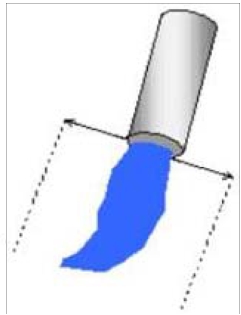
Figure 4-3-050.G.7.c.ii. Buffer measurement at pipe opening.
d. Stream/Lake Buffer Width Requirements:
i. Buffers and Setbacks:
(a) Minimum Stream/Lake Buffer Widths: See subsection G2 of this Section.
(b) Piped or Culverted Streams:
(1) Building structures over a natural stream located in an underground pipe or culvert except as may be granted by a variance in RMC 4-9-250 are prohibited. Transportation or utility crossings or other alterations pursuant to subsection J of this Section are allowed. Pavement over a pre-existing piped stream is allowed. Relocation of the piped stream system around structures is allowed. If structure locations are proposed to be changed or the piped stream is being relocated around buildings, a hydrologic and hydraulic analysis of existing piped stream systems will be required for any development project site that contains a piped stream to ensure it is sized to convey the one hundred (100) year runoff level from the total upstream tributary area based on future land use conditions.
(2) No buffers are required along segments of piped or culverted streams. The City shall require easements and setbacks from pipes or culverts consistent with stormwater requirements in RMC 4-6-030 and the adopted drainage manual.
ii. Increased Buffer Width:
(a) Areas of High Blow-down Potential: Where the stream/lake buffer is in an area of high blow-down potential for trees as identified by a qualified professional, the buffer width may be expanded an additional fifty feet (50') on the windward side.
(b) Habitat Corridors: Where the stream/lake buffer is adjacent to high functioning critical areas (e.g., wetlands, other streams, other identified habitats), the stream/lake buffer width shall be extended to the buffer boundary of the other protected critical area to establish a habitat corridor as needed to protect or establish contiguous vegetated areas between streams/lakes and other critical areas.
e. Criteria for Permit Approval – Type F, Np, and Ns: Permit approval for projects on or near regulated Type F, Np and Ns water bodies shall be granted only if the approval is consistent with the provisions of this subsection, and complies with one of the following conditions:
i. A proposed action meets the standard provisions of this Section and results in no net loss of regulated riparian area or shoreline ecological function in the drainage basin where the site is located; or
ii. A proposed action meets alternative administrative standards pursuant to this Section and the proposed activity results in no net loss of regulated riparian area or shoreline ecological function in the drainage basin where the site is located; or
iii. A variance process is successfully completed and the proposed activity results in no net loss of regulated riparian area or shoreline ecological function in the drainage basin where the site is located.
f. Incentives for Restoration of Streams Located in an Underground Pipe or Culvert: Daylighting of culverted watercourses should be encouraged and allowed with the following modified standards:
i. Residential Zones: Reduced setbacks, lot width and lot depth standards of chapter 4-2 RMC may be approved without requirement of a variance for lots that abut the daylighted watercourse to accommodate the same number of lots as if the watercourse were not daylighted.
ii. Mixed Use, Commercial, and Industrial Zones: Where greater lot coverage allowances are provided for structured parking in chapter 4-2 RMC, lot coverage may be increased to the limit allowed for structured parking if instead a stream is daylighted. The increase in impervious surface allowed shall be equal to the area of stream restoration.
(a) Standard buffers may be reduced pursuant to subsection I of this Section. If reduced buffers in subsection I of this Section along with other development standards of the zone would not allow the same development level as without the watercourse daylighting, a modification may be requested as in subsection I2c of this Section.
(b) When designed consistent with the City’s flood regulations in this subsection G, portions of the daylighted stream/created buffer may be considered part of compensatory storage in flood hazard areas.
(c) Stream relocation is permitted subject to subsection J of this Section.
8. Wellhead Protection Areas:
a. Applicability: Developments, facilities, uses and activities discussed in this subsection shall comply with the applicable provisions and restrictions of this Section and chapters 4-4, 4-5, 4-6, 4-9, and 5-5 RMC for the Wellhead Protection Areas, as classified below, in which the developments, facilities, uses and activities are located, except as preempted by Federal or State law.
i. Wellhead Protection Areas: Wellhead Protection Areas are the portion of an aquifer within the zone of capture and recharge area for a well or well field owned or operated by the City.
ii. Wellhead Protection Area Zones: Zones of a Wellhead Protection Area are designated to provide graduated levels of Wellhead Protection Area recharge. Zone boundaries are determined using best available science documented in the City of Renton Wellhead Protection Plan, an appendix of the City of Renton Water System Plan, as periodically updated. The following zones may be designated:
(a) Zone 1: The land area situated between a well or well field owned by the City and the three hundred sixty five (365) day groundwater travel time contour.
(b) Zone 1 Modified: The same land area described for Zone 1 but for the purpose of protecting a high-priority well, wellfield, or spring withdrawing from a confined aquifer with partial leakage in the overlying or underlying confining layers. Uses, activities, and facilities located in this area are regulated as if located within Zone 1 except as provided by this subsection G8.
(c) Zone 2: The land area situated between the three hundred sixty five (365) day groundwater travel time contour and the boundary of the zone of potential capture for a well or well field owned or operated by the City. If the aquifer supplying water to such a well, well field, or spring is naturally protected by confining overlying and underlying geologic layers, the City may choose not to subdivide a Wellhead Protection Area into two (2) zones. In such a case, the entire Wellhead Protection Area will be designated as Zone 2.
iii. Mapping:
(a) Determination of Location within a Zone of a Wellhead Protection Area: In determining the location of facilities within the zones, the following rules shall apply:
(1) Facilities located wholly within a Wellhead Protection zone shall be governed by the restrictions applicable to that zone.
(2) Facilities having parts lying within more than one zone of a Wellhead Protection Area shall be governed as follows: Each part of the facility shall be reviewed and regulated by the requirements set forth in this Section for the zone in which that part of the facility is actually located.
(3) Facilities having parts lying both in and out of a Wellhead Protection Area shall be governed as follows:
(A) That portion which is within a Wellhead Protection Area shall be governed by the applicable restrictions in this Section; and
(B) That portion which is not in a Wellhead Protection Area shall not be governed by this Section.
b. Facilities:
i. Hazardous Materials – Use, Production, Storage, Treatment, Disposal, or Management: Persons that store, handle, treat, use, or produce a hazardous material as defined by RMC 4-11-080, Definitions H, which are new, existing, or to be closed, shall be subject to the requirements of this Section, and as further specified below:
(a) All applications for development permits for uses in which hazardous materials are stored, handled, treated, used or produced or which increase the quantity of hazardous materials stored, handled, treated, used, or produced at a location in the Wellhead Protection Area must be reviewed for compliance with this chapter by the Department prior to approval.
(b) The focus of review for all permits will be on the hazardous materials that will be stored, handled, treated, used, or produced; and the potential for these substances to degrade groundwater quality.
(c) An inventory of hazardous materials on forms provided by the Department shall be submitted to the Department upon application for a development permit.
(d) Where required by the Department, plans and specifications for secondary containment shall be submitted and shall comply with this subsection G8. Development permits shall not be issued until plans and specifications for secondary containment, if required, have been approved by the Department.
ii. New Facilities – Zones 1 and 2: All proposals for new facilities within any zone of an Wellhead Protection Area must be reviewed for compliance with this Section prior to issuance of any development permits for uses in which hazardous materials are stored, handled, treated, used or produced or which increase the quantity of hazardous materials stored, handled, treated, used, or produced.
iii. Prohibited Facilities – Zone 1:
(a) The storage, handling, use, treatment or production of hazardous materials in aggregate quantities greater than five hundred (500) gallons shall not be allowed within Zone 1 of a Wellhead Protection Area. The storage, handling, use, treatment or production of tetrachloroethylene (e.g., dry-cleaning fluid) shall not be allowed within Zone 1 of a Wellhead Protection Area.
(b) No person, persons, corporation or other legal entity shall temporarily or permanently abandon, close, sell, or otherwise transfer a facility in a Wellhead Protection Area without complying with the requirements of RMC 4-9-015F, Closure Permit, and permit conditions of this Section.
iv. Existing Facilities Change in Quantities – Zone 1: In Zone 1 of a Wellhead Protection Area, no change in operations at a facility shall be allowed that increases the aggregate quantity of hazardous materials stored, handled, treated, used, or produced with the following exception: An increase in the quantity of hazardous materials is allowed up to the amount allowed for a new facility in Zone 1 as provided by subsection C of this Section.
v. Existing Facilities – Allowances in Zone 2: The storage, handling, treatment, use or production of hazardous materials at existing facilities shall be allowed within Zone 2 of a Wellhead Protection Area upon compliance with the permit requirements, release reporting requirements, and closure requirements of this Section.
vi. Requirements for Facilities – Zones 1 and 2: The following conditions in subsections G8bvi(a) to (d) of this Section will be required as part of any operating permit issued for facilities in Zone 1 of a Wellhead Protection Area. Conditions in subsections G8bvi(a) to (c) shall apply to facilities in Zone 2 of a Wellhead Protection Area.
(a) Secondary Containment – Zones 1 and 2:
(1) Materials Stored in Tanks Subject to DOE – Zones 1 and 2: Hazardous materials stored in tanks that are subject to regulation by the Washington Department of Ecology under chapter 173-360 WAC are exempt from containment requirements in subsection G8bvi(a)(2) of this Section, Secondary Containment – Zones 1 and 2, but are subject to applicable requirements in RMC 4-5-120, Underground Storage Tank Secondary Containment Regulations.
(2) Secondary Containment Devices Required in Zones 1 and 2: Every owner of a facility shall provide secondary containment devices adequate in size to contain on site any unauthorized release of hazardous materials from any area where these substances are either stored, handled, treated, used, or produced. Secondary containment devices shall prevent hazardous materials from contacting soil, surface water, and groundwater and shall prevent hazardous materials from entering storm drains and, except for authorized and permitted discharges, the sanitary sewer.
(A) Design requirements for secondary containment devices are as follows:
(i) The secondary containment device shall be large enough to contain the volume of the primary container in cases where a single container is used to store, handle, treat, use, or produce a hazardous material. In cases where multiple containers are used, the secondary containment device shall be large enough to contain the volume of the largest container. Volumes specified are in addition to the design flow rate of the automatic fire extinguishing system, if present, to which the secondary containment device is subjected. The secondary containment device shall be capable of containing the fire flow for a period of twenty (20) minutes or more.
(ii) All secondary containment devices shall be constructed of materials of sufficient thickness, density, and composition to prevent structural weakening of the containment device as a result of contact with any hazardous material. If coatings are used to provide chemical resistance for secondary containment devices, they shall also be resistant to expected abrasion and impact conditions. Secondary containment devices shall be capable of containing any unauthorized release for at least the maximum anticipated period sufficient to allow detection and removal of the release.
(iii) Hazardous materials stored outdoors and their attendant secondary containment devices shall be covered to preclude precipitation with the exception of hazardous materials stored in tanks that have been approved by and are under permit from the Fire Department. Secondary containment for such tanks, if uncovered, shall be able to accommodate the volume of precipitation that could enter the containment device during a twenty four (24) hour, twenty five (25) year storm, in addition to the volume of the hazardous material stored in the tank. (Ord. 5806, 6-20-2016)
(iv) Secondary containment devices shall include monitoring procedures or technology capable of detecting the presence of a hazardous material within twenty four (24) hours following a release.
(v) Hazardous materials shall be removed from the secondary containment device within twenty four (24) hours of detection and shall be legally stored or disposed.
(vi) Areas in which there are floor drains, catchbasins, or other conveyance piping that does not discharge into a secondary containment device that meets the requirements of this chapter shall not be used for secondary containment of hazardous materials. Closure of existing piping shall be according to procedures and designs approved by the Department.
(vii) Primary containers shall be impervious to the contents stored therein, properly labeled, and fitted with a tight cover which is kept closed except when substances are being withdrawn or used.
(viii) Hazardous materials stored outdoors when the facility is left unsupervised must be inaccessible to the public. Such techniques as locked storage sheds, locked fencing, or other techniques may be used if they will effectively preclude access.
(ix) Stored hazardous materials shall be protected and secured, as needed, against impact and earthquake to prevent damage to the primary container that would result in release of hazardous materials that would escape the secondary containment area.
(b) Monitoring Required: See RMC 4-9-015.
(c) Emergency Collection Devices – Zones 1 and 2: Vacuum suction devices, absorbent scavenger materials, or other devices approved by the Department shall be present on site (or available within an hour by contract with a cleanup company approved by the Department), in sufficient quantity to control and collect the total quantity of hazardous materials plus absorbent material. The presence of such emergency collection devices and/or cleanup contract are the responsibility and at the expense of the owner and shall be documented in the operating permit.
(d) Additional Facility Requirements for Zone 1:
(1) An owner of a facility may, at their own expense, be required to institute a program to monitor groundwater, surface water runoff, and/or site soils. The Department may require that the owner of a facility install one or more groundwater monitoring wells in a manner approved by the Department in order to accommodate the required groundwater monitoring. Criteria used to determine the need for site monitoring shall include, but not be limited to, the proximity of the facility to the City’s production or monitoring wells, the type and quantity of hazardous materials on site, and whether or not the hazardous materials are stored in underground vessels.
(2) An owner may be required to pave all currently unpaved areas of their facility that are subject to any vehicular use or storage, use, handling, or production of hazardous materials.
(3) An owner may be required to meet the provisions of RMC 4-6-030E4 if the nature of the business involves the use of hazardous materials outside of fully enclosed structures, and the City evaluates the existing stormwater collection and conveyance system.
(4) The owner may be required to test interior wastewater plumbing and the building side sewer for tightness according to subsection G8gi(c) of this Section, Pipeline Requirements – Zone 1, and the City reserves the right to require that such wastewater conveyance be repaired or replaced according to subsection G8gi of this Section, Pipeline Requirements – Zone 1.
(5) An owner shall be paid by the City fifty percent (50%) of documented capital costs up to twenty five thousand dollars ($25,000.00) for required installation and construction of monitoring wells, site paving, wastewater conveyance, and stormwater improvements as required in subsections G8bvi(d)(1) through (4) of this Section, Groundwater Monitoring and Paving. Payment by the City shall be made according to adopted administrative rules.
c. Limited Exemptions: Activities that are exempt from some, but not all, provisions of this Section are listed below. Whether the exempted activities are also exempt from permits will be determined based upon application of chapters 4-8 and 4-9 RMC, or other applicable sections of the Renton Municipal Code.
i. Hazardous Materials:
(a) Materials for Sale in Original Small Containers: Hazardous materials offered for sale in their original containers of five (5) gallons or less shall be exempt from requirements in subsection G8bvi of this Section.
(b) Activities Exempt from Specified Wellhead Protection Areas Requirements: The following are exempt from requirements in subsections G8bvi(a) through (d) of this Section, the requirements pertaining to review of proposed facilities in subsection C5d of this Section, Prohibited Changes in Land Use and Types of New Facilities – Wellhead Protection Areas, and the requirements pertaining to prohibited facilities in subsection G8biii(a) of this Section:
(1) Hazardous materials use, storage, and handling in de minimis amounts (aggregate quantities totaling twenty (20) gallons or less at the facility or construction site). Weights of solid hazardous materials will be converted to volumes for purposes of determining whether de minimis amounts are exceeded. Ten (10) pounds shall be considered equal to one gallon.
(2) Noncommercial residential use, storage, and handling of hazardous materials; provided, that no home occupation business (as defined by chapter 4-11 RMC) that uses, stores, or handles more than twenty (20) gallons of hazardous material is operated on the premises.
(3) Hazardous materials in fuel tanks and fluid reservoirs attached to a private or commercial motor vehicle and used directly in the operation of that vehicle.
(4) Fuel oil used in existing heating systems.
(5) Hazardous materials used, stored, and handled by the City of Renton in water treatment processes and water system operations.
(6) Fueling of equipment not licensed for street use; provided, that such fueling activities are conducted in a containment area that is designed and maintained to prevent hazardous materials from coming into contact with soil, surface water, or groundwater except for refueling associated with construction activity regulated by RMC 4-4-030(C)(8), Construction Activity Standards – Zones 1 and 2.
(7) Hazardous materials contained in properly operating sealed units (transformers, refrigeration units, etc.) that are not opened as part of routine use.
(8) Hazardous materials in fuel tanks and fluid reservoirs attached to private or commercial equipment and used directly in the operation of that equipment.
(9) Hazardous materials in aerosol cans.
(10) Hazardous materials at multifamily dwellings, hotels, motels, retirement homes, convalescent centers/nursing homes, mobile or manufactured home parks, group homes, and daycare family homes or centers when used by owners and/or operators of such facilities for on-site operation and maintenance purposes.
(11) Hazardous materials used for janitorial purposes at the facility where the products are stored.
(12) Hazardous materials used for personal care by workers or occupants of the facility at which the products are stored including but not limited to soaps, hair treatments, grooming aids, health aids, and medicines.
(c) Uses, Facilities, and Activities in Zone 1 Modified Wellhead Protection Areas Exempt from Specified Wellhead Protection Areas Requirements: Facilities located in the Zone 1 Modified Wellhead Protection Areas are exempt from the following:
(1) Prohibited facilities requirements in subsection G8biii(a) of this Section except that the storage, handling, use, treatment, and production of tetrachloroethylene (e.g., dry-cleaning fluid) shall be prohibited;
(2) Additional facility requirements in subsection G8bvi(d) of this Section;
(3) Wastewater requirements in RMC 4-6-040J1a but shall be subject to Zone 2 requirements in RMC 4-6-040J2;
(4) The prohibition of septic systems; and
(5) Surface water management requirements of RMC 4-6-030E except that Zone 2 requirements contained in RMC 4-6-030E shall apply.
d. Use of Pesticides and Nitrates – All Wellhead Protection Areas:
i. Use of Pesticides: The application of hazardous materials such as pesticides shall be allowed in a Wellhead Protection Area, except within one hundred feet (100') of a City owned well or two hundred feet (200') of a City owned spring; provided, that:
(a) The application is in strict conformity with the use requirements as set forth by the EPA and as indicated on the containers in which the substances are sold.
(b) Persons who are required to keep pesticide application records by RCW 17.21.100.1 and WAC 16-228-190 shall provide a copy of the required records to the Department within seventy two (72) hours of the application.
ii. Fertilizers/Nitrate-Containing Materials: The application of fertilizers containing nitrates shall be allowed in a Wellhead Protection Area except within one hundred feet (100') of a City owned well or two hundred feet (200') of a spring; provided, that:
(a) No application of nitrate-containing materials shall exceed one-half (0.5) pound of nitrogen per one thousand (1,000) square feet per single application and a total yearly application of five (5) pounds of nitrogen per one thousand (1,000) square feet; except that an approved slow-release nitrogen may be applied in quantities of up to nine-tenths (0.9) pound of nitrogen per one thousand (1,000) square feet per single application and eight (8) pounds of nitrogen per one thousand (1,000) square feet per year; and
(b) Persons who apply fertilizer containing nitrates to more than one contiguous acre of land located in the Wellhead Protection Area either in one or multiple application(s) per year shall provide to the Department within seventy two (72) hours of any application the following information:
(1) The name, address, and telephone number of the person applying the fertilizer;
(2) The location and land area of the application;
(3) The date and time of the application;
(4) The product name and formulation;
(5) The application rate.
e. Wastewater Disposal Requirements – Zones 1 and 2: Refer to RMC 4-6-040J, Sanitary Sewer Standards, Additional Requirements that Apply within Zones 1 and 2 of an Aquifer Protection Area.
f. Surface Water Requirements – Zones 1 and 2: Refer to RMC 4-6-030E, drainage plan requirements and methods of analysis for additional surface water requirements applicable within Zones 1 and 2 of a Wellhead Protection Area.
g. Pipeline Requirements:
i. Pipeline Requirements – Zone 1:
(a) Materials: All new and existing pipelines, as defined by RMC 4-11-160, in Zone 1 shall be constructed or repaired in accordance with material specifications contained in this Section.
(b) Maintenance Required for Existing Pipelines: All existing product pipelines in Zone 1 shall be repaired and maintained in accordance with best management practices and best available technology.
(c) Testing Required for New Pipelines: All new pipelines constructed in Zone 1 shall be tested for leakage in conformance with the following provisions prior to being placed into service.
(1) Pipeline leakage testing shall be conducted in accordance with best available technology, to the satisfaction of the Department.
(2) Pipeline leakage testing methods shall be submitted to the Department for review prior to testing and shall include a detailed description of the testing methods and technical assumptions; accuracy and precision of the test; proposed testing durations, pressures, and lengths of pipeline to be tested; and scale drawings of the pipeline(s) to be tested.
(3) Upon completion of testing, pipeline leakage testing results shall be submitted to the Department and shall include: record of testing durations, pressures, and lengths of pipeline tested; and weather conditions at the time of testing.
(4) Routine leakage testing of new pipelines constructed in Zone 1 may be required by the Department.
h. Construction Activity Standards – Zones 1 and 2: Persons engaged in construction activities as defined in RMC 4-11-030, Definitions C, shall comply with subsection G8 of this Section.
i. Fill Material Requirements – Zones 1 and 2: Refer to RMC 4-4-060N4, Fill Material – Zones 1 and 2, regarding quality of fill and fill material source statement requirements within Critical Aquifer Recharge Areas.
j. Regulations for Existing Solid Waste Landfills – Zones 1 and 2:
i. Materials: Earth materials used as fill or cover at a solid waste landfill shall meet the requirements of RMC 4-4-060N4, Fill Material.
ii. Groundwater Monitoring: The Department shall have the authority to require an owner of a solid waste landfill to implement a groundwater monitoring program equal to that described by King County Board of Health Title 10 (King County Solid Waste Regulations) Section 10.72.020 and a corrective action program equal to that described by Section 10.72.030. The Department shall have the authority ascribed to the health officer in said regulations. Quarterly reports shall be provided to the Department detailing groundwater monitoring activity during the preceding three (3) months. Reports detailing corrective action required by the Department shall be submitted according to a written schedule approved by the Department.
k. Fuel Oil Heating Systems – Zones 1 and 2: Owners of facilities and structures shall comply with subsections C5cii(i) and C5ciii(f) of this Section, Prohibited Activities – Wellhead Protection Areas, Zones 1 and 2, relating to conversion of heating systems to fuel oil and installation of new fuel oil heating systems.
9. Wetlands:
a. Applicability: Wetland regulations apply to sites containing or abutting wetlands, defined in RMC 4-11-230, as described below. The City categorizes wetlands according to the most current version of the Washington State Wetland Rating System for Western Washington.
b. Delineation of Regulatory Edge of Wetlands:
i. Methodology: For the purpose of regulation, the exact location of the wetland edge shall be determined by the wetlands specialist hired at the expense of the applicant through the performance of a field investigation in accordance with the approved federal wetland delineation manual and applicable regional supplements.
ii. Adjustments to Delineation by City: Where the applicant has provided a delineation of the wetland edge, the City shall review and may render adjustments to the edge delineation. In the event the adjusted edge delineation is contested by the applicant, the City shall, at the applicant’s expense, obtain the services of an additional qualified wetlands specialist to review the original study and render a final delineation.
c. Wetland Categorization or Categorization System: The following categorization system is hereby adopted for the purposes of regulating wetlands in the City. The City may accept a dual wetland categorization for a wetland exhibiting a combination of Category I and II features or a combination of Category I and III features. The City will not accept a dual rating for a Category II wetland, such as a combined Category II and III rating. Dual ratings for a Category I wetland shall be consistent with the Washington State Wetland Rating System for Western Washington – 2014 Update (October 2014), or as amended hereafter. Wetlands buffer widths, replacement ratios and avoidance criteria shall be based on the following ratings:
i. Category I Wetlands: Category I wetlands are those wetlands of exceptional value in terms of protecting water quality, storing flood and stormwater, and/or providing habitat for wildlife as indicated by a rating system score of twenty three (23) points or more on the state rating system referenced above. These are wetland communities of infrequent occurrence that often provide documented habitat for critical, threatened or endangered species, and/or have other attributes that are very difficult or impossible to replace if altered.
ii. Category II Wetlands: Category II wetlands have significant value based on their function as indicated by a rating system score of between twenty (20) and twenty two (22) points. They do not meet the criteria for Category I rating but occur infrequently and have qualities that are difficult to replace if altered.
iii. Category III Wetlands: Category III wetlands have important resource value as indicated by a rating system score of between sixteen (16) and nineteen (19) points.
iv. Category IV Wetlands: Category IV wetlands are wetlands of limited resource value as indicated by a rating system score between nine (9) and fifteen (15) points. They typically have vegetation of similar age and class, lack special habitat features, and/or are isolated or disconnected from other aquatic systems or high quality upland habitats.
d. Wetland Buffers:
i. Standard Buffer Widths: See subsection G2 of this Section, Critical Area Buffers and Structure Setbacks from Buffers.
ii. Independent Buffer Study: The Administrator shall have the authority to approve proposed alternate buffer widths based on a qualified professional’s wetland study, provided the criteria below are met. Determinations made by the Administrator pursuant to this subsection may be appealed to the Hearing Examiner.
(a) The applicant funds the wetland study; and
(b) The wetland study shows why the standard buffer widths are unnecessary and how the proposed alternate buffer will provide an equivalent ecological protection as provided by the City standards; and
(c) The wetland study demonstrates how it meets best available science as identified in Wetlands in Washington State, Volume 1: A Synthesis of the Science (Ecology Publication No. 05-06-006, March 2005) and Wetlands in Washington State, Volume 2: Managing and Protecting Wetlands (Ecology Publication No. 04-06-008, April 2005).
iii. Measurement of Buffers: All buffers shall be measured from the wetland boundary as surveyed in the field pursuant to the requirements of this subsection.
iv. Increased Wetland Buffer Width: Each applicant shall document in the required wetland assessments whether the criteria in this subsection G9d are or are not met and increased wetland buffers are warranted. Based on the applicant’s report or third party review, increased standard buffer widths may be required in unique cases. Such determination shall be attached as a condition of project approval. Unique cases shall include but not be limited to:
(a) The wetland is used by species listed by the Federal or the State government as threatened, endangered and sensitive species and State-listed priority species, essential habitat for those species or has unusual nesting or resting sites such as heron rookeries or raptor nesting trees or evidence thereof; or
(b) The buffer or adjacent uplands have a slope greater than fifteen percent (15%) or is susceptible to erosion and standard erosion control measures will not effectively prevent adverse wetland impacts.
(c) The area is very fragile, or when a larger buffer is necessary to protect wetlands functions and values.
e. Cooperative Wetland Compensation: Mitigation Banks, In-Lieu Fee Programs, or Special Area Management Programs (SAMP):
i. Applicability: The City encourages and will facilitate and approve cooperative projects wherein a single applicant or other organization with demonstrated capability may undertake a compensation project under the following circumstances:
(a) Restoration or creation on site may not be feasible due to problems with hydrology, soils, or other factors; or
(b) Where the cooperative plan is shown to better meet established regional goals for flood storage, flood conveyance, habitat or other wetland functions.
ii. Process: Applicants proposing a cooperative compensation project shall:
(a) Submit a permit application;
(b) Demonstrate compliance with all standards;
(c) Demonstrate that long-term management will be provided; and
(d) Demonstrate agreement for the project from all affected property owners of record.
iii. Mitigation Banks: Mitigation banks are defined as sites which may be used for restoration, creation and/or mitigation of wetland alternatives from a different piece of property than the property to be altered within the same drainage basin. The City of Renton maintains a mitigation bank. A list of City mitigation bank sites is maintained by the Public Works Department. With the approval of Administrator and the Public Works Department, non-City-controlled mitigation banks may be established and utilized. If credits are from a mitigation bank are to be used for Federal or State permits, the bank must be certified under State rules. If approved, compensation payments received as part of a mitigation or creation bank must be received prior to the issuance of an occupancy permit.
iv. In-Lieu Fee Programs: In-lieu fee mitigation involves the restoration, creation, enhancement, or preservation of aquatic resources through funds paid to a governmental or non-profit natural resources management entity to satisfy compensatory mitigation for Federal, State, and local permits. Both the U.S. Army Corps of Engineers (33 CFR Parts 325 and 332) and Washington State (WAC 173-700) support the use of in-lieu fee programs. The City of Renton is located within the service area of the King County Mitigation Reserves In-Lieu Fee Program, which may be used by applicants with the approval of the Administrator and Public Works Department provided the mitigation occurs within the City of Renton and the same drainage basin.
v. Special Area Management Programs: Special area management programs are those wetland programs agreed upon through an interjurisdictional planning process involving the U.S. Army Corps of Engineers, the Washington State Department of Ecology, any affected counties and/or cities, private property owners and other parties of interest. The outcome of the process is a regional wetlands permit representing a plan of action for all wetlands within the special area.
4-3-050H ALTERATIONS TO CRITICAL AREAS AND/OR BUFFERS – GENERAL REQUIREMENTS:
1. General Purpose: The typically required critical area buffers may be reduced to no less than the minimums set forth in this subsection where the City is able to verify that the proposal will result in no net loss of functions or values as documented in a study prepared by a qualified professional. Greater buffer width reductions require review as a variance pursuant to subsection K of this Section.
2. Authority and Documentation of Required Findings: Based upon an applicant’s request, and the acceptance of a wetland and/or stream or lake study, mitigation and enhancement plan, the Administrator may approve an alteration to the minimum buffer widths where the applicant can demonstrate that through enhancing the buffer and the use of low impact development strategies the reduced buffer will function at a higher level than the standard buffer. Determinations and evidence shall be included in the application file. The City shall also evaluate all proposals using the following criteria, in the order below. The development plan will:
a. Avoid any disturbances to the critical area or buffer;
b. Minimize any critical area or buffer impacts;
c. Compensate for any critical area or buffer impacts;
d. Restore any critical area or buffer temporarily impacted or lost;
e. Create new critical areas and buffers for those lost; and
f. Enhance an existing degraded buffer to compensate for lost functions and values in addition to restoring or creating a critical area.
3. Studies Required: The City’s determination shall be based on specific site studies by recognized experts.
4. Surety, Mitigation, and Monitoring Required: The City will require long-term monitoring of the project pursuant to subsection L3 of this Section.
5. Corrective Actions Required: Corrective actions will be required if adverse impacts to critical areas or buffers are discovered during the monitoring period.
6. Public Notice Required: Public notification shall be given as follows:
a. For applications that are not otherwise subject to notices of application pursuant to chapter 4-8 RMC, notice of the critical area and/or buffer alteration shall be given by posting the site and notifying abutting or adjacent property owners with the potential to be impacted, in accordance with chapter 4-8 RMC. Upon determination by the Administrator to allow or disallow an alteration, notification of parties of record, if any, shall be made.
b. For applications that are subject to notices of application, the critical area and/or buffer alteration or request for determination to allow an alteration shall be included with notice of application. If the determination to allow or disallow an alteration of the mitigation requirements is not known at the time of the notice of application, written notice to abutting or adjacent property owners shall be given instead at the time of the SEPA determination. Upon determination to allow or disallow an alteration, notification of parties of record, if any, shall be made.
4-3-050I ALTERATIONS TO CRITICAL AREAS BUFFERS:
1. Maximum Permissible Administrative Alterations to Critical Areas Buffers – Alteration of Critical Area Buffers: The required critical area buffers may be reduced to no less than the minimums set forth in this subsection. Greater buffer width reductions require review as a variance pursuant to RMC 4-9-250.
|
Critical Area Category or Type |
Reduced Buffer: Minimum Widths Possible |
Averaged Buffer: Minimum Widths Possible |
|---|---|---|
|
Geologically Hazardous Areas |
||
|
Landslide Hazard Areas: |
||
|
Very High |
Based on City acceptance of a geotechnical report1 |
N/A |
|
Streams and Lakes |
||
|
Type F |
90 feet2 |
75 feet3 |
|
Type Np |
60 feet2 |
37.5 feet3 |
|
Type Ns |
40 feet2 |
25 feet3 |
|
Wetlands |
||
|
Wetland buffer widths shall be reduced by no more than 25% of the buffer required in subsection G of this Section. |
||
1. Subject to approval pursuant to the criteria in RMC 4-3-050G5hii.
2. Subject to approval pursuant to the criteria in RMC 4-3-050I2a.
3. Subject to approval pursuant to the criteria in RMC 4-3-050I2b.
2. Streams:
a. Criteria for Reduction of Degraded Stream Buffer Width with Enhancement: A reduced buffer will be approved in a degraded stream buffer only if:
i. It will provide an overall improvement in water quality; and
ii. It will provide an overall enhancement to fish, wildlife, or their habitat; and
iii. It will provide a net improvement in drainage and/or stormwater detention capabilities; and
iv. It will not be materially detrimental to any other property or the City as a whole; and
v. It will provide all exposed areas with stabilized native vegetation, as appropriate; and
vi. The request is not made in conjunction with buffer reduction, and
vii. It will provide, as part of the buffer reduction request, buffer enhancement plan prepared by a qualified professional and fund a review of the plan by the City’s consultant. The plan shall assess habitat, water quality, stormwater detention, groundwater recharge, shoreline protection, and erosion protection functions of the buffer; assess the effects of the proposed modification on those functions; and address the six (6) criteria listed above.
b. Criteria for Approval of Averaged Stream Buffer: Buffer width averaging may be allowed only where the applicant demonstrates all of the following:
i. There are existing physical improvements in or near the water body and associated riparian area; and
ii. Buffer width averaging will result in no net loss of stream/lake/riparian ecological function; and
iii. The total area contained within the buffer after averaging is no less than that contained within the required standard buffer width prior to averaging; and
iv. The proposed buffer standard is based on consideration of the best available science as described in WAC 365-195-905; and
v. Where the buffer width is reduced by averaging pursuant to this subsection, buffer enhancement shall be required.
c. Criteria for Approval of Reduced Buffer for Type Np and Ns Streams to be Daylighted: An applicant may request that the Administrator grant a modification as follows:
i. Modifications may be requested for a reduction in stream buffers for Type Np and Ns watercourses proposed to be daylighted, below the stream buffer reduction levels of subsection I1 of this Section.
ii. In addition to the criteria of RMC 4-9-250D, Modification Procedures, the following criteria shall apply:
(a) The buffer is lowered only to the amount necessary to achieve the same amount of development as without the daylighting; and
(b) The buffer width is no less than fifty feet (50') on a Type Np watercourse and twenty five feet (25') on a Type Ns watercourse; and
(c) The proposed modification is based on consideration of the best available science as described in WAC 365-195-905.
3. Wetlands:
a. Criteria for Reduction of Wetland Buffer Width with Enhancement: The reviewing official must find that the proposal meets all the following criteria:
i. The reduced buffer will function at a higher level than the standard buffer; and
ii. An enhanced buffer shall never be less than seventy five percent (75%) of the standard width at its narrowest point; and
iii. The buffer area has less than fifteen percent (15%) slopes and no direct or indirect, short-term or long-term, adverse impacts to regulated wetlands, as determined by the City, and
iv. The proposal shall rely upon a site-specific evaluation and documentation of buffer adequacy based upon Wetlands in Washington State, Volume 1: A Synthesis of the Science (Ecology Publication No. 05-06-006, March 2005) and Wetlands in Washington State, Volume 2: Managing and Protecting Wetlands (Ecology Publication No. 04-06-008, April 2005), or similar approaches; and
v. The proposed buffer standard is based on consideration of the best available science as described in WAC 365-195-905; and
b. Criteria for Averaging of Wetland Buffer Width: Averaging may be allowed only where the applicant demonstrates all of the following:
i. There are existing physical improvements in or near the wetland and buffer; and
ii. That width averaging will not adversely impact the wetland function and values; and
iii. That the total area contained within the wetland buffer after averaging is no less than that contained within the required standard buffer prior to averaging; and
iv. A site-specific evaluation and documentation of buffer adequacy based upon Wetlands in Washington State, Volume 1: A Synthesis of the Science (Ecology Publication No. 05-06-006, March 2005) and Wetlands in Washington State, Volume 2: Managing and Protecting Wetlands (Ecology Publication No. 04-06-008, April 2005), or similar approaches have been conducted. The proposed buffer standard is based on consideration of the best available science as described in WAC 365-195-905; and
v. In no instance shall the buffer width be reduced by more than seventy five percent (75%) of the standard buffer. Greater buffer width reductions require review as a variance pursuant to RMC 4-9-250B; and
vi. Buffer enhancement in the areas where the buffer is reduced shall be required on a case-by-case basis where appropriate to site conditions, wetland sensitivity, and proposed land development characteristics.
4-3-050J ALTERATIONS TO CRITICAL AREAS:
1. Criteria for Modifying Geologically Hazardous Area Standards:
a. An applicant may request that the Administrator grant a modification to allow:
i. Regrading of any slope which was created through previous mineral and natural resource recovery activities or was created prior to adoption of applicable mineral and natural resource recovery regulations or through public or private road installation or widening and related transportation improvements, railroad track installation or improvement, or public or private utility installation activities; and/or
ii. Filling against the toe of a natural rock wall or rock wall created through mineral and natural resource recovery activities or through public or private road installation or widening and related transportation improvements, railroad track installation or improvement or public or private utility installation activities;
b. Process: The following procedures shall apply to any of the above activities:
i. The applicant shall submit a geotechnical report describing any potential impacts of the proposed modification and any necessary mitigation measures;
ii. All submitted reports shall be independently reviewed by qualified specialists selected by the City at the applicant’s expense;
iii. The Administrator may grant, condition, or deny the request based upon the proposal’s compliance with the applicable modification criteria of RMC 4-9-250D; and
iv. Any slope which remains forty percent (40%) or steeper following site development shall be subject to all applicable geologic hazard regulations for steep slopes and landslide hazards, in this Section; and
v. In addition to the criteria of RMC 4-9-250D, Modification Procedures, the following criteria shall apply: The proposed modification is based on consideration of the best available science as described in WAC 365-195-905.
2. Alterations Within Streams and Lakes or Associated Buffers.
a. Criteria for Administrative Approval of Transportation Crossings in Stream/Lake or Buffer Areas: Construction of vehicular or non-vehicular transportation crossings may be permitted in accordance with an approved stream/lake study subject to the following criteria:
i. The proposed route is determined to have the least impact on the environment, while meeting City Comprehensive Plan Transportation Element requirements and standards in RMC 4-6-060; and
ii. The crossing minimizes interruption of downstream movement of wood and gravel; and
iii. Transportation facilities in buffer areas shall not run parallel to the water body; and
iv. Crossings occur as near to perpendicular with the water body as possible; and
v. Crossings are designed according to the Washington Department of Fish and Wildlife Fish Water Crossing Design Guidelines, 2013, and the National Marine Fisheries Service Guidelines for Salmonid Passage at Stream Crossings, 2000, as may be updated, or equivalent manuals as determined by the Administrator; and
vi. Seasonal work windows are determined and made a condition of approval; and
vii. Mitigation criteria of subsection L of this Section are met.
b. Criteria for Administrative Approval of Utilities in Stream/Lake or Buffer: New utility lines and facilities may be permitted to cross water bodies in accordance with an approved stream/lake study, if they comply with the following criteria:
i. Fish and wildlife habitat areas shall be avoided to the maximum extent possible; and
ii. The utility is designed consistent with one or more of the following methods:
(a) Installation shall be accomplished by boring beneath the scour depth and hyporheic zone of the water body and channel migration zone; or
(b) The utilities shall cross at an angle greater than sixty (60) degrees to the centerline of the channel in streams or perpendicular to the channel centerline; or
(c) Crossings shall be contained within the footprint of an existing road or utility crossing; and
iii. New utility routes shall avoid paralleling the stream or following a down-valley course near the channel; and
iv. The utility installation shall not increase or decrease the natural rate of shore migration or channel migration; and
v. Seasonal work windows are determined and made a condition of approval; and
vi. Mitigation criteria of subsection L of this Section are met.
c. Administrative Approval of In-Water Structures or In-Water Work: In accordance with an approved stream or lake study, in-water structures or work may be permitted, subject to the following: In-stream structures, such as, but not limited to, in-stream ponds, retention and detention facilities, tide gates, dams, and weirs, shall be allowed as part of an approved watershed basin restoration project approved by the City of Renton, and in accordance with mitigation criteria of subsection L of this Section. The applicant will obtain and comply with State or Federal permits and requirements.
d. Administrative Approval of Dredging: Dredging may be permitted only when:
i. Dredging is necessary for flood hazard areas reduction purposes, if a definite flood hazard area would exist unless dredging were permitted; or
ii. Dredging is necessary to correct problems of material distribution and water quality, when such problems are adversely affecting aquatic life; or
iii. Dredging is associated with a stream habitat enhancement or creation project not otherwise exempt in subsection C of this Section; or
iv. Dredging is necessary to protect public facilities; or
v. Dredging is required as a maintenance and operation condition of a federally funded flood hazard areas reduction project or a hazard mitigation project; and
vi. Dredging is done so as to meet applicable mitigation criteria of subsection L of this Section.
e. Administrative Approval of Stream Relocation: Stream relocation may be allowed when analyzed in an accepted stream or lake assessment, and when the following criteria and conditions are met:
i. Stream relocation may only be permitted if associated with:
(a) A public flood hazard areas reduction/habitat enhancement project approved by appropriate state and/or federal agencies; or
(b) Expansion of public road or other public facility improvements where no feasible alternative exists; or
(c) A public or private proposal restoring a water body and resulting in a net benefit to on- or off-site habitat and species.
ii. The following conditions also apply to any stream relocation proposal meeting one or more of the above criteria:
(a) Buffer widths shall be based upon the new stream location; provided, that the buffer widths may be reduced or averaged if meeting criteria of subsection I or J of this Section. Where minimum required buffer widths are not feasible for stream relocation proposals that are the result of activities pursuant to criteria in this subsection J, other equivalent on- or off-site compensation to achieve no net loss of riparian function is provided.
(b) When Type Ns streams, as defined in subsection G7 of this Section, are proposed for relocation due to expansions of public roads or other public facility improvements pursuant to this subsection J, the buffer area between the facility and the relocated stream shall not be less than the width prior to the relocation. The provided buffer between the facility and the relocated stream shall be enhanced or improved to provide appropriate functions given the class and condition of the stream; or if there is no buffer currently, other equivalent on- or off-site compensation to achieve no net loss of riparian functions is provided.
(c) Applicable mitigation criteria of subsection L of this Section must be met.
(d) Proper notification to the City must be made and records provided to the City of stream relocations, pursuant to subsection D of this Section, in cases where the stream/lake is subject to flood hazard area regulations of this Section.
3. Criteria for Modifying Wellhead Protection Area Standards: The Department will consider modification applications in the following cases:
a. The request is to find that a standard is inapplicable to that activity, facility, or development permit due to the applicant’s proposed methods or location; or
b. The request is to modify a specific standard or regulation due to practical difficulties; and
c. The request meets the intent and purpose of the Wellhead Protection Area regulations.
Based upon application of the tests in subsections J3a, b, and c of this Section, applications which are considered appropriate for review as modifications are subject to the procedures and criteria in RMC 4-9-250D, Modification Procedures. Requests to modify regulations or standards which do not meet the above tests shall be processed as variances.
d. The request, in addition to meeting the criteria of RMC 4-9-250D, Modification Procedures, must be based on consideration of the best available science as described in WAC 365-195-905; or where there is an absence of valid scientific information, the steps in RMC 4-9-250F are followed.
4. Criteria for Approving Wetland Alterations: Wetland alterations may only be authorized after the City makes a written finding that the proposal is consistent with the following criteria:
a. No Net Loss: Activities that adversely affect wetlands and/or wetland buffers shall include mitigation sufficient to achieve no net loss of wetland function and acreage and to achieve, where practicable, a net resource gain in wetlands over present conditions. The concept of “no net loss” means to create, restore and/or enhance a wetland so that there is no reduction to total wetland acreage and/or function.
b. Compensation for wetland alterations shall occur in the following order of preference:
i. Re-establishing wetlands on upland sites that were formerly wetlands.
ii. Rehabilitating wetlands for the purposes of repairing or restoring natural and/or historic functions.
iii. Creating wetlands on disturbed upland sites such as those consisting primarily of nonnative, invasive plant species.
iv. Enhancing significantly degraded wetlands.
v. Preserving Category I or II wetlands that are under imminent threat; provided, that preservation shall only be allowed in combination with other forms of mitigation and when the Administrator determines that the overall mitigation package fully replaces the functions and values lost due to development.
vi. Cooperative compensation to mitigation banks or in-lieu fee programs, as indicated in subsection G9e of this Section.
c. Mitigation Ratios for Wetland Impacts: Compensatory mitigation for wetland alterations shall be based on the wetland category and the type of mitigation activity proposed. The replacement ratio shall be determined according to the ratios provided in the table below. The created, re-established, rehabilitated, or enhanced wetland area shall at a minimum provide a level of functions equivalent to the wetland being altered and shall be located in an appropriate landscape setting.
|
Wetland Mitigation Type and Replacement Ratio* |
|||
|---|---|---|---|
|
Wetland Category** |
Creation or Re-establishment |
Rehabilitation |
Enhancement Only |
|
Category IV |
1.5:1 |
2:1 |
3:1 |
|
Category III |
2:1 |
3:1 |
4:1 |
|
Category II |
3:1 |
4:1 |
6:1 |
|
Category I |
6:1 |
8:1 |
Not allowed |
*Ratio is the replacement area: impact area.
**As defined in RMC 4-3-050G.
d. Mitigation Ratios for Wetland Buffer Impacts: Compensation for wetland buffer impacts shall occur at a minimum one to one (1:1) ratio. Compensatory mitigation for buffer impacts shall include enhancement of degraded buffers by planting native species, removing structures and impervious surfaces within buffers, and other measures.
e. Special Requirements for Mitigation Banks: Mitigation banks shall not be subject to the replacement ratios outlined in the replacement ratio table above, but shall be determined as part of the mitigation banking agreement and certification process.
f. Buffer Requirements for Replacement Wetlands: Replacement wetlands established pursuant to these mitigation provisions shall have adequate buffers to ensure their protection and sustainability. The buffer shall be based on the category in subsection G2 of this Section.
g. Location: Compensatory mitigation shall be provided on site or off site in the location that will provide the greatest ecological benefit and have the greatest likelihood of success. Mitigation shall occur as close as possible to the impact area, within the same watershed sub-basin, and in a similar habitat type as the permitted alteration unless the applicant demonstrates to the satisfaction of the Administrator through a watershed- or landscaped-based analysis that mitigation within an alternative sub-basin of the same watershed would have greater ecological benefit.
h. Protection: All mitigation areas whether on or off site shall be permanently protected and managed to prevent degradation and ensure protection of critical area functions and values into perpetuity. Permanent protection shall be achieved through protective covenant in accordance with this Section.
5. Alterations within Flood Hazard Area:
a. Changes to Special Flood Hazard Area:
i. If a project will alter the BFE or boundaries of the special flood hazard area, then the project proponent shall provide the community with engineering documentation and analysis regarding the proposed change. If the change to the BFE or boundaries of the special flood hazard area would normally require a FEMA Letter of Map Change, then the project proponent shall initiate, and receive approval of, a FEMA Conditional Letter of Map Revision (CLOMR) prior to approval of the development permit. The project shall be constructed in a manner consistent with the approved CLOMR.
ii. If a CLOMR application is made, then the project proponent shall also supply the full CLOMR documentation package to the Floodplain Administrator to be attached to the floodplain development permit, including all required property owner notifications.
b. Notification to Other Entities: Whenever a watercourse is to be altered or relocated:
i. Notify adjacent communities and the Department of Ecology prior to such alteration or relocation of a watercourse, and submit evidence of such notification to the Federal Insurance Administrator through appropriate notification means, and
ii. Assure that the flood carrying capacity of the altered or relocated portion of said watercourse is maintained. (Ord. 5977, 8-10-2020)
4-3-050K VARIANCES:
See RMC 4-9-250.
4-3-050L MITIGATION, MAINTENANCE AND MONITORING:
1. Mitigation Plan Required:
a. Criteria: Mitigation plans required through the application of subsections G4 to G9 of this Section shall comply with chapter 4-8 RMC. In addition, the applicant shall:
i. Demonstrate sufficient scientific expertise, the supervisory capability, and the financial resources to carry out the mitigation project; and
ii. Demonstrate the capability for monitoring the site and making corrections during the monitoring period if the mitigation project fails to meet projected goals; and
iii. Protect and manage, or provide for the protection and management, of the mitigation area to avoid further development or degradation and to provide for long-term environmental health of the mitigation area; and
iv. Provide for project monitoring and allow City inspections; and
v. Avoid mitigation proposals that would result in additional future mitigation or regulatory requirements for adjacent or abutting properties.
b. Mitigation Sequencing: If alterations to critical areas are proposed for a non-exempt activity, the applicant shall evaluate alternative methods of developing the property using the following criteria in this order and provide reasons why a less intrusive method of development is not feasible. In determining whether to grant permit approval pursuant to RMC 4-3-050C, a determination shall be made as to whether the feasibility of less intrusive methods of development has been adequately evaluated and that less intrusive methods of development are not feasible.
i. Avoiding the impact altogether by not taking a certain action or parts of an action (usually by either finding another site or changing the location on the site).
ii. Minimizing adverse impacts by limiting the magnitude of the action and its implementation, by using appropriate technology, or by taking affirmative steps, such as project redesign, relocation, or timing, to avoid or reduce impacts.
iii. Rectifying adverse impacts to wetlands, Wellhead Protection Areas, flood hazard areas, and habitat conservation areas by repairing, rehabilitating, or restoring the affected environment to the historical conditions or the conditions existing at the time of the initiation of the project.
iv. Minimizing or eliminating the hazard by restoring or stabilizing the hazard area through engineered or other methods.
v. Reducing or eliminating the adverse impacts or hazard over time by preservation and maintenance operations over the life of the action.
vi. Compensating for adverse impacts to wetlands, Wellhead Protection Areas, flood hazard areas, and habitat conservation areas by replacing, enhancing, or providing substitute resources or environments.
vii. Monitoring the hazard or other required mitigation and taking remedial action when necessary.
c. Based on Best Available Science: The applicant shall demonstrate that the mitigation is based on consideration of the best available science as described in WAC 365-195-905; or where there is an absence of valid scientific information, the steps in RMC 4-9-250F are followed.
d. Mitigation Alternatives and Location:
i. On-Site Mitigation: Mitigation shall be provided on site, unless on-site mitigation is not scientifically feasible due to physical features of the property. The burden of proof shall be on the applicant to demonstrate that mitigation cannot be provided on site.
ii. Off-Site Mitigation: When mitigation cannot be provided on site, mitigation shall be provided in the immediate vicinity of the permitted activity on property owned or controlled by the applicant, and identified as such through a recorded document such as an easement or covenant, provided such mitigation is beneficial to the habitat area and associated resources.
iii. In-Kind Mitigation: In-kind mitigation shall be provided except when the applicant demonstrates and the City concurs that greater functional and habitat value can be achieved through out-of-kind mitigation.
e. Timing of Mitigation Plan – Final Submittal and Mitigation Commencement: When a mitigation plan is required, the proponent shall submit a final mitigation plan for the approval of the Administrator prior to the issuance of building or construction permits for development. The proponent shall receive written approval of the mitigation plan prior to commencement of any construction activity. Where the City requires increased buffers rather than standard buffers, it shall be noted on the subdivision plan and/or site plan.
f. Timing of Construction and/or Building Permit Issuance: In order to ensure no loss of critical area functions and values, development permits shall not be issued prior to installation and acceptance of all required mitigation unless a surety device in an amount of three hundred percent (300%) of the mitigation installation contract amount is provided to the satisfaction of the City. Mitigation activities shall be timed to occur in the appropriate season based on weather and moisture conditions.
g. When Stream or Lake Mitigation Plan Is Required: The applicant shall be required to conduct a stream or lake mitigation plan pursuant to RMC 4-8-120 if impacts are identified within a stream or lake study. The approval of the stream or lake mitigation plan by the Administrator shall be based on the following criteria.
i. Mitigation Location: Mitigation location shall follow the preferences in this subsection L:
(a) On-Site Mitigation: On-site mitigation is required unless a finding is made that on-site mitigation is not feasible or desirable;
(b) Off-Site Mitigation within Same Drainage Subbasin as Subject Site: Off-site mitigation may be allowed when located within the same drainage subbasin as the subject site and if it achieves equal or improved ecological functions over mitigation on the subject site;
(c) Off-Site Mitigation within Same Drainage Basin within City Limits: Off-site mitigation may be allowed when located within the same drainage basin within the Renton City limits if it achieves equal or improved ecological functions within the City over mitigation within the same drainage subbasin as the project;
(d) Off-Site Mitigation within the Same Drainage Basin Outside the City Limits: Off-site mitigation may be allowed when located within the same drainage basin outside the Renton City limits if it achieves equal or improved ecological functions over mitigation within the same drainage basin within the Renton City limits and it meets City goals.
ii. Mitigation Type: In all cases, mitigation shall provide for equivalent or greater biological functions pursuant to subsection L1giii(a) of this Section. Additionally, there shall be no net loss of riparian area or shoreline ecological function resulting from any activity or land use occurring within the regulated buffer area. Types of mitigation shall follow the preferences in this subsection L:
(a) Daylighting (returning to open channel) of streams or removal of manmade salmonid migration barriers;
(b) Removal of impervious surfaces in buffer areas and improved biological function of the buffer;
(c) In-stream or in-lake mitigation as part of an approved watershed basin restoration project;
(d) Other mitigation suitable for site and water body conditions that meet all other provisions for a mitigation plan.
iii. Contiguous Corridors: Mitigation sites shall be located to preserve or achieve contiguous riparian or wildlife corridors to minimize the isolating effects of development on habitat areas, so long as mitigation of aquatic habitat is located within the same aquatic ecosystem as the area disturbed.
(a) Equivalent or Greater Biological Functions: The Administrator shall utilize the report “City of Renton Best Available Science Literature Review and Stream Buffer Recommendations” by AC Kindig and Company and Cedarock Consultants, dated February 27, 2003, unless superseded with a City-adopted study, to determine the existing or potential ecological function of the stream or lake or riparian habitat that is being affected. Alternate reports or literature that meet Best Available Science may be utilized as supplemental information in order to ensure the Administrator’s determination reflects current science and analysis. Mitigation shall address each function affected by the alteration. Mitigation to compensate alterations to stream/lake areas and associated buffers shall achieve equivalent or greater biologic and hydrologic functions and shall include mitigation for adverse impacts upstream or downstream of the development proposal site. No net loss of riparian habitat or water body function shall be demonstrated.
(b) Minimum Mitigation Plan Performance Standards: See subsection L1 of this Section.
iv. Alternative Mitigation: The mitigation requirements set forth in this subsection L1 may be modified at the Administrator’s discretion if the applicant demonstrates that improved habitat functions, on a per-function basis, can be obtained in the affected sub-drainage basin as a result of alternative mitigation measures.
2. Surety Devices:
a. Required for Mitigation Plans: For any mitigation plans required as a result of the application of these regulations, a surety device shall be required to ensure performance consistent with RMC 4-1-230. The King County Critical Areas Mitigation Bond Quantity Worksheet may be used by applicants to determine appropriate amounts sufficient to cover the cost of conformance with the conditions of this Section, including corrective measures associated with work that is not completed. After the Administrator determines that mitigation has been successfully completed in compliance with the approved mitigation plan and the monitoring period has expired, the surety device shall be released. The City may collect against the surety device and require the property owner to sign a property access release form when work, which is not completed, is found to be in violation of the conditions set forth in the mitigation plan and/or the Administrator determines that the site is in violation of the purposes of this Section.
b. Time Period: The surety device shall be sufficient to guarantee that structures, improvements, and mitigation required by permit condition perform satisfactorily for a minimum of five (5) years after they have been completed.
3. Monitoring: All compensatory mitigation projects shall be monitored for a period necessary to establish that performance standards have been met, but generally not for a period less than five (5) years. Reports for wetland mitigation projects shall be submitted quarterly for the first year and thereafter annually for the next four (4) years following construction for a total of five (5) years minimum. Subsequent reporting shall be required if applicable to document milestones, successes, problems, and contingency actions of the compensatory mitigation. Should the mitigation project fail to meet established success criteria at any point, the monitoring period shall be started over at year one. The Administrator shall have the authority to modify or extend the monitoring period and require additional monitoring reports for up to ten (10) years when any of the following conditions apply:
a. The project does not meet the performance standards identified in the mitigation plan;
b. The project does not provide adequate replacement for the functions and values of the impacted critical area;
c. The project involves establishment of forested plant communities, which require longer time for establishment.
4-3-050M APPEALS:
1. General: See RMC 4-8-070, Authority and Responsibilities, and RMC 4-8-110.
2. Record Required – Flood Hazard Areas: See RMC 4-9-250B.
4-3-050N UNAUTHORIZED ALTERATIONS AND ENFORCEMENT:
1. Stop Work Order: When a critical area or its buffer has been altered in violation of this Title, all ongoing development work shall stop. The City shall have the authority to issue a stop work order to cease all ongoing development work, and order restoration, rehabilitation, or replacement measures at the owner’s or other responsible party’s expense to compensate for violation of provisions of this Title.
2. Requirement and Timing for Restoration Plan and Site Restoration: All development work shall remain stopped until a restoration plan is prepared and approved by City. Such a plan shall be prepared by a qualified professional using the best available science and shall describe how the actions proposed meet the minimum requirements described in subsection N3 of this Section. The Administrator shall, at the violator’s expense, seek expert advice in determining the adequacy of the plan. Inadequate plans shall be returned to the applicant or violator for revision and resubmittal. Once the restoration plan has been approved by the City, the applicant must implement the plan to the satisfaction of the City prior to recommencing development activity.
3. Minimum Performance Standards for Restoration: Information demonstrating compliance with the requirements in subsection L of this Section shall be submitted to the Administrator. The following minimum performance standards shall be met for the restoration of a critical area; provided, that if the violator can demonstrate that greater functional and habitat values can be obtained, these standards may be modified:
a. Wellhead Protection Areas, Flood Hazard Areas, Wetlands, and Habitat Conservation Areas:
i. The historic structural and functional values shall be restored, including water quality and habitat functions;
ii. The historic soil types and configuration shall be replicated;
iii. The critical area and buffers shall be replanted with native vegetation that replicates the vegetation historically found on the site in species types, sizes, and densities. The historic functions and values should be replicated at the location of the alteration; and
b. Geologic Hazards:
i. The hazard shall be reduced to a level equal to, or less than, the pre-development hazard;
ii. Any risk of personal injury resulting from the alteration shall be eliminated or minimized; and
iii. The hazard area and buffers shall be replanted with native vegetation sufficient to minimize the hazard.
4. Site Investigations Authorized: The Administrator is authorized to make site inspections and take such actions as are necessary to enforce this Title. The Administrator shall present proper credentials and make a reasonable effort to contact any property owner before entering onto private property.
5. Penalties: See RMC 4-3-120 and chapter 4-1 RMC. (Ord. 5757, 6-1-2015)