


Chapter 18.120
AFFIRMATIVELY FURTHERING FAIR HOUSING OVERLAY DISTRICT
Sections:
18.120.030 AFFH overlay district created.
18.120.050 Allowed uses and permit requirements.
18.120.060 Development standards.
18.120.080 Relationship with Density Bonus Law and other laws.
18.120.010 Purpose.
The affirmatively furthering fair housing overlay district (AFFH overlay district) implements Objective 8.6 of Program 8, Fair Housing, from the city’s 2023-2031 Housing Element. In response to California Assembly Bill 686 (Housing discrimination: affirmatively furthering fair housing, 2018), the program aims to increase housing supply, choices, and affordability in higher-resource neighborhoods of the city.
This chapter establishes the properties subject to the AFFH overlay district, permitted land uses, permit requirements, and development and design standards.
The AFFH overlay district is applied to specific properties within the city’s higher resource areas appropriate for a variety of residential housing types, with a density ranging from 20 to 60 units per net acre, such as small lot single-family dwellings, townhomes, row houses, cluster housing, apartments, and condominiums. [Ord. 26-425.1 § 12 (Exh. F)].
18.120.020 Definitions.
“By-right development review” shall mean that the city’s review of the housing development project does not require a conditional use permit, planned unit development permit, or other discretionary review or approval that would constitute a “project” for purposes of Division 13 (commencing with Section 21000) of the California Public Resources Code. Any subdivision of sites shall be subject to the Subdivision Map Act, CMC Title 17, and all provisions in this title pertaining to minor and major subdivisions.
“Housing development project” has the same meaning as defined in Government Code Section 65589.5(h), or successor statute, and as may be amended. [Ord. 26-425.1 § 12 (Exh. F)].
18.120.030 AFFH overlay district created.
The following AFFH overlay district is hereby created, which shall overlay any underlying zoning district or districts as depicted in Figure 18.120.030(A) and further described in Table 18.120.030(A).
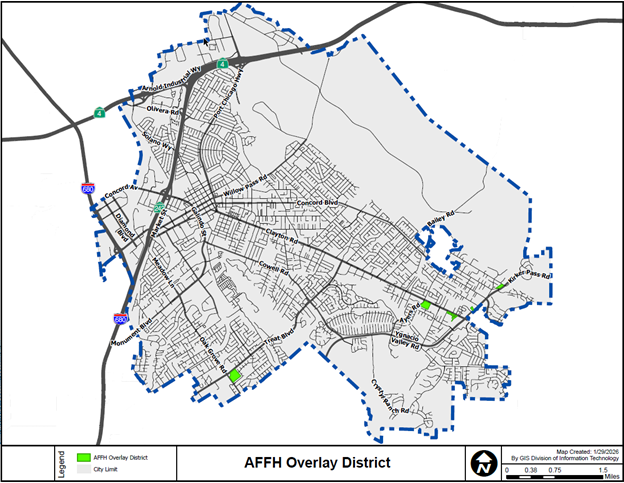
Figure 18.120.030(A) – AFFH Overlay District
The properties, or portions of properties, that shall be subject to the AFFH overlay district are limited to their acreage, configuration, and boundaries as set forth in Figure 18.120.030(A) and Table 18.120.030(A) as of the effective date hereof.
|
Address |
Assessor’s Parcel Number |
Acreage |
|---|---|---|
|
5100 Clayton Road |
133-111-010 |
7.850 |
|
5280 Clayton Road |
120-081-057 |
0.495 |
|
5288 Clayton Road |
120-081-078 |
0.757 |
|
5350 Clayton Road |
120-081-018 |
0.575 |
|
5354 Clayton Road |
120-081-075 |
0.546 |
|
5356 Clayton Road |
120-081-076 |
1.261 |
|
5358 Clayton Road |
120-081-058 |
0.504 |
|
780 Oak Grove Road |
134-400-002 |
12.863* |
|
1539 Kirker Pass Road |
117-170-017 |
0.937 |
|
5390 Myrtle Drive |
117-090-040 |
2.368 |
* Limited to a total of 465 units for the purposes of AFFH Overlay District regardless of the net developable acreage.
[Ord. 26-425.1 § 12 (Exh. F)].
18.120.040 Applicability.
This chapter shall apply only to housing development projects on properties or portions of a property located in the AFFH overlay district (Figure 18.120.030(A) and Table 18.120.030(A)). [Ord. 26-425.1 § 12 (Exh. F)].
18.120.050 Allowed uses and permit requirements.
The AFFH overlay district land use classifications shall be those of the underlying zoning district, except for housing development projects as noted in this section.
A. Allowed Uses.
1. Single-family, attached.
2. Multifamily.
B. Prohibited Uses. The following uses shall be prohibited:
1. Single-family, detached.
2. Single-family, detached – small lot subdivision.
3. Duplex.
C. Zoning Clearance and By-Right Development Review.
1. To qualify for zoning clearance and by-right development review, a proposed housing development project shall satisfy the following conditions:
a. Located entirely on a property or properties within the AFFH overlay district as shown on the map in Figure 18.120.030(A) and in Table 18.120.030(A).
b. Comply with the city’s objective design standards set forth in Chapter 18.152 CDC, Objective Design Standards.
c. Comply with all applicable standards and other provisions of the CMC.
d. Is not a small lot subdivision pursuant to Chapter 18.155 CMC.
D. Ground Floor. Residential uses meeting the standards of this chapter shall be allowed on the ground floor.
E. Exceptions. Housing development projects shall be subject to a use permit when any of the following apply:
1. The project is not located entirely within the AFFH overlay district;
2. The project is not in conformance with all objective design standards; or
3. The applicant requests a deviation or exception from any objective development standard as allowed by the Concord Municipal Code. [Ord. 26-425.1 § 12 (Exh. F)].
18.120.060 Development standards.
Housing development projects shall be designed, constructed, and established in compliance with the following development standards:
A. Minimum and Maximum Density.
1. Minimum Density. All housing development projects shall comply with the minimum residential density requirements described in this section regardless of the density in the underlying zoning district. Any housing development project not providing the minimum required residential density shall be prohibited.
2. Density Range. All housing development projects shall provide a density of at least 20 units per net acre, and not more than 60 units per net acre.
3. Transportation Demand Management (TDM). All housing development projects shall submit, with their development application, a TDM plan to reduce vehicle miles traveled which must include all of the following:
a. New Resident Welcome Packet. Provide new residents or owners with packet including transit maps, bike routes, transit pass information, and TDM information.
b. Enhanced Pedestrian Access. Ensure direct, ADA-compliant sidewalk connectivity to the two closest transit stops.
c. Electric Vehicle (EV) Infrastructure. Install EV-ready conduit for at least 25 percent of the required parking and provide EV chargers for at least 10 percent of the required parking.
4. Exceptions.
a. The property defined in Exhibit H to Ordinance No. 26-425.1, which has an address at the time of adoption of 780 Oak Grove Road, is limited to a total of 465 units for the purposes of the AFFH overlay district regardless of the net developable acreage.
b. Property divided by AFFH Overlay District boundaries. The provisions of CDC 18.15.040, but not including CDC 18.15.040(C), shall apply to any housing development project located partially within the AFFH overlay district. The following standard shall apply in lieu of CDC 18.15.040(C):
If a housing development project is not entirely located within the AFFH overlay district, then the total number of dwelling units and maximum floor area may be distributed to portions of the area located outside of the AFFH overlay district, but not vice versa. In no event shall the density and intensity exceed those set forth in this chapter.
|
Standard |
AFFH Overlay District |
Additional Standards |
|---|---|---|
|
Density (du/net acre) minimum/maximum |
20 – 60 |
|
|
Floor Area Ratio, Nonresidential and Mixed-Use Projects |
As allowed in the underlying zoning district |
|
|
70% |
|
|
|
Lot Area (square feet) minimum |
5,000 |
|
|
Lot Width (feet) minimum |
50 |
|
|
Lot Depth (feet) minimum |
100 |
|
|
Building Height (feet) maximum |
40 |
|
|
Setbacks (feet) minimum |
|
|
|
Front |
10 |
|
|
Corner Side |
10 |
|
|
Interior Side, Rear |
10 |
See CDC 18.150.180 (Transitional requirements). |
|
Open Space/Unit (square feet) minimum |
200 |
See CDC 18.150.100, Open space and recreational facilities for residential developments. |
(1) Chapter 18.152 CDC, Objective Design Standards.
(2) Additional requirements may apply pursuant to Chapter 18.155 CDC (Standards for Small Lot and Medium Density Development) and Division V of this title (Standards for Specific Uses). Lot area, width, depth, and setback limits listed here do not apply if a site is subdivided into multifamily fee simple/condominium units or small residential lots.
[Ord. 26-425.1 § 12 (Exh. F)].
18.120.070 Review authority.
The planning division shall be the review authority for housing development projects pursuant to this chapter, except for small lot housing development projects, which shall be processed pursuant to Chapter 18.155 CDC.
The planning division may deny or approve housing development projects with generally applicable conditions of approval which are set by the planning manager effective at the time of project application or required to bring the project into compliance with objective standards. The planning division may refer the application to the design review board, zoning administrator, or planning commission for review on compliance with objective standards. [Ord. 26-425.1 § 12 (Exh. F)].
18.120.080 Relationship with Density Bonus Law and other laws.
A. Eligibility for Density Bonus Law waivers, incentives and concessions, the city’s affordable housing incentive program and the affordable housing overlay district shall not be limited by the applicability of this chapter.
B. Subdivision Regulations. CMC Title 17 establishes regulations for the subdivision of land. Where conflict exists between the AFFH overlay district and the provisions of CMC Title 17, the provisions of CMC Title 17 shall control.
C. In the event of a conflict between the standards set forth in the AFFH overlay district and the underlying zoning district, the provisions in this chapter shall control for a housing development project. [Ord. 26-425.1 § 12 (Exh. F)].