


Chapter 15.05
OFF-STREET PARKING AND LOADING REQUIREMENTS* Revised 1/23 Revised 7/23
Sections:
15.05.010 Purpose.
15.05.020 Categories of uses and conditions of uses covered by chapter.
15.05.030 Location of off-street parking.
15.05.040 Parking standards for specific activities. Revised 1/23 Revised 7/23
15.05.050 Drive-in businesses.
15.05.060 Loading space.
15.05.070 Off-street parking regulations for downtown commercial and downtown commercial enterprise districts.
15.05.080 Size and design standards.
15.05.090 Overhang exception, landscaping, paving, wheel stops, drainage, lighting, and curbing.
15.05.100 Off-street parking plans.
15.05.110 Electric vehicle charging station spaces.
*Cross reference(s) – Parking regulations, ch. 9.38.
15.05.010 Purpose.
A. It is the purpose of this chapter to specify the off-street parking and loading requirements for all uses permitted in this title, and to describe design standards and other required improvements.
B. The planning director shall have the authority to waive or modify specific requirements of this chapter or to impose additional off-street parking requirements in unique circumstances to ensure that the intent of this chapter is met and to allow for flexibility and innovation in design. Unique circumstances may include, but are not limited to the following:
1. Proximity to transit stations, transfer points, or transit stops;
2. Flexible work hour scheduling for employees;
3. Documentation of parking patterns and demand of employees and patrons;
4. Physical circumstances of the site such as topography, lot size/shape, and environmentally sensitive areas.
(Ord. No. 3409, § 39, 7-7-98)
15.05.020 Categories of uses and conditions of uses covered by chapter.
A. New construction. New construction is covered by this chapter as follows:
1. Buildings constructed or enlarged.
2. Other structures or use areas constructed or enlarged.
3. Parking lots constructed or enlarged as follows:
a. If new or adding the equivalent of 50 percent or more of the existing parking lot area, the entire parking facility must meet the standards of this title.
b. If adding less than 50 percent of the existing parking lot area, only the new portion must meet the standards of this title.
B. Change in use. When the occupancy of any land use, structure, or building, or any part of a building, structure, or land use, is changed to another use, parking shall be provided to meet the parking requirements of the new use, with the following exceptions:
1. Change of use from warehousing and distribution to manufacturing uses.
2. Change of use from warehousing and distribution to complexes which include a combination of uses, including a mixture of office, storage, commercial, and manufacturing uses.
3. Change of use from warehousing and distribution to research, development, and testing.
(Ord. No. 4355, § 7 (Exh. G), 3-3-20)
15.05.030 Location of off-street parking.
A. Single-family dwellings. Required parking for a single-family dwelling shall be located on the same lot as the building it is to serve.
B. Multifamily dwellings. Required parking for multifamily dwellings may be on a contiguous lot if located within five hundred (500) feet of the dwelling units. The lot shall be legally encumbered by an easement or other appropriate means to ensure continuous use of the parking facilities. Documentation shall require review and approval of the city attorney.
C. Other uses. For uses other than those described in subsections (A) and (B) of this section, required parking may be in areas other than on the premises if the additional required amount of parking area is set aside for a particular use in another lot located within five hundred (500) feet of the premises. The lot or area to be utilized shall be legally encumbered by an easement or other appropriate means to ensure continuous use of the parking facilities. Documentation shall require review and approval of the city attorney.
(Ord. No. 4043, § 1, 8-21-12)
15.05.040 Parking standards for specific activities. Revised 1/23 Revised 7/23
A. Standards for the number of parking spaces for specific activities are indicated in the following chart:
|
SPECIFIC LAND USE |
PARKING SPACE REQUIREMENT |
|---|---|
|
Living activities |
|
|
Single-family |
Two parking spaces per single-family dwelling. |
|
Duplex |
Two parking spaces per dwelling unit. |
|
Multifamily1, 2, 3, 4 |
One parking space per unit for efficiency apartments in all sized developments; two parking spaces for each dwelling unit for developments with 49 or less dwelling units; one and eight-tenths parking spaces per dwelling unit for developments of 50 or more dwelling units. |
|
One off-street parking space per accessory unit is required in addition to the required parking for the single-family home. No off-street parking is required if principal single-family dwelling is within one-quarter-mile distance of a major transit stop as defined by RCW 36.70A.696. The planning director may waive this requirement where there are special circumstances related to the property, its location, and the right-of-way. The surface of a required ADU off-street parking space shall comply with KCC 15.05.090(E). |
|
|
Boardinghouses and lodging houses |
One parking space for the proprietor, plus one space per sleeping room for boarders or lodging use, plus one additional space for each four persons employed on the premises. |
|
Mobile and manufactured home parks |
Two parking spaces for each mobile home site. |
|
Recreational vehicle park |
One parking space for each site. |
|
Hotels5 |
One parking space for each guest room, plus two parking spaces for each three employees. |
|
Commercial activities |
|
|
Banks6 |
One parking space for each 200 square feet of gross floor area, except when part of a shopping center. |
|
Professional and business offices6 |
One parking space for each 250 square feet of gross floor area, except when part of a shopping center. |
|
Shopping centers7 |
Four and one-half spaces per 1,000 square feet of gross leaseable area (GLA) for centers having GLA of less than 400,000 square feet, and five spaces per 1,000 square feet of GLA for centers having a GLA of over 400,000 square feet. |
|
Restaurants, nightclubs, taverns and lounges8 |
One parking space for each 100 square feet of gross floor area, except when part of a shopping center. |
|
Retail stores, supermarkets, department stores and personal service shops9 |
One parking space for each 200 square feet of gross floor area, except when located in a shopping center. |
|
Other retail establishments; furniture, appliance, hardware stores, household equipment service shops, clothing or shoe repair shops10 |
One parking space for each 500 square feet of gross floor area, except when located in a shopping center. |
|
Drive-in business11 |
One parking space for each 100 square feet of gross floor area, except when located in a shopping center. |
|
Uncovered commercial area, new and used car lots, plant nursery |
One parking space for each 5,000 square feet of retail sales area in addition to any parking requirements for buildings, except when located in a shopping center. |
|
Motor vehicle repair and services |
One parking space for each 400 square feet of gross floor area, except when part of a shopping center. |
|
Industrial showroom and display |
One parking space for each 500 square feet of display area. |
|
Bulk retail stores |
One parking space for each 350 square feet of gross floor area. |
|
Industrial activities |
|
|
Manufacturing and industrial uses, including warehouses, storage buildings, and speculative warehouse and industrial buildings with multiple use or tenant potential |
One parking space for each 1,000 square feet for 90% of the gross floor area, and one parking space per 250 square feet for 10% of the gross floor area. When total of uses other than manufacturing and industrial exceeds 10% of the gross floor area, the parking requirements for those uses shall apply. |
|
Recreation-amusement activities |
|
|
Auditoriums, theaters, places of public assembly, stadiums, and outdoor sports areas12 |
One parking space for each four fixed seats, or one parking space for each 100 square feet of floor area of main auditorium or of principal place of assembly not containing fixed seats, whichever is greater. |
|
Bowling alleys13 |
Five spaces for each alley, except when located in a shopping center. |
|
Dance halls and skating rinks14 |
One parking space for each 200 square feet of gross floor area, except when located in a shopping center. |
|
Golf driving ranges |
One parking space for each driving station. |
|
Miniature golf courses |
One parking space for each hole. |
|
Recreational buildings, whether independent or associated with a multifamily complex |
One parking space for each 200 square feet of gross floor area. Such spaces shall be located adjacent to the building and shall be designated for visitors by signing or other special markings. |
|
Educational activities |
|
|
Senior high schools, public, parochial, and private |
One space for each employee plus one space for each 10 students enrolled. In addition, if buses for the transportation of children are kept at the school, one off-street parking space shall be provided for each bus, of a size sufficient to park each bus. One additional parking space for each 100 students shall be provided for visitors in the vicinity of or adjacent to the administration portion of the building or complex. Such parking spaces shall be so designated by signing or other special marking as approved by the traffic engineer. |
|
Colleges and universities and business and vocational schools15 |
Two and one-half parking spaces for each employee, plus one space for each three students residing on campus, plus one space for each five day students not residing on campus. In addition, if buses for transportation of students are kept at the school, one off-street parking space shall be provided for each bus, of a size sufficient to park each bus. One additional parking space for each 100 students shall be provided for visitors in the vicinity of or adjacent to the administration portion of the building or complex. Such parking spaces shall be so designated by signing or other special marking as approved by the traffic engineer. |
|
Elementary and junior high |
One parking space for each employee, plus one parking space for every 50 student capacity (Capacity means the designed capacity of the school, even if actual enrollment varies by year). In addition, if buses for transportation of students are kept at the school, one off-street parking space shall be provided for each bus, of a size sufficient to park each bus. Consideration for student loading/unloading and pick-up/drop-off areas shall be integrated in the site plan. |
|
Libraries and museums |
One parking space for each 250 square feet in office and public use. |
|
One parking space for each employee, plus loading and unloading areas. |
|
|
Medical activities |
|
|
Medical and dental offices16 |
One parking space for each 200 square feet of gross floor area, except when located in a shopping center. |
|
Convalescent, nursing, and health institutions |
One parking space for each two employees, plus one parking space for each three beds. |
|
Hospitals |
One parking space for each three beds, plus one parking space for each staff doctor, plus one parking space for each three employees. |
|
Religious activities |
|
|
Churches, religious institutions, or other places of worship17 |
One space for each five seats in the main auditorium/gathering place; provided, that the spaces for any institution shall not be less than 10. One seat is equivalent to seven square feet, for institutions that do not have seats in the main gathering place. For all existing institutions enlarging the seating capacity of their auditoriums, one additional parking space shall be provided for each five additional seats provided by the new construction. For all existing institutions making structural alterations or additions which do not increase the seating capacity of the auditorium, no additional parking need be provided. |
|
Mortuaries or funeral homes |
One parking space for each 100 square feet of floor area of assembly rooms. |
|
Other uses |
For uses not specifically identified in this section, the amount of parking required shall be determined by the planning department, based on staff experience, parking required for similar uses, and, if appropriate, documentation provided by the applicant. |
1. Where enclosed garages are utilized to provide parking required by this title, an 18-foot stacking space shall be provided in front of such garage units; provided, however, the planning director shall have the authority to approve alternative plans where the developer can assure that such garage units will continue to be available for parking purposes and will not cause onsite parking or circulation problems. These assurances include but are not limited to: (a) covenants that run with the land or homeowners’ association that require garages to be utilized for the storage of vehicles, (b) maintenance of drive aisle widths of 26 feet in front of each garage unit, and (c) maintenance of minimum clearances for fire lanes on the site. Special parking for recreational vehicles will not be required as long as the facility does not permit recreational vehicles other than campers or vehicles that will fit into a normal-sized parking stall. If recreational vehicles are to be permitted on the development, they must be screened and fenced.
2. Exceptions for senior citizen apartments in multifamily buildings:
a. The multifamily parking requirement may be reduced as determined by the planning director. The planning director shall base his/her decision on a parking study that supports one or more of the following:
i. Availability of private, convenient, regular transportation services to meet the needs of the tenants;
ii. Accessibility to and frequency of public transportation;
iii. Pedestrian access to health, medical, and shopping facilities;
iv. Minimum age requirement to reside in subject apartments;
v. Special support services offered by the facility;
vi. Other documentation or standards that support a permanent reduction of parking stalls.
3. In MTC-1, MTC-2, and MCR zoning districts, a minimum of three-fourths parking space per dwelling unit, or conduct a parking feasibility study to determine need. No spaces provided for recreation vehicles.
4. For senior developments in MTC-1, MTC-2, and MCR zoning districts, one parking space for every four dwelling units, or conduct a parking feasibility study to determine need.
5. In MTC-1, MTC-2, and MCR zoning districts, one parking space for each guest room, plus two parking spaces for every five employees, or conduct a parking feasibility study to determine need.
6. In MTC-1 and MCR zoning districts, one parking space for every 400 square feet of gross floor area, except when part of a shopping center, or conduct a parking feasibility study to determine need; in MTC-2 zoning district, one parking space for every 500 square feet of gross floor area, or conduct a parking feasibility study to determine need.
7. In MTC-1 and MCR zoning districts, one parking space for every 400 square feet of gross floor area, or conduct a parking feasibility study to determine need.
8. In MTC-1 and MCR zoning districts, one parking space for every 200 square feet of gross floor area, or conduct a parking feasibility study to determine need; in MTC-2 zoning district, a minimum of one parking space for every 300 square feet of gross floor area, or conduct a parking feasibility study to determine need. No parking is required if use is 3,000 square feet or less and with a parking supply of at least 20 spaces within 500 feet or 1,000 feet of a public garage.
9. In MTC-1 and MCR zoning districts, one parking space for every 400 square feet of gross floor area, or conduct a parking feasibility study to determine need; in MTC-2 zoning district, one parking space for every 500 square feet of gross floor area, or conduct a parking feasibility study to determine need. No parking is required if use is 800 square feet or less and with a parking supply of at least 20 spaces within 500 feet or 1,000 feet of a public garage.
10. In MTC-1, MTC-2, and MCR zoning districts, one parking space for every 1,000 square feet of gross floor area, or conduct a parking feasibility study to determine need. No parking is required if use is 800 square feet or less and with a parking supply of at least 20 spaces within 500 feet or 1,000 feet of a public garage.
11. In MTC-1 and MCR zoning districts, one parking space for every 400 square feet of gross floor area, except when located in a shopping center.
12. In MTC-1 and MCR zoning districts, conduct a parking feasibility study to determine need.
13. In MTC-1 and MCR zoning districts, three parking spaces for each alley, except when located in a shopping center.
14. In MTC-1 and MCR zoning districts, one parking space for every 500 square feet of gross floor area, or conduct a parking feasibility study to determine need.
15. In MTC-1, MTC-2, and MCR zoning districts, conduct a parking feasibility study to determine need.
16. In MTC-1, MTC-2, and MCR zoning districts, a minimum of one parking space for every 400 square feet of gross floor area, or conduct a parking feasibility study to determine need.
17. In MTC-1, MTC-2, and MCR zoning districts, one parking space for every 10 seats in the main auditorium; provided, that the spaces for any church shall not be less than 10. For all existing churches enlarging the seating capacity, one additional parking space shall be provided for every 10 seats provided by the new construction.
B. Mixed occupancies or mixed use if one occupancy. In the case of two or more uses in the same building, the total requirements for off-street parking facilities shall be the sum of the requirements for the several uses computed separately; except in shopping centers, and except as provided in the mixed use overlay, KCC 15.04.200. Off-street parking facilities for one use shall not be considered as providing required parking facilities for any other use, except as permitted in subsection (C) of this section pertaining to joint use.
C. Joint use. The minimum amount of off-street parking required by subsection (A) of this section may be reduced by the planning director when shared parking facilities for two or more uses are proposed if:
1. The total parking area exceeds 5,000 square feet;
2. The parking facilities are designed and developed as a single onsite common parking facility, or as a system of onsite and offsite facilities if all facilities are connected with improved pedestrian facilities and located within 500 feet of the buildings or use areas they are intended to serve;
3. The amount of reduction in off-street parking does not exceed 10 percent per use unless it is documented that the peak parking demand hours of two or more uses are separated by at least one hour;
4. The subject properties are legally encumbered by an easement or other appropriate means which provide for continuous joint use of the parking facilities. Documentation shall require review and approval by the city attorney; and
5. The total number of parking spaces in the shared parking facility is not less than the minimum required by any single use.
D. Employee parking. Where employee parking will be maintained separately and in addition to parking for the general public, the regulations of this subsection shall apply:
1. Minimum parking stall sizes, aisle widths, and percentage of compact car stalls shall be as per other requirements in this chapter.
2. Employee parking must be clearly identified as such and not become parking for the general public.
3. If the employee parking is changed to parking for the general public, the normal regulations for off-street parking shall be in force.
4. Employee parking shall not be in lieu of parking requirements per activity as stated in this section.
E. Temporary parking facilities. Temporary parking facilities may be permitted by the planning director when it has been shown that:
1. The existing use of the subject property has adequate legal nonconforming parking or that existing parking conforms to the applicable standards of this title.
2. The temporary parking facility is primarily intended to serve the public at large and not the existing use on the property.
3. The temporary parking facility serves a public need.
4. The temporary facility meets the following minimum standards:
a. There shall be a minimum of 285 square feet gross area per stall.
b. The pavement section shall be a minimum of four inches of five-eighths-inch minus C.R. crushed rock with bituminous surface treatment, subject to engineering department review.
c. Onsite drainage control and detention shall be provided per the drainage ordinance.
d. Ingress and egress and interior circulation and perimeter control shall be subject to traffic engineer approval.
F. Compact car parking.
1. Parking stall size shall be a minimum of eight feet by 16 feet. Aisle width shall be per the requirements of KCC 15.05.080 and Diagram No. 1 following KCC 15.05.100.
2. Compact car parking spaces shall be clearly identified by signing or other marking as approved by the city engineer.
3. Compact car parking spaces shall not exceed 30 percent of the total required parking, and shall be distributed throughout the entire parking area. For parking lots of more than 20 stalls, up to 50 percent of the total required parking may be compact car parking spaces. Compact stalls cannot be located along a fire lane in lots where the percentage of compact stalls exceeds 30 percent, unless approved by the fire marshal.
4. See KCC 15.05.080 and diagram No. 1 following KCC 15.05.100 for typical compact car stall arrangements.
G. Transit and rideshare provisions.
1. The planning director may reduce the minimum number of off-street parking stalls for businesses which have a commute trip reduction program filed with the city. Based upon a review of this program and input from other staff members, a reduction of up to 20 percent of the minimum standard may be approved. Any reduction in the amount of required parking is only valid for as long as the approved CTR program is in effect. An invalidated program or a change in use or operations would result in the application of the underlying standards per subsection (A) of this section.
2. The planning director may reduce the number of required off-street parking stalls for businesses which do not have a commute trip reduction program by one stall for every two car pool stalls, and/or one stall for every one van pool stall if:
a. Reserved rideshare parking is located convenient to the primary employee entrance;
b. Reserved areas are clearly marked by signs for use by approved and qualified rideshare vehicles;
c. The use of reserved areas for rideshare parking is actively enforced by the employer; and
d. The total reduction in the number of parking stalls does not exceed 10 percent of the required stalls.
(Ord. No. 2942, § 2, 9-4-90; Ord. No. 3050, § 5, 7-7-92; Ord. No. 3175, § 3, 7-19-94; Ord. No. 3251, § 11, 11-21-95; Ord. No. 3279, § 1, 3-5-96; Ord. No. 3333, § 2, 1-22-97; Ord. No. 3409, § 40, 7-7-98; Ord. No. 3439, § 3, 2-2-99; Ord. No. 4011, § 19, 12-13-11; Ord. No. 4043, § 2, 8-21-12; Ord. No. 4355, § 7 (Exh. G), 3-3-20; Ord. No. 4456, § 8, 12-13-22; Ord. No. 4464, § 8, 5-16-23)
15.05.050 Drive-in businesses.
All banks, savings and loan associations, cleaning establishments, food dispensing establishments, and other businesses which maintain drive-in facilities which are intended to serve customers who remain in their motor vehicles during the business transactions, or are designed in such a manner that customers must leave their automobiles temporarily in a driving line located adjacent to the facility, shall provide stacking space for the stacking of motor vehicles as follows:
A. Stacking space. The drive-in facility shall be so located that sufficient stacking space is provided for the handling of motor vehicles using such facility during peak business hours of such a facility.
B. Driveway location. Entrances and exits shall not be so located as to cause congestion in any public right-of-way.
C. Businesses located in shopping centers. When located in a shopping center, drive-in facilities shall provide sufficient stacking space to handle peak business demands and shall not in any way obstruct the normal circulation pattern of the shopping center.
15.05.060 Loading space.
For all buildings hereafter erected, reconstructed, or enlarged, adequate permanent off-street loading space shall be provided if the activity carried on is such that the building requires deliveries to it or shipments from it of people or merchandise. Such space shall be shown on a plan and submitted for approval by the planning department and the city engineer. No portion of a vehicle taking part in loading, unloading, or maneuvering activities shall project into a public street, alley, or interior pedestrian area. Loading space or maneuvering areas shall be in addition to required off-street parking spaces.
A. Relationship of loading space to residential areas. Loading berths shall be located not closer than fifty (50) feet to any residential district, unless wholly enclosed within a building, or unless screened from such residential area by a wall or uniformly painted fence not less than six (6) feet in height.
B. Relationship to open space. Space for loading berths may occupy all or any part of any required setback or open space as long as the loading berth is uncovered. A covered loading area shall comply with the minimum setback requirements for the district.
C. Types of uses for which loading space shall be provided. Loading space shall be provided for the following types of buildings or businesses: warehouses, supermarkets, department stores, office buildings with a floorspace in excess of twenty thousand (20,000) square feet, industrial or manufacturing establishments, freight terminals, railroad yards, mortuaries, and such other commercial and industrial buildings which, in the judgment of the planning director, are similar in nature in regard to loading space requirements.
D. Required maneuvering areas.
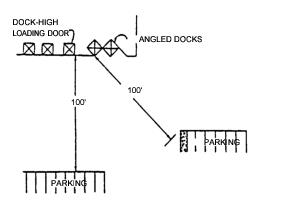
1. For buildings with dock-high loading doors. Buildings which utilize dock-high loading doors shall provide a minimum of one hundred (100) feet of clear maneuvering area in front of each door. See the following diagram:
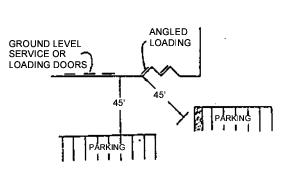
2. Maneuvering area for buildings with ground-level loading doors. Buildings which utilize ground-level service or loading doors shall provide a minimum of forty-five (45) feet of clear maneuvering area in front of each door. See the following diagram:
3. The maneuvering area shall be designed to accommodate the maximum length of vehicle to be served, as identified on a vehicle maneuvering diagram or other site plan measurements, and shall show no encroachment of maneuvering into a public street, opposing lane of a two-way driveway, or within three (3) feet of any required parking stalls. The following standards and minimum distances shall also apply (see Diagram 2):
a. When dock-high doors of one building face dock-high doors of another building, the minimum distance between buildings shall be one hundred sixty-four (164) feet;
b. When dock-high doors of one building face ground-level doors of another building, the minimum distance between buildings shall be one hundred twenty-six (126) feet;
c. When ground-level doors of one building face ground-level doors of another building, the minimum distance between buildings shall be sixty-five (65) feet;
d. A joint access and maneuvering easement is required;
e. The maneuvering area is measured from face of building to face of building. Except for trucks parked at the loading dock, no parking, landscaping, or other obstruction shall be located within the maneuvering area;
f. The fire lane shall be at least twenty-six (26) feet wide and marked and striped per requirements in the fire code, Chapter 13.01 KCC, as amended.
E. Driveways. Ingress and egress points from public rights-of-way (driveways) shall be designed and located in such a manner as to preclude offsite or on-street maneuvering of vehicles.
(Ord. No. 4043, § 3, 8-21-12)
15.05.070 Off-street parking regulations for downtown commercial and downtown commercial enterprise districts.
It is the purpose of this section to recognize the pedestrian-oriented nature of downtown activities while also recognizing the need for off-street parking facilities to eliminate traffic congestion. For the purpose of regulating off-street parking, there shall be two (2) divisions of the downtown commercial enterprise district, one (1) for the area west of the Burlington Northern Railroad tracks, and one (1) for the area east of the tracks.
A. Downtown commercial district. No off-street parking shall be required in this district, excepting that one (1) parking space per unit is required for multifamily residential development. No more than three (3) off-street surface parking spaces per one thousand (1,000) square feet of gross floor area are permitted for nonresidential development. This parking maximum does not apply to structured parking. The downtown commercial district is the core area of downtown which should be pedestrian-oriented. In addition, the property owners in the downtown commercial district have provided off-street parking through local improvement district assessments.
B. Downtown commercial enterprise district – West of the Burlington Northern Railroad tracks. Off-street parking shall be provided and shall be in accordance with the provisions of this chapter, except there may be a fifty (50) percent reduction from the parking standard requirements contained in KCC 15.05.040 and except that those properties in the downtown commercial enterprise zone who paid into parking local improvement district 260 shall be exempt from off-street parking requirements. One (1) parking space per unit is required for all multifamily residential development, except multifamily residential development for senior citizens may be further reduced as allowed by KCC 15.05.040(A)(2). No more than three (3) off-street surface parking spaces per one thousand (1,000) square feet of gross floor area are permitted for nonresidential development except that this surface parking maximum does not apply to either structured parking or properties located in the “west frame district” of the Kent downtown planning area described in KCC 15.09.046, which shall have a maximum of four and one-half (4.5) off-street surface parking spaces per one thousand (1,000) square feet of gross floor area for nonresidential development.
C. Downtown commercial enterprise district – East of the Burlington Northern Railroad tracks. Off-street parking shall be provided and shall be in accordance with the provisions of this chapter except there may be a twenty-five (25) percent reduction from the parking standard requirements contained in KCC 15.05.040. One and one-half (1.5) parking spaces per unit are required for multifamily residential development, except multifamily residential development for senior citizens may be further reduced as allowed by KCC 15.05.040(A)(2). No more than three (3) off-street parking spaces per one thousand (1,000) square feet of gross floor area are permitted for nonresidential development except that this surface parking maximum does not apply to either structured parking or properties located in the “east frame district” of the Kent downtown planning area described in KCC 15.09.046, which may have a maximum of four and one-half (4.5) off-street surface parking spaces per one thousand (1,000) square feet of gross floor area for nonresidential development if at least twenty-five (25) percent of the overall project gross floor area is comprised of residential development.
(Ord. No. 3050, § 4, 7-7-92; Ord. No. 3742, § 5, 4-19-05; Ord. No. 4043, § 4, 8-21-12)
15.05.080 Size and design standards.
A. Parking stall size. Parking stall size shall be as follows:
Standard 8.5 feet by 18 feet (1) (3)
Compact 8 feet by 16 feet (2) (3)
Parallel 9 feet by 23 feet
Notes:
1. Dimensions may include overhang. See KCC 15.05.090(H) for exceptions.
2. See Diagram No. 1 following this chapter for typical compact stall placement.
3. Parking stall length may be reduced by a maximum of two (2) feet with corresponding increases in aisle width.
B. Minimum design standards and typical parking stall arrangements. For minimum design standards and typical parking stall arrangements, see the diagrams at the end of this chapter.
C. Units of measurement.
1. Benches. In stadiums, sports arenas, churches, and other places of assembly in which patrons or spectators occupy benches, pews, or other similar seating facilities, each twenty (20) inches of width of such seating facilities shall be counted as one (1) seat for the purpose of determining requirements for off-street parking facilities under this title.
2. Fractions. When a unit of measurement determining the number of required parking spaces results in the requirement of a fractional space, any fraction up to but not including one-half (1/2) shall be disregarded and fractions one-half (1/2) and over shall require one (1) parking space.
(Ord. No. 4043, § 5, 8-21-12)
15.05.090 Overhang exception, landscaping, paving, wheel stops, drainage, lighting, and curbing.
A. Landscaping generally. The landscaping requirements of Ch. 15.07 KCC shall apply with respect to off-street parking facilities.
B. Landscape islands. Landscape islands with a minimum size of one hundred (100) square feet shall be located in the following areas to protect vehicles and to enhance the appearance of parking areas:
1. At the ends of all parking rows.
2. Where loading doors or maneuvering areas are in close proximity to parking areas or stalls.
C. Additional parking lot landscaping. Parking, maneuvering, and loading areas of over twenty thousand (20,000) square feet shall have a minimum of ten (10) percent of the parking area, maneuvering area, and loading space landscaped as a means to reduce the barren appearance of the lot and to reduce the amount of stormwater runoff. Perimeter landscaping, required adjacent to property lines, shall not be calculated as part of the ten (10) percent figure.
D. Low impact design (LID) stormwater management facilities, in accordance with the LID Technical Guidance Manual for Puget Sound (current edition) and applicable city codes, are encouraged to be integrated with parking lot landscaping. Clustering of landscaping is permitted to encourage larger planting areas for LID.
E. Paving.
1. All vehicular maneuvering areas, including but not limited to off-street parking areas, truck and mobile equipment loading, unloading, storage, and maneuvering areas, and related accesses to and from public right-of-way shall be paved with asphalt or equivalent material, to be approved by the city engineer or his/her designee. Where it is not otherwise required by codes, ordinances, and standards, permeable surfacing is encouraged where site and soil conditions make LID feasible, as determined by the city.
2. The planning director may waive the paving requirement for areas used primarily for the storage and operation of heavy equipment, tracked vehicles, trucks, and other large-tire vehicles, where such areas are not generally used for regular deliveries or access by the general public.
3. Single-family residential driveways shall be paved from the edge of pavement or back of sidewalk on the street serving the driveway to either the front face of the carport or garage, or the first forty (40) feet, whichever is less. All parking areas in the front yard must also be paved in accordance with subsection (E)(1) of this section.
4. Permeable pavement for surfacing above the minimum. All parking spaces and associated access driveways that are above the minimum number of spaces required by this chapter shall be constructed of permeable surfacing unless site and soil conditions make permeable surfacing infeasible, as determined by the city. Permeable surfacing shall be designed and constructed in accordance with the LID Technical Guidance Manual for Puget Sound (current edition), the manufacturer’s recommendation, and any applicable city codes and standards. Single-family residential development is exempt from this requirement. Permeable paving is not appropriate in the following circumstances:
a. Fire lanes, unless the developer provides certification from the manufacturer that the material is capable of meeting fire access requirements;
b. Gas stations, truck stops, industrial chemical storage areas, or other locations where concentrated pollutant spills are a hazard;
c. Parking lot surfaces with a slope more than five (5) percent;
d. Where excessive sediment is likely to be deposited on the surface, such as construction and landscaping material storage areas, or where an erosion prone area is upslope of the permeable surface;
e. Where seasonally high ground water creates prolonged saturation at or near the surface, or where soils can become instable when saturated; and
f. In any other situation or application where, based on accepted engineering practice or standards, the city determines that permeable paving is inappropriate.
F. Wheel stops. Wheel stops, a minimum of two (2) feet from any obstruction or the end of the parking stall, shall be required in the following locations:
1. Where the parking stall abuts a building or where vehicles may overhang a property line.
2. Where the parking stall abuts a pedestrian walkway of less than six (6) feet in width.
3. Where a parking stall abuts any physical object which may be impacted (i.e., light standards, fire hydrants, fences, power vaults, utility poles, etc.).
4. Where a hazardous grade difference exists between the parking area and the abutting property.
5. Where other hazardous situations may exist as determined by the city engineer.
G. Lighting. Any lighting of a parking lot or storage area shall illuminate only the parking lot or storage area. All lighting shall be designed and located so as to avoid undue glare or reflection of light onto adjoining properties or public rights-of-way.
Light standards shall not be located so as to interfere with parking stalls, maneuvering areas, or ingress and egress areas.
H. Vehicle overhang exception. Where sufficient area is available to allow safe and efficient overhang of a vehicle, the planning department may permit the standard parking stall length to be reduced by two (2) feet with corresponding increase in adjacent walkway or landscaping width. A corresponding increase in adjacent landscaping is not necessary if the landscaping is at least ten (10) feet in width.
I. Concrete curb placement. In addition to wheel stop requirements as provided in subsection (F) of this section, all landscape areas within or abutting parking areas shall be separated from the paved area by concrete curbing or other acceptable method as approved by the planning director and the city engineer.
J. Parking structures. Multiple level parking structures, developed either as a single use structure or as parking incorporated into a structure, shall be designed and laid out in accordance with the dimensional and numeric requirements of this chapter.
15.05.100 Off-street parking plans.
A. Off-street parking plans shall be subject to review and approval by planning services and the city engineer or his/her designee. Planning services shall review plans for compliance with the requirements of this title. The city engineer shall review plans based upon the following criteria:
1. Safety and efficiency of interior circulation.
2. Safety of ingress and egress points.
3. Effects of access on public streets with regard to street capacity, congestion, and delay.
4. Compliance with construction standards relating to stormwater runoff.
|
Parking Space Dimensions |
|||||
|---|---|---|---|---|---|
|
|
A (angle) |
B (stall width) |
C (stall depth) |
D (aisle width, one-way) |
E (aisle width, two-way) |
|
Standard |
0° (parallel) |
9' |
23' |
12' |
20' |
|
Standard Compact |
30° |
8.5' 8' |
18' 16' |
12' 12.5' |
20' 20' |
|
Standard Compact |
45° |
8.5' 8' |
18' 16' |
14.5' 14.5' |
20' 20' |
|
Standard Compact |
60° |
8.5' 8' |
18' 16' |
17' 17' |
20' 20' |
|
Standard Compact |
90° |
8.5' 8' |
18' 16' |
24' 24' |
24' 24' |
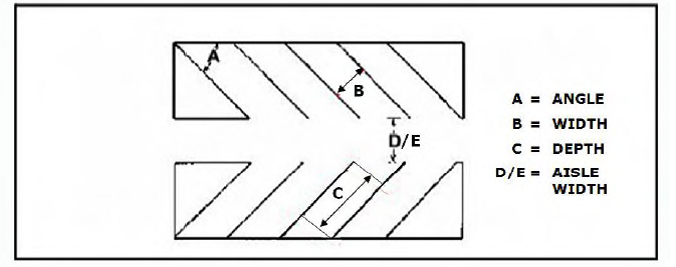
Diagram 2. Loading And Maneuvering Areas Between Loading Doors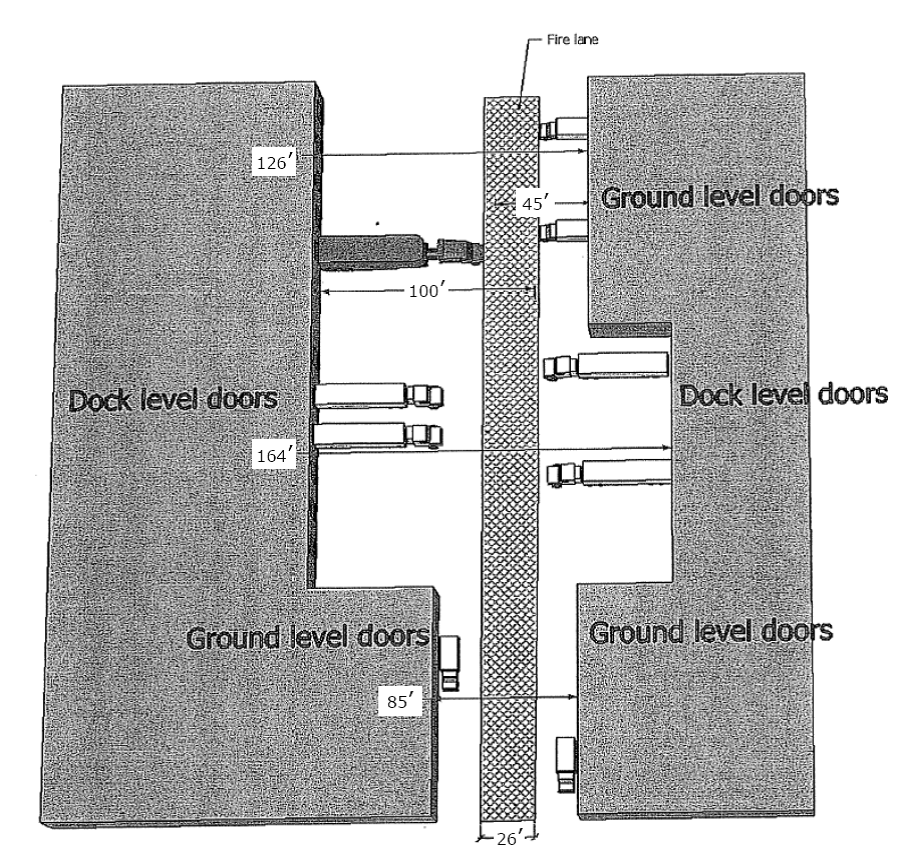
(Ord. No. 3409, § 42, 7-7-98; Ord. No. 4003, § 3, 9-20-11; Ord. No. 4043, § 7, 8-21-12)
15.05.110 Electric vehicle charging station spaces.
A. Purpose. This section applies to all public electric vehicle charging stations located in parking lots or garages.
B. Number. No minimum number of charging station spaces is required.
C. Minimum Parking Requirements. An electric vehicle charging station space may be included in the calculation for minimum required parking spaces that are required pursuant to other sections of this chapter.
D. Location and Design Criteria. The provision of electric vehicle parking will vary based on the design and use of the primary parking lot. The following required and additional locational and design criteria are provided in recognition of the various parking lot layout options:
1. Where provided, parking for electric vehicle charging purposes shall include the following:
a. Signage. Each charging station space shall be posted with signage indicating the space is only for electric vehicle charging purposes. Days and hours of operation shall be included if time limits or tow away provisions are to be enforced. Refer to the 2009 Manual on Uniform Traffic Control Devices (MUTCD) for electric vehicle and parking signs, specifically D9-11b, D9-11bP, R7-2, and R7-108. The following are examples of signage and appropriate sizes:
|
|
|
|
|
12" x 12" |
12" x 18" |
12" x 18" |
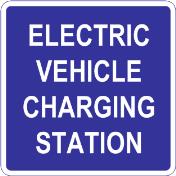
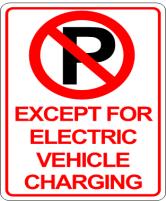
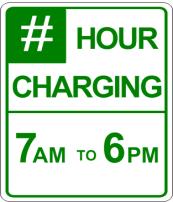
b. Maintenance. Charging station equipment shall be maintained in all respects, including the functioning of the charging equipment. A phone number or other contact information shall be provided on the charging station equipment for reporting when the equipment is not functioning or other problems are encountered.
c. Accessibility. Where charging station equipment is provided within an adjacent pedestrian circulation area, such as a sidewalk or accessible route to the building entrance, the charging equipment shall be located so as not to interfere with accessibility requirements of WAC 51-50-005.
d. Lighting. Where charging station equipment is installed, adequate site lighting shall exist, unless charging is for daytime purposes only.
e. Charging Station Equipment. Charging station outlets and connector devices shall be no less than 36 inches and no higher than 48 inches from the surface where mounted, and shall contain a retraction device or a place to hang permanent cords and connectors sufficiently above the ground or paved surface.
f. Charging Station Equipment Protection. Except for parallel parking stalls, adequate equipment protection, such as wheel stops or concrete-filled steel bollards, shall be used. Curbing may be used in lieu of wheel stops or bollards, if equipment is set back a minimum of 24 inches from the face of the curb.
2. Parking for electric vehicles should also consider the following:
a. Notification. Information on the charging station, identifying voltage and amperage levels and any time of use, fees, or safety information.
b. Signage. Installation of directional signs at the parking lot entrance and at appropriate decision points to effectively guide motorists to the charging station space(s). Refer to the 2009 Manual on Uniform Traffic Control Devices (MUTCD) for electric vehicle and directional signs, specifically D9-11b, D9-11bP and M6-1. The following are examples of signage and appropriate sizes:
|
|
12" x 12" |
|
12" x 12" |
|
|
12" x 6" |
|
12" x 6" |
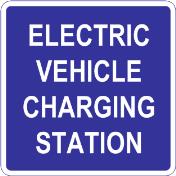



(Ord. No. 3976, § 3, 10-19-10)