


Chapter 17.621
SIGNS
Sections:
ARTICLE I.
17.62.010 Title and authority.
17.62.020 Findings and purposes.
17.62.050 General rules and interpretation.
ARTICLE II.
17.62.060 Signs exempt from a sign permit.
17.62.080 Applications, fees, processing, review, approvals--All signs.
ARTICLE III.
17.62.090 Temporary signs located outside the historical commercial zoning district.
17.62.100 Permanent sign standards outside the historical commercial district.
17.62.110 Signs requiring a conditional use permit--Special findings.
17.62.120 Sign standards for the historical commercial (HC) zoning district.
ARTICLE IV.
17.62.130 Requests for exceptions.
17.62.140 Findings for approval of an exception.
ARTICLE V.
17.62.160 Unsafe/hazardous signs.
17.62.170 Abandoned signs--Removal.
17.62.180 Nonconforming signs--Permitted when.
17.62.190 Nonconforming, abandoned or illegal signs--Removal.
ARTICLE I.
17.62.010 Title and authority.
A. Title. This chapter shall be known and cited as the "City of Angels Sign Regulations."
B. Authority. This chapter is adopted pursuant to the authority vested in the city of Angels and the state of California, including but not limited to: the State Constitution, California Government Code Sections 38774, 38775, 65850 et seq. and 65850(b), California Business and Professions Code Sections 5200 et seq. and 5490 et seq., and California Civil Code Section 713 and other applicable state laws. (Ord. 552 (Att. A), 2025)
17.62.020 Findings and purposes.
A. Findings. The city of Angels hereby finds as follows:
The city character is associated with its rural small-town charm, distinctive architecture, and historic tradition. Signs have a strong visual impact on this character. As a prominent part of the scenery, they attract or repel the viewing public, affect the safety of vehicular traffic, and their appearance, size, and placement help set the tone of the community. Since the city relies on these characteristics to attract commerce, aesthetic considerations assume economic value. It is the intent of the city, through this chapter, to protect and enhance the city’s historic, commercial, small-town and residential character and, therefore, its economic base through the provision of appropriate and visually appealing signage. In addition, it is the intent of the city to standardize sign requirements in order to minimize their distracting effect on drivers and thereby improve traffic safety.
B. Purposes. The purposes of these sign regulations are to:
1. Ensure that signs are designed, constructed, installed, located and maintained according to minimum standards to safeguard life, health, property and public welfare;
2. To protect and enhance the city’s unique character minimizing visual distractions and sign proliferation that can detract from the unique character of the city and its built environment;
3. Provide reasonable sign standards:
a. To encourage their effective and attractive use as a means of identification, rather than for advertising, businesses, services, events, and uses enhancing economic values while minimizing unnecessary sign competition;
b. Attract and direct the public to available activities, goods, and services;
c. For consistency with community goals and policies expressed in the general plan and adopted specific plans;
d. Consistent with state and federal laws, including outdoor advertising regulations applicable to state highways;
4. Ensure that the designs of signs are architecturally compatible with affected structures and the character of surrounding development in order to maintain the overall quality of a neighborhood or commercial district;
5. Protect public safety by ensuring that official traffic regulation devices are easily visible and free from nearby visual obstructions and distractions (e.g., attention-getting signs, excessive numbers of signs, signs resembling official signs);
6. Protecting the right of free speech by enacting regulations to regulate the time, place and manner under which signs are permitted, and not the content of signs. Although examples of content may be provided in these regulations, content will not be used as a basis for determining whether or not a proposed sign may be permitted. (Ord. 552 (Att. A), 2025)
17.62.030 Definitions.
For the purpose of this chapter, the following words and phrases have the meanings respectively ascribed to them as follows:
"A-frame sign," "portable sign" and "sandwich board sign" shall mean portable signs capable of standing without support or attachment and intended to be placed outside and returned to the inside of a building at the start and end of each business day. An A-frame sign is a double-sided sign attached at an apex whose legs provide a frame for plywood panels.
"Aggregate total glass surface area" shall mean the product of multiplying the length times the width of the storefront glass surface along a single building elevation with the proviso that window panel separations (mullions, grids, etc.) that are less than six inches wide shall be counted within the aggregate total glass surface area available for signage, and window panel separations or building structural elements separating windows that are greater than six inches shall not be included within the aggregate total glass surface area available for signage. In case of stores with more than one building elevation with window glass, the aggregate total glass surface area available for the placement of signage shall be calculated based on the dimensions of each individual elevation. Unused amounts of aggregate total glass surface area from one elevation shall not be applied to any other elevation.
"Amenity sign" means a wall-mounted or freestanding sign that promotes features and/or services of a commercial business.
"Animated sign" shall mean a sign with motion, flashing lights, or changes in color or intensity utilizing electricity or other sources of energy. This definition shall not include a sign which tells only time and temperature in alternating sequences.
Apartment Community. The term "apartment community" shall mean an apartment project which consists of a minimum of eight apartment units located on the same lot, which are for rent only.
"Area of sign" shall mean in computing maximum permissible sign area or display surface the overall display surface of a sign shall be included, or the largest face of a double sign and not the aggregate of display faces. The area of a sign without a border shall be computed by enclosing the entire sign within sets of parallel lines touching the outer limits of the sign message and computing the area thus enclosed.
"Awning" shall mean a structure composed of canvas or other noncanvas materials, except for the supporting framework, which extends from the exterior wall of a building.
"Awning sign" shall mean a sign composed of flexible materials and incorporated into an awning.
"Balloon" shall mean any inflatable sign or balloon regardless of size that is designed to be used as an advertising device for any business or promotional event.
"Banner sign" shall mean a temporary sign composed of lightweight, flexible, nonrigid material either enclosed or not enclosed in a rigid frame. "Banner signs" do not blow or move in the wind and are generally attached to a structure at four corners.
"Billboard" shall mean, in the city of Angels, an outdoor advertising device typically ranging in size from ten feet by thirty-six feet to fourteen feet by forty-eight feet in size. Billboards typically advertise a single entity.
"Blade sign" shall mean a pedestrian-oriented, non-internally illuminated double-faced sign, comprised of one individual panel, projecting from the building wall on which it is mounted. A blade sign cannot exceed a total of five square feet of signage per side, and cannot project more than thirty-six inches from the building wall on which it is mounted.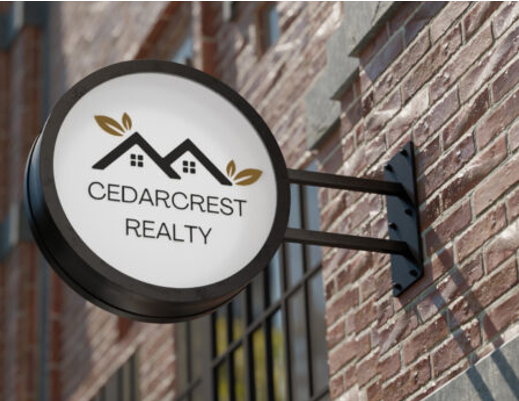
"Building facade" shall mean that portion of any exterior elevation of a building extending from grade to eaves, parallel to the street and extending the entire width of the building. Any area of the facade made up of false fronts and/or parapets cannot be included in the facade calculation for sign area.
"Building front" shall mean the wall surface facing the primary street. In case of a corner business, it shall be at the discretion of the owner which building face shall be considered the front.
"Bulletin board sign" shall mean an exterior sign used to display announcements pertaining to an on-site church, school, community center, park, hospital, or institutional building.
"Business front" shall mean the side of a building that contains the principal entrance. For a shopping center, multiple business fronts may exist.
"Business sign" shall mean any structure, housing sign, device, figure, painting, display, message placard, or other contrivance, or any part thereof, which has been designed to advertise, or to provide data or information in the nature of advertising, for any of the following purposes:
1. To designate, identify, or indicate the name or business of the owner or occupant of the premises upon which the business sign is lawfully erected.
2. To advertise the business conducted, services available or rendered, or goods produced, sold, or available for sale upon the property where the business sign has been lawfully erected.
"Canopy" shall mean a roof of a building or a fixed overhead shelter used as a roof, which may or may not be attached to a building.
"Canopy sign" shall mean a sign attached to, written on, or hung from a canopy.
"Changeable message board" or "changeable message sign" shall mean a programmable electronic sign temporarily used by the city of Angels, Caltrans, or authorized construction contractors to direct traffic during construction, temporary road closures or detours, emergencies, special events or related public functions or events.
"Civic sign" shall mean a sign, other than a commercial sign, posted to advertise a civic event, public agency, school, church, civic-fraternal organization or similar noncommercial organization.
"Coming soon sign" shall mean a sign placed on the site of work under construction stating that a business will be opening soon and denoting the opening date, architect, engineer, contractor, future business or lending agency.
"Construction sign" shall mean a temporary sign with the names of the architects, engineers, contractors, subcontractors and financing agencies of buildings and structures being constructed upon the site on which the sign is located.
"Corner triangle" shall mean the triangular area created by a line connecting points along the front and side lot lines which points are established forty feet in distance from the intersection of the extension of such front and side lot lines within the street right-of-way, and by a line connecting points along the front lot line and driveway apron, which points are established ten feet in distance from the intersection of the extension of such front lot line and driveway apron within the perpendicular to the street right-of-way.
"Corporate flag" shall mean a flag identifying a business or firm.
"Directional tract sign" shall mean an off-site temporary sign containing only the name and location of a subdivision and/or a multiple-family residential project and directions for reaching the project.
"Double-faced sign" shall mean a sign with more than one face located on the same base or support structure and the sign advertising faces are back-to-back so that both faces cannot be viewed from any point at the same time, and the sign faces are not more than eighteen inches apart.
"Electronic reader board sign" shall mean a business sign on which the copy is manually or electronically changed and which is intended primarily to promote items for sale or of general interest to the community. This term includes a business bulletin board, a time/temperature sign, or other changeable copy sign. See also "changeable message board," "changeable message sign."
"Erect" shall mean to build, construct, attach, hang, place, suspend or affix. Such terms also include the painting of wall signs.
"Facade" shall mean the portion of any exterior elevation of a building extending from grade to the top of the parapet wall, or eaves, parallel to the street and extending the entire width of the building.
"Feather flag" shall mean a type of temporary sign with a pole shaped similar to a feather/flag as pictured.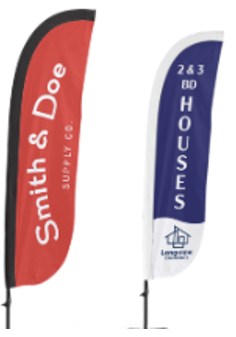
"Flashing sign" shall mean an illuminated sign in which the artificial light is not maintained in a stationary or constant intensity.
"Frontage property" shall mean the longest, single, lineal dimension of a parcel of property abutting on a public street.
"Garage sale sign" shall mean a sign that is used to advertise the sale of used or secondhand goods or merchandise at dwellings and on residentially zoned property; these sales may also be known as patio sales, yard sales, estate sales, etc.
"Grand-opening signs" shall mean banners, pennants, flags, balloons, searchlights, and advertising devices when used only for bona fide grand-opening functions.
"Height" shall mean, in determining maximum or allowed height, the distance shall be measured from base of pole, or point where base of pole would be on level ground, to top of sign.
"Historic sign" shall mean an existing sign, or refurbishing of an existing sign, or re-creation of a sign that once existed on the subject site at least fifty years ago.
"Identification sign" shall mean a sign, or device, which serves exclusively to designate the name, or the name and use, of churches, auditoriums, public buildings, or multifamily residential uses, or the use of a lawful parking area, recreation area, or other use permitted in the district.
"Illegal sign" shall mean signs and their supporting members which do not meet any of the criteria of this chapter and that are not otherwise a legal nonconforming sign.
"Illuminated sign" shall mean an internally or externally illuminated business sign which uses a source of light in order to make the message readable.
"Marquee" shall mean a fixed overhead shelter used as a roof, which may or may not be attached to a building, and which projects into or overhangs a public street or alley right-of-way.
"Marquee sign" shall mean a sign attached to or hung from a marquee and which is mounted in a vertical plane.
"Master sign program" or "master sign plan" shall mean a sign program approved by the city for a shopping center or other multi-occupant or mixed-use building.
"Mobile sign" shall mean any sign not permanently affixed to a vehicle that is used to advertise a business or service.
"Monument sign" shall mean an independent, freestanding sign structure supported on the ground by a solid base at least as wide as the sign, as opposed to being supported by poles or open braces.
"Mural" shall mean a picture or decoration which is painted on, or otherwise applied directly to, an external wall. Murals integral to the architecture of the building shall not count as signage. Murals that do not include advertising shall be considered public art.
"Neon" shall mean illumination affected by a light source consisting of a LED or neon or other gas tube which is bent to form letters, symbols or other shapes.
"Nonconforming sign" shall mean any sign installed prior to the adoption of the ordinance codified in this chapter which does not meet the specifications and requirements of this chapter.
"Office building master identification sign" shall mean a business sign that serves to identify an office building or any institutional use, and whose copy shall include only the name of the building or institutional use and the street address range of the complex.
"Official public sign" shall mean signs of a public nature, which shall include public transit service signs, utility information signs, public restroom or telephone signs, trespassing signs, city established monument signs, legal notices erected by a public officer in the performance of a public duty and signs placed by a public agency for the purpose of guiding persons to emergency centers or places, buildings, public parking areas, or locations of regional or historical significance.
"Off-site advertising sign" shall mean any sign which advertises or informs about a business organization or event, goods, products, services or uses not available on the property upon which the sign is located. Signage for a business within a shopping center under multiple ownership shall not be considered an off-site advertising sign even though it is not located on the same property as the business being advertised. The term "off-site advertising sign" does not include community identification signs, off-site residential development directional signs or off-site temporary for sale or lease signs.
"Off-site residential development directional sign" shall mean a uniformly designed sign which advertises or informs the public about a residential development where five or more dwelling units are undergoing construction.
"Off-site temporary for sale or lease sign" shall mean any off-site sign used in lieu of a freestanding sign which advertises property for sale or lease.
"On-site temporary for sale or lease sign" shall mean any on-site sign used in lieu of a freestanding sign, which advertises property for sale or lease.
"Open house sign" shall mean a portable sign used in connection with the sale of individual residential real properties.
"Pedestrian/shingle sign" shall mean a suspended sign used to identify and indicate pertinent facts concerning a business or professional services conducted on the premises.
"Pennant" shall mean any tapering flag used for signaling or identification.
"Permitting body" shall mean the person or body with the authority to review and approve permits for signs. This may include the city planner, the planning commission, or the city council.
"Pole sign" shall mean a freestanding sign supported by one or more pillars, poles or posts that is more than eight feet in height but less than twenty feet in height with sign copy or content no lower than eight feet, nor higher than eighteen feet in height.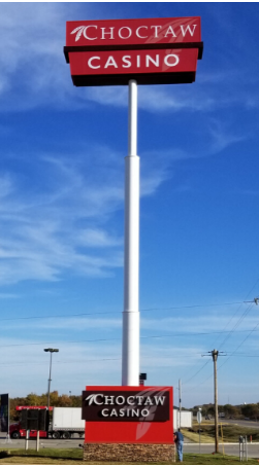
"Political sign" shall mean a sign designed for the purpose of advertising support of or opposition to a candidate or proposition for a public election.
"Projecting building sign" shall mean a wall sign which projects from and is supported by a wall or roof of a building, structure or sign structure and projects beyond the eaves of a building or overhang.
"Real estate sign" means a sign advertising real property for sale, rent, or lease, including an "open house" sign.
"Roof sign" shall mean any sign erected and constructed wholly on or over the roof of a building, supported by the roof structure, and extending vertically above the roof.
"Service station display structure" shall mean an on-site identification business sign that serves to identify the name and logo of the service station located on the site.
"Service station price sign" shall mean a business sign indicating gasoline prices and available services.
"Shopping center" shall mean any complex of separate businesses so designated by the planning commission as a shopping center.
"Sign" shall mean every sign, billboard, freestanding sign, portable freestanding sign, wall sign, roof sign, illuminated sign, projecting sign, temporary sign and street clock, and includes any announcement, declaration, demonstration, display, illustration or insignia used to advertise or promote any interest when the same is placed so that it is clearly visible to the general public from an out-of-doors position.
"Sign structure" shall mean the supports, uprights, braces and framework of a sign.
"Streamer" shall mean a long, narrow banner, flag, or pennant.
"Street address sign" shall mean the numerals of a street address for a given use or uses in a given residential or commercial building or buildings.
"Street tree" shall mean any tree planted within a city, county, or state right-of-way or on public property.
"Temporary sign" shall mean any sign, banner, pennant, valance, feather flag, campaign sign or advertising display constructed of cloth, canvas, light fabric, plastic, cardboard, wallboard or other light materials, with or without frames, intended to be displayed for a period of not more than one hundred days in a calendar year.
"Tenant directory sign" shall mean a tenant directory or other exclusively informational listing of tenant names attached to the exterior wall at the entrances of a building and used for the purpose of displaying the names and unit identifications of occupants engaged in professions or businesses on the premises.
"Tenant frontage" shall mean the linear length of a building frontage of suites occupied by a tenant.
"Vehicular sign" shall mean any sign permanently affixed to an operable or inoperable vehicle currently registered as a motor vehicle, which is used in the normal course of business.
"Wall sign" shall mean any sign attached to, painted on or erected against the wall, roof or marquee of a building or structure, and not extending more than six inches beyond the point of attachment.
"Window sign" shall mean a sign maintained in or painted in or painted upon a window, which shall be classified as a wall sign. (Ord. 552 (Att. A), 2025)
17.62.040 Applicability.
This chapter shall apply to all property and land within the jurisdiction of the city. It is unlawful for any person, firm, or corporation that owns, occupies, or controls property in the city to construct, maintain, display or alter or cause to be constructed, maintained, displayed or altered a sign within the city except in conformance with this chapter. (Ord. 552 (Att. A), 2025)
17.62.050 General rules and interpretation.
A. Signs Must Comply With This Code. In all zones, only such signs that are specifically permitted or exempted in this chapter may be placed, erected, maintained, displayed or used, and the placement, erection, maintenance, display or use of signs shall be subject to all restrictions, limitations and regulations contained in this chapter. The placement, erection, maintenance, display or use of all other signs is prohibited.
B. Enforcement Authority. The city planner is authorized and directed to enforce and administer the provisions of this chapter.
C. Permit Requirement. Unless expressly exempted by a provision of this chapter, or by other applicable law, signs within the regulatory scope of this chapter may be displayed only pursuant to a permit issued by the city pursuant to this chapter and any applicable permits required by the building code.
D. Message Neutrality. It is the city’s policy to regulate signs in a way that does not favor commercial speech over noncommercial speech and is content neutral as to noncommercial messages which are within the protections of the First Amendment to the U.S. Constitution and the California Constitution.
E. Regulatory Interpretations. All regulatory interpretations of this chapter are to be exercised in light of the city’s message neutrality policy. Where a particular type of sign is proposed in a permit application, and the type is neither expressly allowed nor prohibited by this chapter, or whenever a sign does not qualify as a "structure" as defined in the building code, then the city shall approve, conditionally approve or disapprove, or refer the sign to the planning commission, based on the most similar sign type that is expressly regulated by this chapter.
F. Substitution of Messages. Subject to the property owner’s consent, a noncommercial message of any type may be substituted for any commercial message or any noncommercial message; provided, that the sign is otherwise legal without consideration of message content. Such substitution of message may be made without any additional approval or permitting. This provision prevails over any more specific provision to the contrary within this chapter. This provision does not create a right to increase the total amount of signage on a parcel, lot or land use; does not affect the requirement that a sign structure or mounting device be properly permitted; does not allow a change in the physical structure of a sign or its mounting device; and does not allow the substitution of an off-site commercial message in place of an on-site commercial message.
G. Severance. If any section, sentence, clause, phrase, word, portion or provision of this chapter is held invalid, or unconstitutional, or unenforceable, by any court of competent jurisdiction, such holding shall not affect, impair, or invalidate any other section, sentence, clause, phrase, word, portion, or provision of this chapter which can be given effect without the invalid portion. In adopting this chapter, the city council affirmatively declares that it would have approved and adopted the chapter even without any portion which may be held invalid or unenforceable. (Ord. 552 (Att. A), 2025)
ARTICLE II.
17.62.060 Signs exempt from a sign permit.
The city has a compelling interest in permitting the following signs in order to comply with state and local laws and to promote public safety on city property and in the public right-of-way. The following signs may be installed without a sign permit, provided they meet the requirements listed below. Under certain circumstances these signs may require a building permit or encroachment permit. Contact the building department for permitting requirements prior to installing any of the signs listed below. These signs shall not be included in the determination of type, number, or area of signs allowed on a given property.
A. Address Signs. Signs installed in compliance with California Fire Code Section 505.1 or, if updated, the applicable fire code section as determined by the city fire marshal.
B. Signs Posted During Construction. A maximum of four nonilluminated signs located on construction sites not exceeding sixteen square feet in aggregate area, while a valid construction permit is active. For commercial and residential projects on sites three acres or larger, the maximum exempt sign area under this subsection is thirty-two square feet. For construction projects along linear routes (e.g., roads, pipelines), signage shall be as permitted pursuant to the project’s encroachment permit.
C. Gasoline Price Signs. Not more than one price sign for each frontage, not to exceed twenty square feet each and subject to height and setback limits established by zoning district. Notwithstanding other provisions of this chapter, signs may include digital readouts or LED technology as necessary to comply with the Business and Professions Code for the display of fuel prices.
D. Official Signs. Official federal, state, local government signs and notices issued by any court, person, or officer in performance of a public duty; signs required by federal, state, or local law; and signs placed by utility companies as part of the normal operation and maintenance of utility facilities.
E. Directional Signs.
1. Directional signs may be erected for the purposes of facilitating or controlling the efficient or safe movement of pedestrians or vehicles (motorized and nonmotorized). Directional signs placed within the city or state highway ROW shall require an encroachment permit from the city or Caltrans, as applicable.
2. Such signs shall not be used for advertising purposes.
F. Miscellaneous Small Signs. Signs with an aggregate area not exceeding four square feet.
G. No Trespassing Signs. Trespass warnings that are posted in compliance with applicable federal, state, and local laws.
H. Traffic Safety Signs. Signs warning of construction, excavation, or similar hazards if expressly approved by the city engineer (for local streets) or Caltrans (for state highways).
I. Vehicle Signs. Painted signs or decals affixed to the body of any vehicle, unless parked or operated for the primary purpose of displaying the sign. See prohibited vehicle signs in Section 17.62.070.
J. Signs Within Building Interior. Signs or other visual communicative devices that are located entirely within a legally established building or other enclosed structure and are not intended to be oriented or be made visible from the exterior.
K. Temporary Signs in Residential Zoning Districts.
1. A total of twelve square feet of nonilluminated and nonelectronic temporary signage is permitted (e.g., one sign not exceeding twelve square feet, or two temporary signs not exceeding six square feet, etc.) for up to one hundred days per calendar year in addition to other signs that may be installed in accordance with this section. Note: Christmas or holiday decorations are not considered signage for the purposes of this provision.
2. Temporary signs shall not include sign types listed in Section 17.62.070 (Prohibited signs).
3. Temporary signs may change copy during the one-hundred-day period, but shall not exceed one hundred days total for all temporary signs per calendar year.
4. Signs in multi-unit apartments, condominiums, or common interest subdivisions with no ground level ownership may have up to two temporary window signs not to exceed twenty percent of the window area in which they are displayed and not exceed one hundred days in total duration per calendar year.
Examples of such signs include yard sale signs, campaign signs. (Ord. 552 (Att. A), 2025)
17.62.070 Prohibited signs.
The city has a compelling interest to prohibit the following signs to further the findings and purpose (Section 17.62.020) of these sign regulations and to enforce local, state and federal law. All signs below are specifically identified as prohibited with some exceptions, and any other signs not expressly provided for or exempted from this chapter are prohibited. Sign types which, in the determination of the city planner, are similar to those listed in this section or which are not described in these regulations are also prohibited.
A. Attention-Getting Devices. Pennants, streamers, spinners, balloons, inflatable signs, search lights, beacons, flashing lights or messages and other similar attention-getting devices, unless authorized in conjunction with a temporary sign permit or special event permit, and provided the city engineer and Caltrans, if applicable, determine that such a sign will not create an unsafe distraction for users of public rights-of-way.
B. Signs Placed Within the State Right-of-Way (Along SR 4 or SR 49). The State Outdoor Advertising Act prohibits nonofficial signs placed within the state right-of-way.
C. Property Owner Consent. No sign may be displayed without the consent of the legal owner(s) of the property on which the sign is mounted or displayed. For purposes of this policy, "owner" means the holder of the legal title to the property and all parties and persons holding a present right to possession, control or use of the property (Penal Code Section 556.1)2.
D. Publicly Owned Property. Nonofficial signs are not allowed on publicly owned property. "Publicly owned property" means any property owned by the city (even if open to the public), including sidewalks, streets, landscape areas/medians, light poles, electric poles, traffic signals, along any public right-of-way, etc. For signs announcing special events in city-owned parks, a temporary sign permit (which may be issued in conjunction with a special event permit) is required.
E. Pole Signs. New pole signs are prohibited. Pole signs in existence on October 1, 2025, which may or may not be legally conforming, shall be deemed legally conforming (see Section 17.62.180). Any change in copy or structure shall comply with the provisions of this chapter for existing pole signs.
F. Outdoor Advertising Displays and Off-Site Signs. Outdoor advertising displays such as billboards, handheld signs, mascots, and all off-site commercial signs that display advertising for a business, commodity, service, facility, or other such matter that is not located, conducted, sold, or offered upon the premises where the sign is located are prohibited within the city. Any such outdoor advertising displays that are located within the public right-of-way are considered off site and are prohibited. See Section 17.62.110 for regulations related to off-site signs that are not prohibited, but require a conditional use permit.
G. Highly Reflective and Fluorescent Signs. Signs made wholly or partially of highly reflective material and fluorescent or Day-Glo painted signs.
H. Signs on Utility Poles or Traffic Control Devices. Signs attached or placed adjacent to any utility pole, traffic sign, signal, or marking, or any other official traffic control device, unless in accordance with the California Vehicle Code.3
I. Signs on Street Trees. Any sign posted on a street tree.
J. Signs That Block Ingress or Egress. Any sign, such as a sandwich board sign, placed or maintained so as to interfere with free ingress to or egress from any door, window or fire escape, or parking lot. Prohibited signs include signs that block ingress or egress necessary to comply with the Americans with Disabilities Act (ADA).
K. Signs in the Street Right-of-Way. Any sign placed in any street right-of-way without a valid encroachment permit or prior approval of the city or, if applicable, Caltrans, for the purpose of safety or traffic control.
L. Simulated Traffic Signs. Any sign which simulates or imitates in size, color, lettering or design any traffic sign or signal, or which makes use of words, symbols or characters in such a manner as to interfere with, mislead, or confuse pedestrian or vehicular traffic.
M. Vehicle Signs or Mobile Advertising Displays. Mobile billboard advertising displays and advertising signs on motor vehicles parked or left standing upon a public street or right-of-way or in view of a public street or right-of-way, except for advertising signs that are permanently affixed to the body of, an integral part of, or a fixture of a motor vehicle for permanent decoration, identification, or display and that do not extend beyond the overall length, width, or height of the vehicle, advertisement on license plate frames installed in compliance with Vehicle Code Section 5201, and paper advertisements issued by a dealer contained within a license frame installed in compliance with Vehicle Code Section 5201. For purposes of this section, "permanently affixed" means any of the following:
1. Painted directly on the body of a motor vehicle;
2. Applied as a decal on the body of a motor vehicle; or
3. Placed in a location on the body of a motor vehicle that was specifically designed by a vehicle manufacturer as defined in Vehicle Code Section 672 and licensed pursuant to Vehicle Code Section 11701, in compliance with both state and federal law or guidelines, for the express purpose of containing an advertising sign.
The city has determined this prohibition is necessary because mobile advertising as a primary purpose inhibits the safe movement of traffic, contributes to air pollution, and detracts from the overall aesthetics of the city. This prohibition applies citywide irrespective of the content of the message or ideas expressed.
N. Prohibited or Unpermitted Uses. Any sign displaying a commercial message promoting a business that is not a permitted use pursuant to this title (zoning regulations).
O. Billboards. New billboards are prohibited. Billboards in existence on October 1, 2025, which may or may not be legally conforming, shall be deemed legally conforming until such time as the lease for the billboard expires. After that time, they shall be deemed legally nonconforming.
P. Roof Signs. New roof signs are prohibited. Roof signs in existence on November 1, 1991, which may or may not be legally conforming, shall be deemed legally conforming. Any change in copy or structure shall comply with the provisions of this chapter for nonconforming signs. (Ord. 552 (Att. A), 2025)
17.62.080 Applications, fees, processing, review, approvals--All signs.
A. Application. An application for a permit for each sign shall be made to the city in such form and include such information as the city shall prescribe. The application shall be accompanied by the permit fee herein provided. The application will be obtainable at the community development department.
B. Fees. The permit fee for each application for each sign shall be based on the fees prescribed by resolution of the city council.
C. Fee Waivers, Master Sign Plans.
1. Sign Permit Fee Waiver If Obtained at the Same Time as Other Entitlements. Sign permits should be obtained in conjunction with other entitlements required for a project (e.g., other entitlements include, but are not limited to, site plan review, site development permit, special event permit, conditional use permit). When sign permits are obtained in conjunction with and prior to issuance of another entitlement for the same project, a separate sign permit fee will not be required unless the sign permit requires a conditional use permit. Sign permits obtained after issuance of another entitlement for the same project will require payment of a sign permit fee. Sign permits obtained in conjunction with a business license only require payment of a sign permit fee.
2. Master Sign Plans.
a. Shopping centers shall submit a master sign plan to the planning commission at the time of site plan approval.
b. The city planner may require a business with multiple tenants to submit and obtain approval for a master sign plan to encourage consistent sign design, avoid disputes amongst tenants, and facilitate approval of new signs in the same complex.
D. Processing, Review, and Approval.
1. Planning Commission Review. Whenever a public hearing is required for the review and approval of a project due to the requirement for an entitlement(s) in addition to a sign permit (e.g., nonadministrative site plan review, nonadministrative site development permit, nonadministrative conditional use permit, tentative subdivision map, variance, sign exception), the sign for that project shall be subject to review and approval by the planning commission at the same time as the public hearing for the other entitlement(s) occurs.
2. City Planner Review. When the provisions of subsection (D)(1) of this section do not apply, the city planner may issue any sign permit that does not otherwise require a conditional use permit or request an exception to the city of Angels sign regulations. The decision of the city planner is appealable to the planning commission pursuant to Section 17.81.020. The city planner may refer any sign permit to the planning commission at his or her discretion. In the historical commercial zoning district, the city planner may, at his or her discretion, refer the sign permit to the historic district sign review committee, established pursuant to Section 17.85.105, or to the full planning commission.
3. Public Noticing. Signs issued by the city planner or the historic district sign review committee (Section 17.85.105) do not require public noticing or a public hearing unless such signs otherwise require a conditional use permit or include a request for an exception to the city of Angels sign regulations, in which case public noticing and a public hearing are required in accordance with Section 17.85.160. (Ord. 552 (Att. A), 2025)
ARTICLE III.
17.62.090 Temporary signs located outside the historical commercial zoning district.
A. Permit and Fees Required.
1. Temporary signs shall require a sign permit issued by the city planner in accordance with Section 17.62.060 excepting those identified in subsection B of this section. Any temporary sign installed without a temporary sign permit and not exempt per subsection B of this section may be removed by the city in accordance with Section 17.62.190.
2. A fee shall be collected as established by resolution of the city council.
B. Exceptions. Temporary signs allowed without obtaining a temporary sign permit include those:
1. Approved in conjunction with an approved temporary or intermittent use, or outdoor event permit or special event permit, or other planning entitlement(s) (e.g., site plan review, site development permit, special event permit, conditional use permit); or
2. Approved with a sign permit as a temporary sign pending manufacture and installation of an approved permanent sign for not more than thirty days or within a specified time frame as determined by the city planner; or
3. Approved by the city over designated rights-of-way (i.e., SR 49) in compliance with the city’s Caltrans encroachment permit; or
4. Exempt under Section 17.62.060.
C. Temporary Sign Standards for Nonresidential Zoning Districts, Excluding the Historical Commercial Zoning District. This subsection excludes temporary signs allowed in the historical commercial zoning district. For temporary signs allowed in the historical commercial zoning district, see Section 17.62.110.
Examples of temporary signs in nonresidential districts outside the historical commercial zoning district are campaign signs, real estate signs, notices of special events, and grand openings. Temporary signs shall be posted below the roofline of the building and not obscure architectural features or cover windows and comply with all of the following:
1. A total of twenty-four square feet of nonilluminated and nonelectronic temporary signage is permitted subject to obtaining a temporary sign permit (e.g., one sign not exceeding twenty-four square feet, or two temporary signs not exceeding twelve square feet etc.) for up to one hundred days per calendar year unless otherwise provided in subsection (C)(4) of this section.
2. Temporary signs shall not include sign types listed in Section 17.62.070 (Prohibited signs).
3. Temporary signs may change copy during the one-hundred-day period, but shall not exceed one hundred days total for all temporary signs per calendar year unless otherwise provided in subsection (C)(4) of this section.
4. Removal. Temporary signs must be removed within ten days after the election, sale, rental, lease or conclusion of the event which is the basis for the sign. For signs promoting events without an "end" date, the provisions of subsection (C)(1) of this section shall apply.
5. Temporary Political Signs in View of a State Highway (SR 4, SR 49). Section 5405.3 of the State Outdoor Advertising Act (Business and Professions Code) exempts the placing of temporary political signs from normal state outdoor advertising display requirements when the sign (a) encourages a particular vote in a scheduled election, (b) is placed no sooner than ninety days prior to the scheduled election and removed within ten days after the election, (c) is no larger than thirty-two square feet, and (d) the sign proponent has filed a statement of responsibility certifying a person who will be responsible for removing the sign and (e) the sign is not placed in the state right-of-way. State law directs the Department of Transportation to remove unauthorized temporary political signs and bill the responsible party for their removal.
6. Sunset Clause for This Section December 31, 2028. The provisions of this section shall end December 31, 2028, unless the city determines that this section is consistent with the purposes expressed in Section 17.62.030 and an extension to this section with or without changes is warranted. (Ord. 552 (Att. A), 2025)
17.62.100 Permanent sign standards outside the historical commercial district.
A. Maximum Area per Building. The maximum sign area for each building, except that covered under "shopping centers," Section 17.62.080(C)(2)(a) and provisions in the historic district, shall not exceed ten percent of the business front, but in no case shall exceed ninety square feet for the business front. The sign area allowed to separate occupancies in multiple-use buildings will be in direct proportion of their part of the total building front including doors and windows.
B. Types Permitted. There may be permitted for each building a combination of not more than three types of signs: freestanding, wall or projecting, with their aggregate size not exceeding the size limitations under subsection A of this section.
1. Freestanding Sign--On Premises. The following applies to freestanding signs on premises:
a. Location. An on-premises sign is one that is confined to the owner’s property. Such signs are not allowed in residential zones.
b. Height. No such sign shall exceed eight feet in height except as provided in Section 17.62.130. The height of freestanding signs shall be measured from the base line.
c. Number. There may be one such sign for each building, and in no case shall exceed ninety square feet as defined in subsection A of this section.
2. A-Frame/Sandwich Board Signs.
a. Freestanding Signs on an A-Frame. Subject to the requirement to be located on the parcel of the business being identified; is not in the public right-of-way; does not block the sidewalk or create visibility problems for vehicles or pedestrians; and does not exceed a width of four feet or height of four feet for a total sign area to not exceed sixteen square feet per side of sign area.
b. Sandwich signs located along sidewalks shall not block sidewalks. Signs on or near sidewalks shall maintain a minimum four-foot travel way to accommodate accessibility.
3. Wall and Window Signs.
a. Location. Wall signs shall be located on the business front.
b. Height. No part of any sign shall extend above the top level of the wall upon or in front of which it is situated. Any such sign which is suspended or projects over any public walkway or walk area shall have an overhead clearance of at least eight feet.
c. Number. There may be any number of wall signs for each business front, but the total sign area shall not exceed ten percent of the building front, and in no case exceed ninety square feet, as defined in subsection A of this section.
d. Thickness or Projection. No sign, including any light box or other structural part, shall project more than twelve inches from the building face.
4. Projecting Signs.
a. Location. Signs may be located on the building front, providing they do not constitute a hazard to pedestrians or vehicular traffic, do not conceal from view any public or business sign or traffic signal, do not extend or project over a street right-of-way and do not extend lower than eight feet above the surface below it.
b. Height. No such sign shall extend above the top level of the wall upon or in front of which it is situated, or, in the case of buildings having sloping roofs, above the roof ridge.
c. Number. There may be one projecting sign for each business front, but total sign area shall not exceed ten percent of the building front, and in no case exceed ninety square feet.
C. Lighted Signs. Signs shall have no flashing or blinking lights; lighting shall be arranged so that visibility of vehicular traffic is not impaired, and objectionable glare is shielded from adjoining residential zones, except for the following:
Each business may have one LED or neon sign not exceeding two square feet as measured along the outside perimeter (frame) of the sign. The sign shall be nonblinking with steady light.
Any sign in violation of this subsection shall be removed immediately. (Ord. 552 (Att. A), 2025)
17.62.110 Signs requiring a conditional use permit--Special findings.
The following signs are prohibited in the historical commercial zoning district and require a conditional use permit in all other zoning districts:
A. Electronic Message Centers (EMC Signs) and Digital Display. Signs using digital displays or other means to present images or messages. These signs typically use light emitting diode (LED), liquid crystal display (LCD), plasma or other technology to present a series of still images, full motion animation, or other text messages. (Does not apply where preempted by state law for fuel price signage or other applicable codes; does not apply to changeable message signs.)
B. Off-Site/Off-Premises Signs. Signs shall advertise only licensed business conducted, services rendered or products from or sold on the parcel. Off-site signs shall require approval of a conditional use permit by the planning commission.
C. Special Findings for Conditional Use Permit for Signs. In addition to the findings for a conditional use permit required in Section 17.78.030, the findings for sign exceptions in Sections 17.62.140(B) and (C) also are required for issuance of a conditional use permit pursuant to this section.
The planning commission may also consider and approve a conditional use permit for other types of signs, such as off-site signs, where provisions of this title specifically provide for such consideration, and approval and findings of Section 17.78.030 can be made. (Ord. 552 (Att. A), 2025)
17.62.120 Sign standards for the historical commercial (HC) zoning district.
A. Sign permits (temporary and permanent) shall be secured prior to installing a new sign in accordance with Section 17.62.080(D) unless the sign is exempt pursuant to Section 17.62.060.
B. Permanent Sign Standards Within the HC Zoning District.
1. Design Standards. No sign shall be placed, erected, altered or relocated on any property within the historical district unless such sign shall as to its exterior appearance be compatible with the Mother Lode architectural style and the "City of Angels Design Guidelines for Signs" (PC Resolution 2010-02).
2. On-Site. No sign shall be allowed except a sign which identifies or advertises the business conducted on the premises.
3. Location. Each sign shall be affixed to a building, except that where a building is set back from the street to such extent that a sign affixed to the building would not be within reasonable view from the street, then a sign need not be so affixed, but may be located in some other manner as the city planner shall approve.
4. Projections.
a. No sign shall project more than six feet from the face or vertical surface of the building where applicable. Signs must not constitute a hazard to pedestrians or vehicular traffic.
b. No sign shall project above the eave or the parapet line of the building.
c. Signs shall not project over the edge of the sidewalk into Caltrans right-of-way or otherwise interfere with parking or ingress/egress of the public from vehicles parking along sidewalks within the Caltrans ROW.
5. Area.
a. The total aggregate area per any one parcel for attached on-site signs shall not exceed ten percent of the building facade excluding parapets and/or false fronts and in no case shall exceed fifty square feet of the total sign area. If a single business entity has public customer entrances on two or more sides of a building, the building owner may choose which building facade is most beneficial to use as the ten percent of the facade area.
b. The area of an irregular sign shall be the area of the smallest rectangle which can wholly contain all the sign text and graphics.
6. Moving/Flashing. No sign shall contain any flashing, blinking, or moving letters, characters, or other elements, and the sign itself shall not move.
7. Sidewalk Clearances. All hanging signs above walkways shall maintain a minimum eight-foot clearance as measured from the bottom of the sign to the sidewalk surface.
C. Temporary Signs in the Historical Commercial Zoning District.
1. Require a sign permit and shall be processed in accordance with Section 17.62.080(D) unless the sign is exempt pursuant to Section 17.62.060.
2. Banners are the only temporary sign type permitted in the historical commercial zoning district.
3. Banners are limited to one per parcel and shall not exceed twenty-four square feet in size and may remain up to one hundred days per calendar year unless otherwise provided in subsection (C)(4) of this section.
4. Removal. Temporary signs must be removed within ten days after the election, sale, rental, lease or conclusion of the event which is the basis for the sign. For signs promoting events without an "end" date; the provisions of subsection (C)(3) of this section shall apply.
5. Temporary Political Signs in View of a State Highway (SR 4, SR 49). Section 5405.3 of the State Outdoor Advertising Act (Business and Professions Code) exempts the placing of temporary political signs from normal state outdoor advertising display requirements when the sign (a) encourages a particular vote in a scheduled election, (b) is placed no sooner than ninety days prior to the scheduled election and removed within ten days after the election, (c) is no larger than thirty-two square feet, and (d) the sign proponent has filed a statement of responsibility certifying a person who will be responsible for removing the sign and (e) the sign is not placed in the state right-of-way. State law directs the Department of Transportation to remove unauthorized temporary political signs and bill the responsible party for their removal.
6. Sunset Clause for Subsection C of This Section December 31, 2028. The provisions of subsection C of this section, Temporary Signs in the Historical Commercial Zoning District, shall end December 31, 2028, unless the city determines that this section is consistent with the purposes expressed in Section 17.62.020 and an extension to this section with or without changes is warranted.
D. Sandwich Board Signs. In addition to the standards included in 17.62.100(B)(2), sandwich board signs or A-frame signs in the historical commercial district shall incorporate the following design features:
1. The sign shall not be made of plastic;
2. The sign must be historical in nature (wood, metal, scroll writing, etc.).
E. Tubing/Neon Signs.
1. Tubing. No sign shall contain any outline tubing except as provided in subsection (E)(2) of this section.
2. Neon signs or signs containing any outline tubing which are to be located inside a building and which area is designed to be seen from the outside of the building are prohibited except for the following:
a. Each business may have one LED or neon sign not exceeding two square feet as measured along the outside perimeter (frame) of the sign. The sign shall be nonblinking with steady light.
b. Buildings originally constructed in the Art Deco style using neon (e.g., the Angels Theatre) may continue use of neon where neon originally was used on the building. (Ord. 552 (Att. A), 2025)
ARTICLE IV.
17.62.130 Requests for exceptions.
Unusual site conditions or other design factors may warrant signs not otherwise permitted by these regulations. A sign permit application which includes a request for exceptions to standards established by these regulations is subject to approval by the planning commission and shall be based upon the findings in Section 17.62.140. Exceptions require a separate application and fees for planning commission review, which must be approved before a sign permit is issued. (Ord. 552 (Att. A), 2025)
17.62.140 Findings for approval of an exception.
Exceptions to the sign regulations shall meet all of the following findings:
A. There are unusual circumstances applying to the property which make strict adherence to the regulations impractical or infeasible, such as building configuration, historic architectural features, architectural style, site layout, intervening obstructions, or other unusual circumstances. Exceptions shall not allow for additional signage in number or size beyond what is necessary to compensate for the unusual circumstances. Unusual circumstances may also include sign designs which are not expressly provided for or exempted in this chapter, but which represent superior or innovative design appropriate for the building and location.
B. The exception is consistent with the intent and purpose of the sign regulations (see Section 17.62.020) and the exception is not being granted in cases where alternative options of allowed signage in this chapter could provide an adequate alternative for sufficient visibility to the public with equal or superior design.
C. The sign exception is for superior design and complies with design principles of this chapter, and will not result in: visual clutter; excessively sized signage in comparison to the building or surroundings; signage that is inconsistent with the character of the surroundings; or approval of signs that are prohibited in this chapter. (Ord. 552 (Att. A), 2025)
ARTICLE V.
17.62.150 Sign maintenance.
All signs must be maintained in the same condition as when the sign was installed. Normal wear and tear of aged signs shall be repaired when they detract from the visible quality of the sign, as determined by the city planner. When signs are repaired, they must be done so in a manner (paint colors shall match, etc.) that is consistent with the approved sign permit. When signs are removed, the wall behind the sign shall be repaired and painted to match the rest of the building wall. (Ord. 552 (Att. A), 2025)
17.62.160 Unsafe/hazardous signs.
A. No sign shall constitute a hazard to pedestrians or vehicular traffic, conceal from view any public sign or traffic signal, nor extend on or project over or into a street right-of-way.
B. Any sign that, in the opinion of the city building inspector or the city engineer, is unsafe or insecure shall be deemed an unsafe sign and shall be corrected or removed, together with any supporting structure, by the owner of the property on which the sign is located, within seventy-two hours of written notice by the city building inspector or his or her designee. (Ord. 552 (Att. A), 2025)
17.62.170 Abandoned signs--Removal.
A sign shall be considered abandoned if the use or business associated with the sign has not been conducted for a period of more than one year. An abandoned sign may be removed in compliance with Section 17.62.190. An exception to this provision may be granted for signage in the historical commercial zoning district that is integral to the character and historical integrity of the building including a reference to its historical use (e.g., Angels Theatre, Utica Hotel) or if the removal would otherwise adversely affect the historical integrity of the building. (Ord. 552 (Att. A), 2025)
17.62.180 Nonconforming signs--Permitted when.
Any sign which is nonconforming with this chapter shall be removed if the sign is altered or modified. "Altered or modified" within this chapter means any change to the sign structure including but not limited to changes to the sign cabinet, supports, structure or copy on the face for a new tenant or user. The normal painting of the sign as part of routine maintenance where no change in tenant occurs is not considered an alteration. Signs may remain until any change in design, structure, location or other alteration is made. A nonconforming sign may not be restored or rebuilt if fifty percent or more of the sign is damaged or destroyed for any reason or damaged to the extent of more than half of its current replacement cost. A nonconforming sign may not be resumed if use is discontinued or if business is not being conducted for any reason for a period of more than one year. Nonconforming signs may be altered if necessary for public safety to the restrictions of this section. Such a nonconforming sign, when altered for public safety, shall be subject to securing a sign permit from the city with an explanation for retaining the sign. (Ord. 552 (Att. A), 2025)
17.62.190 Nonconforming, abandoned or illegal signs--Removal.
Any sign constructed after the effective date of the ordinance codified in this chapter which is nonconforming with the requirements of this chapter may be removed by the city of Angels. Any sign determined abandoned in conformance with Section 17.62.170 may be removed by the city of Angels. Any sign determined to be in violation of the city of Angels sign regulations may be removed by the city of Angels. The city council or its authorized agents may enter upon private property for the purpose of removal of the sign. These signs shall be stored for a period of at least twenty days, and, if not claimed within that time, may be destroyed. The owner shall pay a fee to the city equal to the costs incurred by the removal, storage and handling of the sign(s). (Ord. 552 (Att. A), 2025)
17.62.200 Enforcement.
Violations of the provisions of this chapter shall be in conformance with Chapters 1.16, 1.17, 1.18, 1.19 and Section 17.62.190 unless otherwise specified herein. (Ord. 552 (Att. A), 2025)
Prior legislation: Signs provisions based on Ords. 280, 324, 377, 386, 392, 440, 444, 486, and 514 were previously codified in Chapter 15.12.
It is a misdemeanor for any person to place or maintain or cause to be placed or maintained upon any property in which he has no estate or right of possession any sign, picture, transparency, advertisement, or mechanical device which is used for the purpose of advertising, or which advertises or brings to notice any person, article of merchandise, business or profession, or anything that is to be or has been sold, bartered, or given away, without the consent of the owner, lessee, or person in lawful possession of such property before such sign, picture, transparency, advertisement, or mechanical device is placed upon the property. (Penal Code 556.1)
Pacific Gas and Electric v. Public Utilities Commission, 475 U.E.1 (1986)