


Chapter 17.08
DEFINITIONS
Sections:
17.08.010 Definitions.
Note: Unless the context indicates otherwise, words in the present tense include the future; the singular number includes the plural and the plural number includes the singular; undefined words have their ordinary accepted meanings within the context in which they are used. Webster’s Third New International Dictionary of the English Language, Unabridged, shall be considered a standard reference.
“Abutting” means to be contiguous to; having a property line, zoning boundary, or wall in common. “Abutting” does not apply to buildings, uses, or properties separated by a street or alley. See also “contiguous.”
“Access” means the way or means by which pedestrians and vehicles enter and leave property.
“Accessory dwelling unit” means an interior, attached or detached residential structure that is used in conjunction with or that is accessory to a detached or an attached single-unit dwelling and that includes permanent interior provisions for living, sleeping, eating, cooking, and sanitation.
“Accessory structure” means a structure or building detached from a principal structure or building and located on the same lot or parcel, subordinate and clearly incidental to the principal building or structure. The primary use of the site is not carried on in an accessory structure or building.
“Accessory use” means a use or activity which is subordinate and clearly incidental to the primary use.
“Adjacent” is when buildings or uses are sited on abutting parcels or lots, or across a street or alley, and are not separated from each other by existing or planned intervening buildings.
“Affordable housing” means housing in which each unit on the property is made available to own or rent to households with incomes of 80 percent or less of the area median income as determined by the Oregon Housing Stability Council based on information from the United States Department of Housing and Urban Development, or the average of all units on the property is made available to own or rent to households with incomes of 60 percent or less of the area median income. In either or both cases, affordability is enforceable by an affordable housing covenant, included as described in ORS 456.270 to 456.295, for a duration of no less than 30 years. See LCMC 17.80.200.
“Alcove” means a recessed section of a building’s exterior wall; may provide weather protection or outdoor seating.
“Alley” means a minor way which is used primarily for vehicular service access to the back or side of properties otherwise abutting on a street.
“Alteration” means any change, addition, or modification in construction.
“Applicant” means a person who applies for approval under this code. An applicant can be the owner of the property, a contract purchaser, or someone who is legally authorized to represent the owner, such as a builder, developer, or contract purchaser.
“Assisted living facility” means an establishment which provides living quarters and a variety of supportive personal care, limited health care, housekeeping, and/or transportation services to individuals who are unable to live independently due to infirmity of age or disability, but who do not need the full-time, medically oriented care of a nursing home.
“Attached single-unit dwelling” means a dwelling unit which is located on that unit’s own individual lot or parcel, which is used as an independent dwelling unit, and which is attached to one or more dwelling units by common vertical walls; also known as a townhouse.
“Attached single-unit dwelling development” means a development consisting of four or more attached single-unit dwellings.
“Automobile service station” means an establishment where fuels, oils and accessories for motor vehicles are dispensed for sale at retail only, and where motor vehicle repair work and related service are secondary.
“Awning” means a light roof-like structure, supported entirely by the exterior wall of a building; consisting of a fixed or movable frame covered with cloth, plastic, or metal; extending over doors, windows, and/or show windows; with the purpose of providing protection from sun and rain and/or embellishment of the facade.
“Awning sign” means a permanent attached sign affixed or attached to or placed upon an awning.
“Basement” means a portion of a building, not deemed a story, which has more than one-half of its height (but not more than six feet) measured from finished floor to finished ceiling above the average grade of the adjoining ground.
“Beacon” means any light with one or more beams directed into the atmosphere or directed at one or more points not on the same lot as the light source; also, any light with one or more beams that rotate or move.
“Bed and breakfast accommodations” means any establishment located in a structure designed as a detached single-unit dwelling, providing limited overnight lodging and meals for guests pursuant to the requirements outlined in LCMC 17.80.060.
“Belt course” means a horizontal course in a masonry wall that is of a different color, texture, size, or material and which is compatible with the overall form and architectural composition.
“Blade sign” means a permanent attached sign that projects from, and is supported by or attached to, a roof, canopy, awning, marquee, or wall of a building or structure.
“Boarding, lodging or rooming house” means a building or portion thereof, other than a hotel, where meals and/or lodging are provided for compensation for five or more persons that are not temporary occupants.
“Boat house” means a facility attached to a floating device for the purpose of sheltering a boat or boats and generally enclosed on the sides and top, but which does not include a dwelling unit.
“Bollard” means a post of metal, wood, or masonry, or a combination thereof, that is used to separate or direct traffic, vehicles, pedestrians, or both. Bollards may or may not contain sidewalk or pathway lighting.
“Boutique inn” means a facility that contains 15 or fewer rooms, none with individual cooking facilities, which are intended or designed to be used, rented, or hired out to temporary occupants where each room contains at least one bed, one bathroom, and unique amenities, design choices, distinctive character, or intentional design and decor, and the facility includes an on-site management office. A boutique inn is not a bed and breakfast accommodation, dwelling, hotel, motel, resort, or short-term rental dwelling.
“Buildable area” means the area of a property outside of the natural resource overlay zone and all required setback areas.
“Building” means any structure utilized or intended for supporting or sheltering any use or occupancy.
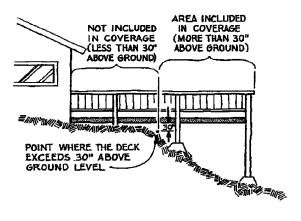
“Building coverage” means the percentage of the total lot or parcel covered by the footprint of all primary and accessory structures and buildings, including decks, balconies, porches, and stairs. Uncovered decks, porches, or stairs that are 30 inches or less from the ground are not included in the determination of building coverage.
Building Height. See LCMC 17.52.190 and 17.52.200.
“Building official” means the building official of the city of Lincoln City, or authorized designee.
“Bulkhead” means a structure to retain earth or fill material which is located adjacent and parallel to the shoreline.
“Canopy” means a light roof-like structure, supported by the exterior wall of a building and on columns or wholly on columns, consisting of a fixed or movable frame covered with approved cloth, plastic, or metal, extending over entrance doorways only, with the purpose of providing protection from sun and rain and embellishment of the facade.
“Canopy sign” means a permanent attached sign affixed or attached to or placed upon a canopy.
“Carport” means a stationary structure consisting of a roof, its supports, and not more than one wall or storage cabinets substituting for a wall, used to shelter motor vehicles, recreational vehicles, or boats; does not include temporary shelters or canopies affixed to a permanent foundation per applicable building codes.
“Cellar” means a room or a group of rooms, usually under a building, which has more than one-half of its height measured from finished floor to finished ceiling below the average grade of the adjoining ground.
“Changeable copy sign” means a permanent sign where the display can only be changed manually and that is incorporated into a permanent attached or permanent freestanding sign.
“Child care center” means a child care facility, other than a family child care home, that is certified under ORS 329A.280(3).
“City” means the city of Lincoln City, Oregon.
“City council” means the elected governing body of the city of Lincoln City.
“City engineer” means the city engineer of the city of Lincoln City or authorized designee.
“City manager” means the city manager of the city of Lincoln City or authorized designee.
“City recorder” means the city recorder of the city of Lincoln City or authorized designee.
“Clerestory” means the upper part of a wall that rises above a roof and that has windows.
“Cold frame” means an unheated, outdoor structure consisting of a wooden or concrete frame and a top of glass or clear plastic, not more than 24 inches high, used for protecting seedlings and plants from the cold.
“Commercial” means use involving the buying and/or selling of goods and/or services as the primary activity.
“Commercial building” means a building with more than 50 percent of its ground floor space used for commercial uses.
“Common area” means land jointly owned to include open space, landscaping, and/or recreation facilities (e.g., may be managed by a homeowners’ association).
“Common open space” means an area improved for active or passive recreational uses or gardening that all property owners in a development own and maintain in common through a homeowners’ association, condominium association, or similar mechanism.
“Community garden” means a site where plants, including flowers, are grown, and several individuals or households cultivate the site. The site may be divided into individual allotments, or gardeners may work together to cultivate the entire property. The land may be publicly or privately owned. The plants are grown for personal use by the gardeners, or for donation.
“Component” means any element of a sign or its source of support (excluding the building) including but not limited to support structure, accessories, wiring, or framing. Paint, vinyl, paper, fabric, lights, diodes, or plastic copy panels on a sign do not constitute components.
“Comprehensive plan” means the current adopted comprehensive plan of the city of Lincoln City.
“Conditional use” means a use which is not permitted outright within the zoning district; but a permit for such use may be granted after a public hearing with the approval of the planning commission upon a finding that the use is provided for in this title and meets specified conditions.
“Condominium” means ownership of a single unit in a structure with more than one unit that may or may not contain common area and facilities; includes both residential and commercial condominiums. Pursuant to House Bill 3395 from the Oregon 2023 Legislative Session, local governments are precluded from reviewing and approving condominium plats. Local governments are also prohibited from applying any zoning, subdivision, building code, or other regulation that imposes a tax or fee, approval process, or permitting requirements upon any development or property proposed as condominium not also imposed on a different form of ownership.
“Contiguous” means having a property line, zoning boundary, or wall in common. Contiguous does not apply to buildings, uses, or properties separated by a street or alley. See also “abutting” and “adjacent.”
“Conversion” means changing the lawful use of a property from use as a hotel or motel to use as an emergency shelter; from use as a hotel or motel that was converted to an emergency shelter to then use as affordable housing; or from use as a hotel or motel to use as affordable housing and including an alteration to a building that changes the number of units but does not expand the building footprint. Per 2021 House Bill 3261, conversion as defined herein is not a land use decision as defined in ORS 197.015. See LCMC 17.80.190.
“Corbel” means a projection on a building out from a wall, sometimes to support a load and sometimes for decorative effect.
“Cornice” means any horizontal member, structural or nonstructural, projecting outward from the exterior walls at the roofline, including eaves and other roof overhang.
“Cottage” means a detached single-unit dwelling that is part of a cottage housing development and that contains 1,000 square feet or less of gross floor area.
“Cottage cluster” means a group of four to 12 cottages, arranged around a common open space.
“Cottage housing development” means cottage clusters developed under a single land development plan, or as a part of another land development plan.
“Court” means any open space, unobstructed from the ground to the sky, that is bounded on two or more sides by the walls of a building that is on the same lot or parcel.
“Department” means the planning and community development department of the city of Lincoln City.
“Detached building or structure” means a building or structure that is not attached to any other building or structure by any means, has no roof, wall, floor, foundation, or structural support in common with any other building or structure and has no reliance on any other building or structure for support or structural integrity.
“Detached single-unit dwelling” means a single dwelling unit that is not attached to any other dwelling unit by any means, has no roof, wall, or floor in common with any other dwelling unit, and is on its own lot or parcel.
“Development” has two definitions:
1. A piece of land that contains buildings, structures, and other modifications to the natural environment; or
2. The alteration of the natural environment through:
a. The construction or exterior alteration of any building or structure, whether above or below ground or water, and any grading, filling, dredging, draining, channelizing, cutting, topping, or excavation associated with such construction or modification.
b. The placing of permanent or temporary obstructions that interfere with the normal public use of the waters and lands subject to this code.
c. The division of land into two or more parcels, and the adjustment of property lines between parcels.
“Director” means the planning and community development director of the city of Lincoln City, or authorized designee.
“Discretionary” means a permit action or decision that involves judgment or discretion.
“Dock” means a floating structure extending along or out from the shore into a body of water, to which watercraft may be moored.
“Domestic fowl” means mature female chickens (i.e., hens), but not roosters.
“Drive-in use” means an establishment or facility that by design, physical facilities, service, or packaging procedures encourages or permits customers to receive services, obtain goods, or be entertained while remaining in their motor vehicles before and during the transaction or activity.
“Driveway” means the area that provides vehicular access to a site from a street, and/or the area that provides vehicular circulation on a site.
“Duplex” means one structure containing two primary dwelling units on one lot or parcel. The units must share a common wall or common floor/ceiling and are not located on their own individual lots or parcels.
“Dwelling” means a structure conforming to the definition of a dwelling under applicable building codes and providing complete, independent living facilities for one or more persons, including permanent indoor provisions for living, sleeping, eating, cooking, and sanitation.
“Dwelling unit” means a building, or a portion of a building, that has independent living facilities including permanent indoor provisions for living, sleeping, cooking, and sanitation, and that is designed for residential occupancy. Buildings with more than one set of cooking facilities are considered to contain multiple dwelling units, as applicable, unless the additional cooking facilities are clearly accessory to the primary use, such as an outdoor grill or wet bar.
“Eco-roof,” also called a “green roof,” is a lightweight vegetated roof system consisting of waterproofing material, growing medium, and specially selected plants.
“Elderly housing” means housing in which at least 85 percent of the individual housing units in the elderly housing complex are either studio or one- or two-bedroom units, and which is:
1. Provided under any state or federal program that is specifically designed and operated to assist elderly persons as defined by the state or federal program; or
2. Is intended for and solely occupied by persons 62 years of age or older; or
3. Is intended and operated for occupancy by at least one person 55 years of age or older per unit and has significant facilities and services specifically designed to meet the physical or social needs of older persons, or if provision of such facilities and services is not practicable, such housing is necessary to provide important housing opportunities for older persons.
The city may impose the requirement of a covenant to run with the land for an elderly housing complex to ensure that, if such elderly housing complex is ever converted to a conventional apartment complex, additional off-street parking will be provided in accordance with any applicable parking ordinance requirements in effect at the time of the conversion.
“Electronic display center” means a permanent sign utilizing electronic technology such as light emitting diodes (LEDs), incandescent bulbs, or magnetized flipping devices to display content or animation any of which can be electronically, digitally, or mechanically changed by remote or automatic means, and that is incorporated into a permanent attached or permanent freestanding sign.
“Emergency cache” means a publicly owned metal shipping container, or similar public facility, that is owned, placed, and maintained by the city, county, special district, or state government and that contains basic survival items such as water, food, and basic medical supplies to sustain individuals for a limited period of time until authorities are able to respond to the emergency.
“Emergency shelter” means a building that provides shelter on a temporary basis for individuals and families who lack permanent housing.
“Essential emergency communications, early warning and associated emergency facilities” means a publicly owned and operated facility used for emergency communications or warning such as a police, fire, rescue, or ambulance radio transmitting, receiving, or relay station or antenna, a tsunami or fire warning siren, or other similar emergency preparation facilities, including emergency caches, that the city council has declared by resolution to be essential to the public safety.
“Facade” means the exterior wall of a building or structure exposed to public view or that wall viewed by persons from a street, sidewalk, or right-of-way.
“Family child care home” means a child care facility in a dwelling that is caring for not more than 16 children and is certified under ORS 329A.280(2) or is registered under ORS 329A.330.
“Farm animals” means animals such as cattle, horses, sheep, and llamas.
Fence, Sight-Obscuring. “Sight-obscuring fence” means a fence, consisting of wood, metal or masonry, or an evergreen hedge or other evergreen planting, arranged in such a way as to obstruct vision.
“Fenestration” means the arrangement of windows and doors on the elevations of a building or structure.
Flag Lot. Located behind another lot, a “flag lot” has two distinct parts: the flag, which is the building site; and the pole, which connects the flag to the street, provides the only street frontage for the lot and at any point is less than the minimum lot width for the zone (see illustration below).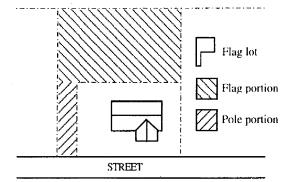
“Flashing or blinking sign” means a sign that has the presence of a flashing or blinking light source (whether on the face or externally mounted), or the presence of a light source which creates the illusion of intermittent or flashing or blinking light by means of animation.
“Floor area” means the sum of the gross horizontal area of the several floors of a building, measured from the exterior faces of the exterior walls or from the centerline of walls separating two buildings, but not including:
1. Attic space providing headroom of less than seven feet;
2. Basement or cellar;
3. Uncovered steps or fire escapes;
4. Private garages, carports or porches;
5. Accessory water towers or cooling towers;
6. Accessory off-street parking or loading spaces.
“Foot-candle” means an English unit of measurement of the amount of light falling upon a surface. One foot-candle is equal to one lumen per square foot. Foot-candles are measured by means of an illuminance meter.
“Footprint” means the square footage of a building that rests, directly or indirectly, on the ground, including, for example, cantilevers, bay windows with floor space, and chimneys.
“Four-flat dwelling” means a structure designed to resemble a single-unit dwelling, but that contains four individual dwelling units and appears to have no more than two (with at least one of the two entrances located in the front of the structure) exterior entrances opening onto a common hallway(s) providing access to the four individual units within the structure.
“Freestanding sign” means a permanent sign wholly supported by structures or supports that are placed on, or anchored in, the ground and that is independent of and detached from any building or other structure, whether portable or stationary. Freestanding signs are ground, monument, and pole signs in which changeable copy signs or electronic display centers may be incorporated.
“Frontage” means that part of a property line abutting a street.
“Garden, community” means an area of land managed and maintained by a group of individuals to grow and harvest crops such as food crops and ornamental crops for personal or group use, consumption, or donation. Community gardens may be divided into separate plots for cultivation by one or more individuals or may be farmed collectively by members of the group and may include common areas maintained and used by group members.
“Garden, market” means an area of land managed and maintained by an individual or a group of individuals to grow and harvest crops such as food crops and ornamental crops to be sold for profit. Crops may be sold on site or off site.
“Garden, personal” means an area of land located on a lot developed with one or more residences and managed and maintained by an individual or a family to grow and harvest crops such as food crops and ornamental crops for personal or family use, consumption, or donation.
“Goal 17 planning area” means all lands west of Highway 101, all lands within 500 feet of the ordinary high water mark of Devils Lake or Spring Lake, and all lands within 1,000 feet of the mean higher high water elevation of the Schooner Creek, Drift Creek, and Siletz Bay estuaries.
“Government buildings” means all buildings and structures used by the public that are constructed, purchased, leased or rented, in whole or in part, by the use of federal, state, county or municipal funds or funds of any political subdivision of the state.
“Government sign” means a sign that is constructed, placed, attached, affixed, installed, erected, or maintained by the federal, state, or local government for the purpose of carrying out an official duty or responsibility, or a sign that is required to be constructed, placed, attached, affixed, installed, erected, or maintained by federal, state, or local government to enforce a property owner’s rights.
“Grave marker” means a sign on a cemetery or mausoleum plot or space, including any floral displays or other decorations placed upon the plot or space.
“Grazing” means the use of land for pasture of horses, cattle, sheep, goats and/or other domestic herbivorous animals, alone or in conjunction with agricultural pursuits.
“Greenhouse” means a building sheathed in glass, plastic, or fiberglass in which plants are cultivated.
“Gross area” means the total area within the property lines of a unit of land.
“Gross floor area” means the area within the exterior walls, but excluding any space where the floor to ceiling height is less than six feet.
“Ground cover” means plants that grow densely and close to the ground, covering large expanses, and deliberately planted to prevent weeds or soil erosion; also means processed plant material (e.g., mulch, bark chips), river rock, pea gravel, boulders, stones, driftwood, and similar, used for aesthetic purposes and to prevent erosion (i.e., cover bare ground).
“Ground sign” means a permanent freestanding sign which is permanently anchored to the ground and has no air space between grade and the bottom of the frame or sign face.
“Handheld sign” means a hand-carried sign of four square feet or less in area, worn or carried by a person when being displayed.
“High water line or mark” means the high water elevation as shown on the county assessor’s records, or as determined by the county surveyor, based upon the line where normal high water elevation results in a pronounced change in vegetation characteristics.
“Home occupation” means any lawful activity carried out for gain by a resident of a dwelling unit in that resident’s dwelling unit and in which the activity is secondary to the primary use of the dwelling unit as a dwelling unit, where no employees not residing in the dwelling unit enter the premises for any activity related to the home occupation, and does not give the outward appearance of anything other than a residence.
“Hoop house” means a structure made of PVC piping or other material covered with translucent plastic and constructed in a half-round or hoop shape and not more than seven feet high or 20 feet long.
“Hotel” means an establishment that contains rooms or suites of rooms, with or without individual cooking facilities, which are intended or designed to be used, rented, or hired out to temporary occupants and where all lobbies, offices, and internal circulation to guest rooms and suites is within and integral to the same enclosed building or buildings as the guest rooms or suites. A hotel is not a bed and breakfast accommodation, boutique inn, dwelling, motel, resort, or short-term rental dwelling.
“Illuminance” means the amount of light falling upon a real or imaginary surface at a given distance, commonly called “light level” or “illumination.”
“Illuminated sign” means a sign characterized by the use of artificial light, either projecting through its surface(s) as internally or trans-illuminated; or reflecting off its surface(s) as externally illuminated. The illumination is “external” when the light source is separate from the sign and is directed to shine upon the sign and “internal” when the light source is contained within the sign, but does not include signs where the display is composed of dot matrix or LEDs.
“Impervious surface/area” means any surface that does not allow for the infiltration of water directly into the underlying earth. Types of impervious surfaces include rooftops and eaves, asphalt and concrete parking lots other than those surfaced with pervious materials, driveways, roads, sidewalks and pedestrian plazas, and standing water. Note: Uncovered, slatted decks are considered pervious. Gravel surfaces are considered pervious unless they cover impervious surfaces.
“Indirect” means, when describing the illumination of a sign, external illumination from a source located away from the sign, which lights the sign, but which is itself not visible to persons viewing the sign from any right-of-way or adjacent property.
Institution, Educational. “Educational institution” means a college or university supported by public or private funds, tuitions, contributions or endowments, giving advanced academic instruction as approved by a recognized accrediting agency, including fraternity and sorority houses, excluding elementary and high schools, and trade and commercial schools.
“Integral sign” means a sign that is embedded, extruded, or carved into the material of a building facade and projecting no more than two inches from a building, made of noncombustible material (such as bronze, brushed stainless steel, aluminum, or similar).
“Junk yard” means any property where any person is engaged in breaking up, dismantling, sorting, storing, distributing, buying or selling of any scrap, waste materials or junk.
“Kennel” means a lot or premises on which four or more cats and/or dogs, more than four months of age, are kept for business purposes such as animal boarding, animal day care, commercial breeding, and the like.
“Land use regulations” means regulations which relate to a specific condition such as density or intensity or to building size, bulk or siting conditions occurring anywhere and for any type of building located within a given zoning district.
“Landscaping” means any combination of living trees, shrubs, plants, flowers, vegetative ground cover, and nonvegetative ground cover, but not including invasive or noxious plants or weeds or artificial trees, shrubs, plants, or flowers, and can include such items as fountains and other water features, benches, decks, patios, pathways, and artificial turf or carpeting.
“LED” means a semiconductor diode that converts applied voltage to light.
“Legislative” is a term applied to the making or giving of laws. In land use actions, it is the formulation of general policy that is applicable to the entire jurisdiction or a large part therein.
“Loading space” means an off-street space or berth, for the temporary parking of a vehicle while loading or unloading persons, merchandise or materials, and which space or berth abuts upon a street, alley or other appropriate means of access and egress.
“Lot” means a legally defined piece of land other than a tract that is the result of a land division. This definition includes the state definition of both lot (result of subdividing) and parcel (result of partitioning).
Lot, Corner. “Corner lot” means a lot abutting on two or more streets, other than an alley, at their intersection.
“Lot depth” means the perpendicular distance measured from the midpoint of the front property line to the midpoint of the opposite property line.
Lot, Interior. “Interior lot” means a lot other than a corner lot.
Lot, Through. “Through lot” means an interior lot having frontage on two streets.
“Lot width” means the horizontal distance between the side property lines measured at right angles to the lot depth at a point midway between the front and rear property lines.
Lot, Zoning. A “zoning lot” is either:
1. A lot of record existing on the effective date of the zoning ordinance or any applicable subsequent amendment thereto; or
2. A tract of land, either not subdivided or consisting of two or more contiguous lots of record located within a single block in single ownership.
“Manufactured dwelling” means a residential trailer, mobile home, or manufactured home, as those terms are defined in this chapter. “Manufactured dwelling” does not include any building or structure constructed to conform to the state of Oregon Specialty Code, the Low-Rise Residential Dwelling Code adopted pursuant to ORS 455.020 or 455.610 or the Small Home Specialty Code adopted under Section 2, Chapter 401, Oregon Laws 2019.
“Manufactured dwelling park” means any place where four or more manufactured dwellings or prefabricated structures, that are relocatable and more than eight and one-half feet wide, are located within 500 feet of one another on a lot, tract, or parcel of land under the same ownership, the primary purpose of which is to rent or lease space or keep space for rent or lease to any person for a charge or fee paid or to be paid for the rental or lease space or keep space for rent or lease to any person for a charge or fee paid or to be paid for the rental or lease or use of facilities or to offer space free in connection with securing the trade or patronage of such person. “Manufactured dwelling park” does not include a lot or lots located within a subdivision being rented or leased for occupancy by no more than one manufactured dwelling per lot if the subdivision was approved by the local government unit having jurisdiction under an ordinance adopted pursuant to ORS 92.010 to 92.192.
“Manufactured home” means a structure constructed for movement on the public highways that has sleeping, cooking, and plumbing facilities, that is intended for human occupancy, that is being used for residential purposes and that was constructed in accordance with federal manufactured housing construction and safety standards and regulations in effect at the time of construction. “Manufactured home” does not include any building or structure constructed to conform to the state of Oregon Specialty Code, the Low-Rise Residential Dwelling Code adopted pursuant to ORS 455.020 or 455.610 or the Small Home Specialty Code adopted under Section 2, Chapter 401, Oregon Laws 2019.
“Marquee” means a permanent roofed structure attached to and supported entirely by a building; no part of which shall be used for occupancy or storage; with the purpose of providing protection from sun and rain or embellishment of the facade.
“Marquee sign” means a permanent attached sign affixed or attached to or placed upon a marquee.
“Medallion” means a small decorative detail used to accent a building’s exterior.
“Mezzanine” means an intermediate level between a ground floor and the upper story(ies) occupying a partial area of floor space.
Mini Warehouse. See “self-storage facility.”
“Mixed use” means a development that includes a building or buildings containing a mix of commercial and residential uses that are planned and developed together on the same site. The mix of uses may occur in the same building or in separate buildings, provided at least one building in the development contains both commercial and residential uses.
“Mobile food pod” means more than one singular mobile food unit located on the same lot or parcel.
“Mobile food unit” means a wheeled mobile unit that meets state, county, and Department of Motor Vehicles requirements for licensing, registration, and operation as a unit utilized to provide commercial food preparation and serving to the general public. Food may be prepared or processed on the unit, and said prepared or processed food is sold and dispensed to the ultimate consumer from the unit.
“Mobile home” means a structure constructed for movement on the public highways that has sleeping, cooking and plumbing facilities, that is intended for human occupancy, that is being used for residential purposes and that was constructed between January 1, 1962, and June 15, 1976, and met the construction requirements of Oregon mobile home law in effect at the time of construction.
“Mobile home park” means any place where four or more manufactured dwellings are located within 500 feet of one another on a lot, tract, or parcel of land under the same ownership, the primary purpose of which is to rent space or keep space for rent to any person for a charge or fee paid or to be paid for the rental or use of facilities or to offer space free in connection with securing the trade or patronage of such person. “Mobile home park” does not include a lot or lots located within a subdivision being rented or leased for occupancy by no more than one manufactured dwelling per lot if the subdivision was approved by the municipality unit having jurisdiction under an ordinance adopted pursuant to ORS 92.010 to 92.192.
“Monument sign” means a permanent freestanding sign that is placed on a solid base that extends a minimum of 12 inches above the ground and extends at least 75 percent of the length and width of the sign. The above-ground portion of the base is considered part of the total allowable height of a monument sign.
“Motel” means an establishment that includes an auto court, motor lodge, tourist court, or other facility similarly identified, that contains rooms, with or without individual cooking facilities, which are offered for compensation for accommodation of temporary occupants primarily traveling by automobile, and where each sleeping room is independently accessible from the outside. A motel is not a bed and breakfast accommodation, boutique inn, dwelling, hotel, resort, or short-term rental dwelling.
Motor Vehicle Repair, Major. “Major motor vehicle repair” means the general repair, rebuilding or reconditioning of engines, motor vehicles or trailers; collision service including body, frame or fender straightening or repair; overall painting or paint shop.
Motor Vehicle Repair, Minor. “Minor motor vehicle repair” means the replacement of parts for and motor service to passenger cars and trucks not exceeding one and one-half tons capacity, but not including any operation named under “Motor Vehicle Repair, Major.”
“Multi-unit dwelling” means a structure containing three or more dwelling units where the land underneath the structure is not divided into separate lots or parcels.
“Native riparian vegetation” means plants historically found in wet and streamside areas of the Pacific Northwest. “Flora of the Pacific Northwest” (1973) by Hitchcock and Cronquist is a primary reference for native plant determinations.
“Natural resource overlay zone” means the overlay zone comprising the land that is shown as significant natural resources on the adopted significant natural resources maps in the comprehensive plan.
“Neat, clean, and in good repair” means the following: “Neat” means without rotting or broken parts; having parts that are solid and sound, without chipping or peeling paint, paper, vinyl or plastic; without graffiti; and without faded, washed-out, or illegible displays. “Clean” means free of dirt, unsoiled, without grime or soot, but does not include minor dust coating that is undetected from the main-traveled way of a public right-of-way. “Good repair” means having sound and solid parts, without rotting or broken parts, firmly fixed in place so as to be able to withstand a wind pressure of 20 pounds per square foot of exposed surface.
“Neon sign” means a sign internally or externally illuminated by a light source consisting of neon or other method that simulates the appearance of a neon tube, except for fluorescent lighting.
“Net area” means the area left after subtracting from the gross area the following: significant wetland areas, significant riparian areas, areas dedicated for public rights-of-way, areas dedicated to the public for public parks, areas in a bluff erosion zone, and areas in a flood hazard area.
“Nonconforming commercial site development” means characteristics of existing developed properties that do not meet standards specified in Chapter 17.74 LCMC, Design Standards.
“Nonconforming sign” means any sign which lawfully exists prior to the effective date of the ordinance codified in this chapter but which, due to the requirements herein, no longer complies with the height, area, or placement regulations or other provisions of this chapter.
“Nonconforming structure” means a structure that was lawful at the time of construction, but that presently does not conform to the provisions of the zoning district in which it is situated. Any existing structure, including a sign or sign structure, for which zoning regulations now require a conditional use permit or other permit, shall be deemed to be nonconforming until such a permit is secured.
“Nonconforming use” means a use that was originally lawful, but no longer is a permitted use in the district in which it is situated. Any existing use for which zoning regulations now require a conditional use permit shall be deemed to be nonconforming until such a permit is secured.
“Occupancy classification” means the formal designation of the primary purpose of the building, structure, or portion thereof as listed in the adopted Oregon Structural Specialty Code and Oregon Residential Specialty Code.
“Off-street parking” means all off-street areas, not in public right-of-way or on private streets, designed, constructed, used, or required, or intended to be used, for the parking of motor vehicles. See Chapter 17.56 LCMC for parking standards.
“On-street parking” means parking in the public right-of-way, or private streets.
“Order” is a term applied to the direction of public administrative officers in quasi-judicial land use proceedings.
“Ordinary high water mark” means a line delineating the highest water level that has been maintained for a sufficient period of time to leave evidence upon the landscape, such as a clear, natural line impressed upon the bank, shelving, changes in the character of the soil, change from predominantly aquatic to predominantly terrestrial vegetation, or the presence of organic litter or debris.
“Ordinary low water line” means the line on the bank or shore to which the low water ordinarily recedes annually in season.
“Orient” means to cause to face toward a particular point of reference (e.g., “a building oriented to the street”).
“Original art display” means a hand-produced work of visual art which is tiled or painted by hand directly upon, or affixed directly to, an exterior wall of a building. “Original art display” does not include: mechanically produced or computer generated prints or images, including but not limited to digitally printed vinyl; electrical or mechanical components; or changing images.
“Outdoor sales display” means the temporary or permanent outdoor display of items for direct sale, rental, or lease to the consumer.
“Outdoor storage area” means an area in which goods, junk, material, merchandise, vehicles, or other items are kept in the same place for more than 24 hours, other than as an outdoor sales display.
“Owner” is the owner of the title to real property or the contract purchase of real property of record, as shown on the latest assessment records in the Lincoln County assessor’s office. “Owner” also includes a deed holder or contract purchaser whose name does not appear in the latest assessment records, but who presents to the city a copy of a recorded deed or contract of sale signed by the owner of record.
“Parapet” means a low protective wall at the edge of a roof or balcony.
Parcel. See “Lot.”
“Parking area” means all the area devoted to the standing, maneuvering, and circulation of motor vehicles. Parking areas do not include driveways or areas devoted exclusively to non-passenger loading or fire apparatus lanes.
“Parking space” means an improved space designed to provide temporary standing area for a vehicle. See Chapter 17.56 LCMC for parking space standards.
“Pathway” means a pedestrian and/or bicycle way on public or private property that provides pedestrian and/or bicycle circulation within a site and to adjacent sites and facilities, that may or may not be dedicated to the public or within right-of-way.
“Pearls” means the six historic business districts that comprise the seven-mile stretch of Lincoln City that is connected by Highway 101 on the Oregon Coast. These districts are Wecoma, Oceanlake, DeLake, Nelscott, Taft, and Cutler City, and the boundaries of each are identified on the city’s adopted zoning map. Oceanlake, Nelscott, and Taft are also zoning districts in addition to being a pearl.
“Pedestrian-scale lighting” means lighting that is designed and located to illuminate a sidewalk, pathway, or other area that is used principally by pedestrians. Bollards, wall-mounted lights, and step lights are typical of pedestrian-scale lighting.
“Pedestrian space” means areas planned and improved to provide opportunities for active recreation, passive relaxation, or community interaction, and which are accessible to the general public or to residents, tenants, employees, or customers in common. Examples include plazas, courtyards, alcoves, outdoor seating areas, private parks, and viewpoints overlooking natural resource areas. Pedestrian spaces do not include public parks unless the public parks were approved as pedestrian space and conveyed to the city.
“Pediment” means a low-pitched gable over a portico, door, or window; may be used to reduce the scale of a building facade.
“Permanent sign” means a sign permanently and directly attached by means of screws, nuts, bolts, anchors, or similar, or affixed directly, to a permanent structure, wall, building, canopy, awning, or marquee for permanent display.
“Person” means any natural person, firm, partnership, association, social or fraternal organization, corporation, estate, trust, receiver, syndicate, branch of government, or any other group or combination acting as a unit.
“Pier” means, in architectural terms, a portion of a wall between windows, doors, or other openings. As a water facility, it means a fixed moorage facility constructed outward from the shoreline.
“Pilaster” means a shallow pier used to buttress a wall; or a rectangular column with a capital and base, projecting only slightly from a wall as an ornamental motif.
“Place of worship” means a special-purpose building that is architecturally designed and particularly adapted for the primary use of conducting religious services on a regular basis.
“Planned development” means a development in which the applicable subdivision and zoning restrictions apply to the development as a whole rather than to each individual lot.
“Planning commission” means the city of Lincoln City planning commission.
“Plaza” means an outdoor area designed to encourage social interaction and accommodate recreational events or relaxation. Plazas are typically provided with pedestrian amenities, art, and/or landscaping.
“Pole sign” means a permanent freestanding sign that is permanently supported in a fixed location by a structure of one or more poles, posts, uprights, or braces from the ground and not supported by a building or a base structure.
“Portico” means a porch or entrance to a building consisting of a covered and often columned area.
“Practicable” means capable of being done after taking into consideration reasonable cost, existing technology, and logistics in light of overall project purposes.
“Prefabricated structure” means a building or subassembly that has been in whole or substantial part manufactured or assembled using closed construction at an off-site location to be wholly or partially assembled on site; does not mean a manufactured dwelling or a small home as defined in Section 2, Chapter 401, Oregon Laws 2019.
“Primary entrance” means the entrance to a building that most individuals are expected to use. Generally, each building has one primary entrance; however, some buildings may have more than one primary entrance or may have entrances that open directly into the building’s lobby or principal interior ground level circulation space.
“Primary structure” means a structure or combination of structures of chief importance or function on a site. In general, the primary use of the site is carried out in a primary structure. The difference between a primary and accessory structure is determined by comparing the size, placement, design, appearance, and the orientation of the structures on a site.
“Primary use” means an activity or combination of activities of chief importance on the site. The main purpose for which the land or structures are intended, designed, or ordinarily used.
“Property line” means the division line between two units of land.
“Front property line” means a property line that abuts a street. On a corner lot, the front property line is the shortest of the property lines that abut a street. If two or more street property lines are of equal length, then the property owner can choose which property line is to be the front. However, a through lot has two front property lines regardless of whether street property lines are of equal or unequal length.
“Rear property line” means the line opposite the front property line. For irregular or triangular lots, the rear property line shall be a straight line 10 feet in length, within the lot, parallel with and at the maximum distance from the front property line.
“Side property line” means property lines that are neither a front or rear property line. On a corner lot, the longest property line which abuts a street is a street side property line.
“Public utility” means telephone, electric, natural gas, telecommunication, and similar franchise facilities, and water and wastewater (sanitary sewer and storm) conveyance and treatment facilities. Utility uses may or may not have regular employees at the site. Services may be public or privately provided.
“Qualified professional” means an individual who has proven expertise and experience in a given natural resource field.
“Quasi-judicial” is a term applied to the action, discretion, etc., of public officers, who are required to investigate facts, or ascertain the existence of facts, and draw conclusions from them, as a basis for their official action, and to exercise discretion of judicial nature. In land use actions, it is the applying of policy to particular persons, places or circumstances.
“Radio and television transmitter or tower” means transmitter or tower that disseminates only radio and television communications intended to be received by the public, including the direct transmission or by the intermediary of relay stations.
“Recreation” means activities or pastimes offering diversion and relaxation to persons.
Recreational Facility, Private. “Private recreational facility” means a recreational facility under private ownership and operated by a profit or nonprofit organization, open to bona fide members, and providing one or more of the following types of recreation activity: tennis, handball, squash, volleyball and swimming.
“Recreational vehicle” means a vehicle with or without motive power that is designed for use as living quarters and as further defined by the Oregon Director of Transportation.
“Recreational vehicle park” means any place where two or more recreational vehicles are located within 250 feet of one another on a lot, tract, or parcel of land under the same ownership, the primary purpose of which is to rent space or keep space for rent to any person for a charge or fee paid or to be paid for the rental or use of facilities or to offer space free in connection with securing the trade or patronage of such person.
“Repair” means mending or replacing broken or worn parts or elements with comparable (like for like) materials and like dimensions, while retaining all existing dimensions as well as all sound parts and elements.
“Replace” means actions to substitute one material or system for another when like for like is not possible.
“Residential facility” means a residential care, residential training or residential treatment facility, as those terms are defined in ORS 443.400 (Definitions for ORS 443.400 to 443.455), that provides residential care alone or in conjunction with treatment or training or a combination thereof for six to 15 individuals who need not be related. Staff persons required to meet licensing requirements shall not be counted in the number of facility residents, and need not be related to each other or to any resident of the residential facility.
“Residential home” means a residential treatment or training home, as defined in ORS 443.400 (Definitions for ORS 443.400 to 443.455), a residential facility registered under ORS 443.480 (Definitions for ORS 443.480 to 443.500) to 443.500 (Investigation of registered facilities) or an adult foster home licensed under ORS 443.705 (Definitions for ORS 443.705 to 443.825) to 443.825 (Disposition of penalties recovered) that provides residential care alone or in conjunction with treatment or training or a combination thereof for five or fewer individuals who need not be related. Staff persons required to meet licensing requirements shall not be counted in the number of facility residents, and need not be related to each other or to any resident of the residential home.
“Residential trailer” means a structure constructed for movement on the public highways that has sleeping, cooking and plumbing facilities, that is intended for human occupancy, that is being used for residential purposes and that was constructed before January 1, 1962.
“Resort” means a self-contained establishment, with or without individual cooking facilities, providing for most of a temporary occupant’s needs while remaining on the premises (lodging, food, drink, sports, entertainment, shopping, etc.). A resort is not a bed and breakfast accommodation, boutique inn, dwelling, hotel, motel, or short-term rental dwelling.
“Responsible party” means the property owner and any party acting on behalf of or for the benefit of the property owner including construction contractors and subcontractors.
“Riparian area” means the area adjacent to a river, lake, or stream, consisting of the area of transition from an aquatic ecosystem to a terrestrial ecosystem.
“Riparian area, significant” means a riparian area that is shown as significant on the adopted significant natural resources maps in the comprehensive plan.
“Roof sign” means a permanent sign erected upon, against, over, or above the roof of any building or structure or a sign placed directly on the roof such as a painted sign where the painting takes place directly on the surface of the roof.
“Routine repairs and maintenance” means the activities intended to preserve and care for a structure, building, landscaping, or other improvements to such an extent that they remain safe, presentable, neat, and carry out the purpose for which they were initiated, installed, constructed or required, without expanding the existing development or activity; also the regular upkeep of physical properties including recurring, preventative, and ongoing maintenance necessary to delay or prevent the failure of critical and noncritical building systems, buildings, and structures. Examples of routine repairs and maintenance include painting, re-roofing, repairing dry rot, re-siding, replacing exterior windows or doors in the same location as their existing location, or similar.
School, Commercial. “Commercial school” means a building or land where instruction is given to pupils in arts, crafts or trades, and operated as a commercial enterprise as distinguished from schools endowed and/or supported by taxation.
School, Primary, Elementary, Junior High or High. “Primary, elementary, junior high or high school” includes public, private or parochial, but not nursery school, kindergarten or day nursery, except when operated in conjunction with a school.
“Screening” means the visual shielding of one structure or use from another structure or use by fences, walls, berms, or densely planted vegetation so as, on installation, to substantially, but not necessarily totally, eliminate visual impacts of the shielded structure or use on the other structure or use.
“Self-storage facility” means a building or group of buildings containing separate, individual, and private storage spaces of varying sizes available for lease or rent for varying periods of time. See “mini warehouse.”
“Setback” means the minimum or maximum distance required between a specified object and another point. Typically, a setback refers to the minimum or maximum distance from a building or structure to a specified property line.
“Front setback” means the required distance from the front property line and a specified object.
“Garage/carport entrance setback” means the distance from the property line to the garage/carport entrance.
“Interior side setback” means the required distance from the side property line and a specified object.
“Rear setback” means the required distance from the rear property line and a specified object.
“Street side setback” means the required distance from the street side property line and a specified object.
“Shoreline” means the boundary line between a body of water and land, measured on tidal waters at mean high water, and on non-tidal waterways at the ordinary high water mark.
“Short-term rental” means a dwelling unit that is used, rented, or occupied on a daily or weekly basis for rental periods of 30 days or less, or is available for use, rent, or occupancy on a daily or weekly basis for rental periods of 30 days or less, or is advertised, or listed by an agent, as available for use, rent, or occupancy on a daily or weekly basis for rental periods of 30 days or less.
“Sidewalk cafe” means any group of tables and chairs, and its authorized decorative and accessory devices, situated and maintained upon the public sidewalk or along the private porches, plazas, and arcades for use in connection with the consumption of food and beverages sold to the public from or in an adjoining indoor restaurant or delicatessen.
“Sign” means any display, illustration, structure, or device that has a visual display where any portion of said visual display is visible from any public right-of-way and designed to identify, announce, direct, or inform. The scope of the term “sign” does not depend on the content of the message or image being conveyed.
“Sign structure” means any structure which supports, has supported, or is capable of supporting a sign.
“Significant aesthetic resource” means a site that is identified as a significant aesthetic resource in the comprehensive plan natural resource inventory.
“Significant natural resource” means wetlands, riparian areas, and wildlife areas shown on the adopted significant natural resources maps in the comprehensive plan.
“Single-room occupancy” means a residential development with no fewer than four attached rooms that are independently rented and lockable and provide living and sleeping space for the exclusive use of an occupant, but require that the occupant share sanitary and food preparation facilities with other units in the occupancy. Single-room occupancy units do not have independent kitchens/bathrooms.
“Site” means, for land divisions and property line adjustments, the lots, lots of record, parcels, or tracts proposed to be divided or reconfigured. For all other purposes, the site is an ownership except as follows:
1. If a proposed development includes multiple ownerships, then the site is the combined area of all contiguous ownerships.
2. If a proposed development includes only a portion of an ownership, and the balance of the ownership is vacant, then the applicant may choose to define the site as the portion of the ownership that is proposed for development.
3. If a proposed development includes only a portion of an ownership, and there is other development on the ownership, then the applicant may choose to define the site as the portion of the ownership that is currently developed plus the portion proposed for development.
“Skirting” means a weather-resistant material used to enclose the space below a manufactured dwelling.
“Slope” means the ratio of vertical distance to horizontal distance on a surface, where a ratio of one vertical foot in change to two horizontal feet in change equals a 1:2 ratio. Example: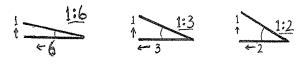
“Small animals” means animals commonly kept as household pets, other than animals such as aquarium fish, reptiles, hamsters, gerbils, or cage birds such as finches, canaries, and parakeets, and includes the following:
1. Cats (Felis catus);
2. Dogs (Canis familiaris) but not dog-wolf hybrids;
3. Rabbits (Leporidae);
4. Vietnamese, Chinese, or Asian potbelly pigs (Sus scrofa bittatus) but not any greater than 22 inches in height at the shoulder or more than 150 pounds in weight;
5. Miniature, pygmy, or dwarf goats, but not any greater than 24 inches in height at the shoulder or more than 100 pounds in weight, and not any that have not been dehorned, or any unneutered adult male goats.
Offspring of small animals that are less than five months of age are not considered “small animals” as that term is used in this title.
“Small solar energy system” means a system composed of a solar energy collector, an energy storage facility, and components for the distribution of transformed energy that may be attached to a residence or other structure. A small solar energy system may be a photovoltaic system to convert the sun’s energy to electricity or it may be a solar thermal system used to heat water.
“Small wind energy system” means a wind energy conversion system consisting of a wind turbine, a support structure, and associated control or conversion electronics and that has a rated capacity of not more than 10 kilowatts and that is intended to reduce on-site consumption of utility power.
“Spandrel” means the blank space between windows and successive stories; or the area between the top of a column or pier and the apex of the arch springing from it.
“Special event” means any nonexempted event or activity whether conducted on public or private property, which places an additional demand on city resources or emergency services, including public health and safety. Nonexempted events or activities require a special event permit as outlined in Chapter 5.16 LCMC, and are defined as follows: (1) an event on public or private property which requires the closing of a street or other traffic control; (2) an event which involves the authorized sale or consumption of alcohol on public property in the city; (3) an event which involves sound amplification on public property in the city; (4) commercial activity or use of city property (other than standard concession agreements). An event, regardless of the location, conducted by the city of Lincoln City, its authorized employees, or contactors, is not a special event.
“Story” means that portion of a building included between a floor and the ceiling above.
Story, Half. “Half story” means a story under a gable, hip or gambrel roof, the wall plates of which on at least two opposite exterior walls are not more than two feet above the floor of such story.
“Stream” means a channel such as a river or creek that carries flowing surface water, including perennial streams and intermittent streams with defined channels, and excluding artificial irrigation and drainage channels.
“Street” means, for purposes of this title, the entire width between the right-of-way lines of every way for vehicular and pedestrian traffic and includes the terms, and may be used interchangeably with, “road,” “highway,” “lane,” “place,” “avenue,” “alley” and other similar designations.
“Structural alteration” means a change or repair of the supporting members of a building or structure, such as alteration of bearing walls, foundation, columns, beams, or girders. In addition, any decrease or increase to number or size of exterior openings shall be considered a structural alteration.
“Structure” means, except as provided by applicable building codes, any object constructed in or on the ground. “Structure” includes buildings, decks, fences, towers, flag poles, signs, utility vaults, and other similar objects. “Structure” does not include paved areas or vegetative landscaping materials.
“Taft Village core” means the area depicted graphically below and generally defined by the Fleet Avenue alignment at Highway 101 (north), Schooner Creek bridge and Siletz Bay (south), Inlet Avenue (east), and the west end of SW 51st Street (west).
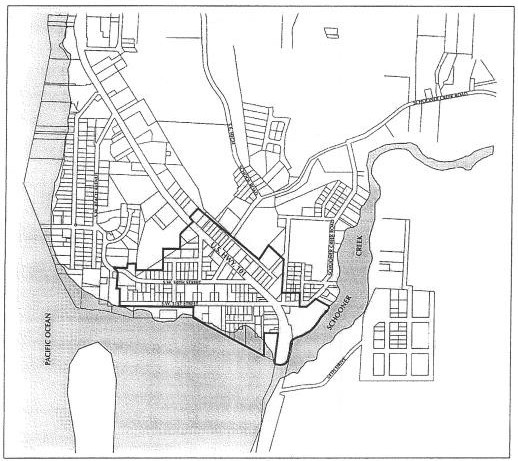
Taft Village Core
“Temporary occupant” means any person that occupies any room or rooms for habitation for a continuous period not exceeding 30 days. This excludes any person who pays for lodging on a monthly basis. This also excludes occupants of emergency shelters.
“Tenant space” means, in reference to Chapters 9.34 and 17.72 LCMC, an area, unit, or space occupied by a person or entity where a certificate of occupancy for the current occupancy classification and use of the area, unit, or space has been issued, as well as any other applicable permits related to the area, unit, or space.
“Tiedown” means any device designed to anchor a manufactured dwelling securely to the ground.
Time-Share.
1. “Accommodation” means any apartment, condominium unit, cabin house, lodge, hotel or motel room or any other private or commercial structure that is situated on real property designed for residential use by one or more individuals.
2. “Time-share period” means a period of time when a purchaser of a time-sharing plan is entitled to possession and use of accommodations and facilities of the time-sharing plan.
3. “Time-share plan” means any arrangement, plan, scheme or device including exchange programs, whether by membership, agreement, share, tenancy-in-common, sale, lease, deed, rental agreement, license, right-to-use agreement or otherwise, whereby a purchaser, in exchange for consideration, receives a right-to-use accommodation and facilities for a period of time less than 30 days during any given year.
“Tiny house” means either: (1) a park model recreational vehicle that: is designed for use as living quarters providing complete, independent living facilities for one or more persons, including permanent indoor provisions for living, sleeping, eating, cooking, and sanitation; is built on a single trailer or chassis mounted on wheels; has a floor area that does not exceed 400 square feet, excluding lofts; is more than eight and one-half feet wide; complies with manufacturing standards and other requirements adopted by Oregon Department of Transportation; and, has a skirting of pressure-treated wood, mass timber, masonry, or similar material; or (2) a standalone dwelling with a floor area of 400 square feet or less, excluding lofts.
“Tiny house development” means a site designed to contain at least three tiny houses and designed and operated under a single land development plan, or as part of another land development plan such as a planned development or a cottage cluster development.
“Tract” means a piece of land within a platted subdivision reserved for common area, utility corridor, recreation facilities, sensitive lands, or other purpose; may be dedicated to a homeowners’ association or other entity for maintenance.
“Transom” means a horizontal crossbar in a window, over a door, or between a door and a window.
“Transom window” means a window immediately above a door or other window and commonly hinged to a transom.
“Transparency (windows)” means nonreflective glass with a visible transmittance rating of 0.50 or greater, per the National Fenestration Rating Council.
“Transportation uses” means transportation facilities, services, and improvements, as identified in the Transportation Planning Rule, OAR 660-012-0045(1), including the following:
1. Operation, maintenance, and repair of existing transportation facilities identified in the city transportation system plan;
2. Dedication of right-of-way, authorization of construction, and the construction of facilities and improvements, where the improvements are consistent with clear and objective dimensional standards; and
3. Changes in the frequency of transit.
“Turret” means a small tower extending above a building.
“Underlying zone” means the property’s existing zoning district at the time an application is accepted for processing.
Undeveloped Lot(s) or Parcel(s). A lot or parcel is undeveloped unless: (1) lawful business operations are conducted on the lot in good faith; and (2) the lot either contains development that has been approved through development review pursuant to city code or contains development that would not have been required to go through development review if development review, or its equivalent, had existed at the time the development occurred.
“Unlawful sign” means a sign or sign structure that does not conform to the provisions of this chapter and is not a nonconforming sign.
“Usable open space” means an area in a multi-unit residential development that is improved for active or passive recreational use and/or relaxation for the use of tenants or their guests.
“Use” means the purpose or activity for which land or a building or structure thereon is designed, arranged, occupied, or intended or for which it is maintained, and shall include any manner or performance of such activity with respect to the performance requirements of this title.
“Utility sign” means a sign constructed or placed by a utility on or adjacent to a pole, pipe, vault, substation, box, or pump of the utility.
“Variance” means a decision by the review authority to lessen or otherwise modify the requirements of the zoning code.
“Vehicle sign” means a sign on or attached to a motor vehicle, truck, trailer, van, bus, railroad car, light rail car, or similar.
“Vermiculture” means worm composting in bins.
“Video sign” means a sign providing a display in both a horizontal and vertical format (as opposed to linear), through use of pixel and subpixel technology having the capacity to create continuously changing displays in a full spectrum of colors and light intensities.
“Visitor information center” means an establishment primarily engaged in marketing and distributing information on community resources and facilities to businesses and leisure travelers through a range of activities, including but not limited to assisting organizations in locating meeting and convention sites; providing maps and travel information on area attractions, events, indoor and outdoor recreational opportunities, lodging accommodations, restaurants, and available group tours of local historical, recreational, and cultural attractions.
“Wall sign” means a permanent attached sign that is affixed parallel with the wall or painted or printed on the wall, or is affixed flat against the sloping surface of the wall.
“Water area” means the area between the banks of a lake, pond, river, perennial or fish-bearing intermittent stream, excluding artificial farm ponds.
“Water-dependent use” means a use or activity which can be carried out only on, in, or adjacent to water areas because the use requires access to the water body for waterborne transportation, recreation, or energy production, or as a source of water.
“Wetland” means an area that is inundated or saturated by surface water or groundwater at a frequency and duration to support, and that under normal circumstances does support, a prevalence of vegetation typically adapted for life in saturated soil conditions.
“Wetland, significant” means a wetland shown on the adopted significant resources maps in the comprehensive plan.
“Wharf” means a fixed moorage facility constructed parallel to the shoreline and usually attached continuously thereto.
“Wildlife area” means an area upon which wildlife depend in order to meet their requirements for food, water, shelter, and reproduction. Examples include wildlife migration corridors, big game winter range, and nesting and roosting sites.
“Wildlife area, significant” means a wildlife area shown on the adopted significant natural resources maps in the comprehensive plan. Where a significant wildlife area includes a significant riparian area, the extent of the significant wildlife area is the same as the extent of the significant riparian area.
“Window sign” means a sign applied, printed, painted, attached, or affixed to the interior or exterior of a window and visible from outside of the window.
“Wireless communications facilities” means facilities, including towers, providing licensed commercial wireless telecommunications services, including cellular, personal communication services (PCS), specialized mobilized radio (SMR), enhanced specialized mobilized radio (ESMR) paging, and similar services that are marketed to the general public. (Ord. 2023-26 § 1; Ord. 2023-24 § 1; Ord. 2023-04 § 3; Ord. 2022-38 § 1; Ord. 2022-36 § 1; Ord. 2022-25 § 2; Ord. 2022-15 § 2; Ord. 2020-17 § 1; Ord. 2020-14 § 13; Ord. 2020-03 § 1; Ord. 2019-24 § 1; Ord. 2017-09 § 1; Ord. 2014-08 § 1; Ord. 2012-06 § 5; Ord. 2011-09 § 2; Ord. 2011-03 §§ 1, 2; Ord. 2010-06 § 12; Ord. 2009-07 § 4; Ord. 2009-06 § 1; Ord. 2009-05 §§ 1 – 3; Ord. 2009-02 § 8; Ord. 2007-10 § 2; Ord. 2005-14 § 2; Ord. 2003-24 § 2; Ord. 2003-08 § 3; Ord. 2003-01 § 3; Ord. 2001-01 §§ 3, 4; Ord. 2000-11 § 9; Ord. 98-12 § 2; Ord. 98-11 § 6; Ord. 97-11 § 1; Ord. 97-8 § 1; Ord. 97-5 §§ 1, 2; Ord. 95-15 § 1; Ord. 92-28; Ord. 93-2 § 1; Ord. 92-8 § 1; Ord. 92-4 §§ 1 – 3; Ord. 91-4 § 1; Ord. 89-11 § 1; Ord. 84-2 § 1.040)