


Chapter 17.74
DESIGN STANDARDS
Sections:
Article I. General Provisions
17.74.040 Standards versus guidelines.
Article II. Design Regulations for Mixed Uses and Uses Other Than Residential
Article III. Design Regulations for Multi-Unit Residential Structures
Prior legislation: Ords. 2007-10, 2010-05, 2011-12 and 2014-05.
Article I. General Provisions
17.74.010 Intent.
The intent of these regulations is to:
A. Enhance and protect the city’s quality of life and community image through clearly articulated site and building design standards;
B. Protect and promote the city’s economic vitality by encouraging and rewarding high-quality development;
C. Establish a clear relationship between streets, pedestrian spaces, and buildings; and
D. Enhance and protect the security and health, safety, and welfare of the public. (Ord. 2020-10 § 14)
17.74.020 Applicability.
A. Zoning Districts. The provisions of this chapter apply to the multiple-unit residential (RM), recreation commercial (RC), general commercial (GC), Nelscott plan district (NP), Taft Village core (TVC), and Oceanlake plan district (OP) zones.
B. Conflicting Regulations. Where conflicts occur between this chapter and other municipal code regulations or ordinances, the strictest requirement shall apply.
C. The provisions of this chapter apply to the development of undeveloped sites, the redevelopment of previously developed sites, and/or new construction of any building or structure. (Ord. 2022-25 § 64; Ord. 2020-10 § 14)
17.74.030 Exceptions.
A. Routine Repairs and Maintenance. Routine repairs and maintenance are exempt from this chapter.
B. Additions or Expansion. Additions to or expansions of an existing building or structure are exempt from this chapter.
C. Residential. All residential developments, buildings, and structures other than multi-unit residential developments, buildings and structures and mixed-use buildings are exempt from this chapter.
D. Accessory Structures or Buildings. Accessory structures or buildings are exempt from this chapter. (Ord. 2023-04 § 28; Ord. 2022-25 § 65; Ord. 2020-10 § 14)
17.74.040 Standards versus guidelines.
The sections that follow provide intent statements, followed by standards and guidelines. Most standards contain approval criteria that are objective; however, some criteria require the review authority to apply discretion. Where discretion is involved, the review authority must use the guidelines in evaluating a proposal. The following further explains the relationship between intent statements, standards, and guidelines.
A. Intent statements are not utilized as applicable approval criteria for evaluating the application for approval or denial. However, intent statements are utilized when considering approval or denial of requests for adjustments as the applicant must demonstrate how the requested adjustment and proposed alternative conform to the intent statements.
B. Standards use the words “shall” or “must” and are mandatory. A request for an adjustment is required if the standard cannot be met.
C. Guidelines use the words “should,” “may,” “preferred,” “encouraged,” and “discouraged,” and are advisory only. Guidelines supplement the standards and provide examples of acceptable or unacceptable design.
1. Graphics used in this chapter do not prescribe a particular design, but serve as examples of acceptable or unacceptable design solutions.
D. Standards and guidelines both serve as approval criteria, but the review authority has much greater latitude in applying guidelines. Where a guideline conflicts with a standard, the standard prevails.
E. In the case of a requested adjustment to a standard, the submitted application and associated materials must demonstrate how the adjustment results in equal or greater conformity to the intent of the code and other applicable standards and guidelines.
F. Nullification of one standard or guideline by a court of competent jurisdiction does not cause any other standard or guideline to be nullified (severability). (Ord. 2022-25 § 66; Ord. 2022-15 § 44; Ord. 2020-10 § 14)
Article II. Design Regulations for Mixed Uses and Uses Other Than Residential
17.74.050 Guiding principles.
A. Enhance Lincoln City’s historic qualities and facilitate compact, walkable, mixed use development.
B. Orient buildings and their primary entrances to public or private streets or to pedestrian spaces abutting the public or private streets.
C. Create vibrant pedestrian spaces that, where possible, take advantage of western and southern exposures.
D. Provide aesthetically pleasing visual interest along the public right-of-way and private streets, retaining the historic pattern of small buildings or at least the impression of small buildings.
E. Treat corner lots as focal points by prominent placement of the building and with vertical building elements, public art, seating, or other design features.
F. Allow for flexibility to accommodate a wide variety of site conditions, while maintaining basic standards and common themes.
G. Enhance the street front by providing visual interest through site design and building articulation.
H. Sustainable building practices are encouraged, as is energy conservation in construction.
I. Permeable surfaces for driveways, walkways, and parking areas are encouraged. (Ord. 2020-10 § 14)
17.74.060 Site design.
A. Intent.
1. Facilitate the development of a continuous pedestrian pathway network throughout the city.
2. Create a sense of enclosure and human scale by orienting buildings to streets or, where buildings must be set back from the street, by orienting them to pedestrian activity, and design intervening area with pedestrian spaces and landscaping.
3. Maintain views to the ocean, bay, rivers, and forested hillsides and bluffs.
B. General Standards.
1. Site Conditions. Locate buildings to preserve existing topography, views, and natural features to the extent possible, and to take advantage of unique site conditions.
2. Pedestrian Space. Maximize opportunities for usable, attractive, well-integrated pedestrian space.
3. Site Design. Site designs should maximize the preservation of existing mature vegetation and should provide for on-site storm water quality treatment and management such as through providing bioswales or other natural water treatment features.
4. Natural Features and Systems. Prioritize natural features and systems by orienting buildings around existing native vegetation, significant wetlands, and significant riparian areas, and maximizing passive heating and solar gain, protection from weather, and predominant winds.
5. Building Entries. Create clearly identifiable building entries from the street, unless restricted by unique site conditions.
6. Building Continuity. Where practicable, it is encouraged to extend buildings from side property line to side property line to increase vitality and to maintain continuity of a storefront character.
7. Mixed Use Buffers. Provide buffers at residential entries at sidewalks within mixed use frontages by means of entry courtyards, porches, or stoops as well as landscaping.
8. Retaining Walls. Where new retaining walls are constructed adjacent to public right-of-way, they must consist of one or more of the following: rusticated concrete block, striated or battered concrete, or natural stone.
9. Compliance with Chapter 17.52 LCMC is required. If conflicts occur, the strictest requirement shall apply.
10. Drive-Through Facilities and Stacking Lanes. Drive-through facilities, including windows and ordering stations, must not be visible from public right-of-way. Stacking lanes must be able to accommodate all vehicles on the site, such that no part of any vehicle using or in line to use a drive-through facility shall project into or over any portion of public right-of-way.
11. Building Orientation.
a. Building Orientation. A building or structure must extend along at least 50 percent of the lot’s street frontage(s). If the lot has more than one street frontage, this requirement shall apply to all of the lot’s street frontages. This required 50-percent building frontage must be at the back of a public sidewalk, public right-of-way, or adjacent to an area dedicated to the public. See Figure 17.74.060-2.
b. Primary Building Entrance.
i. Corner Building. A primary entrance is required at the corner within 10 feet of right-of-way. Where a corner entrance is not practicable, a primary building entrance must be within 40 feet of the corner. See Figure 17.74.060-2.
ii. Interior Building. A primary entrance is required within 10 feet of public right-of-way and directly connected to a public sidewalk.
Figure 17.74.060-2. Building orientation diagram.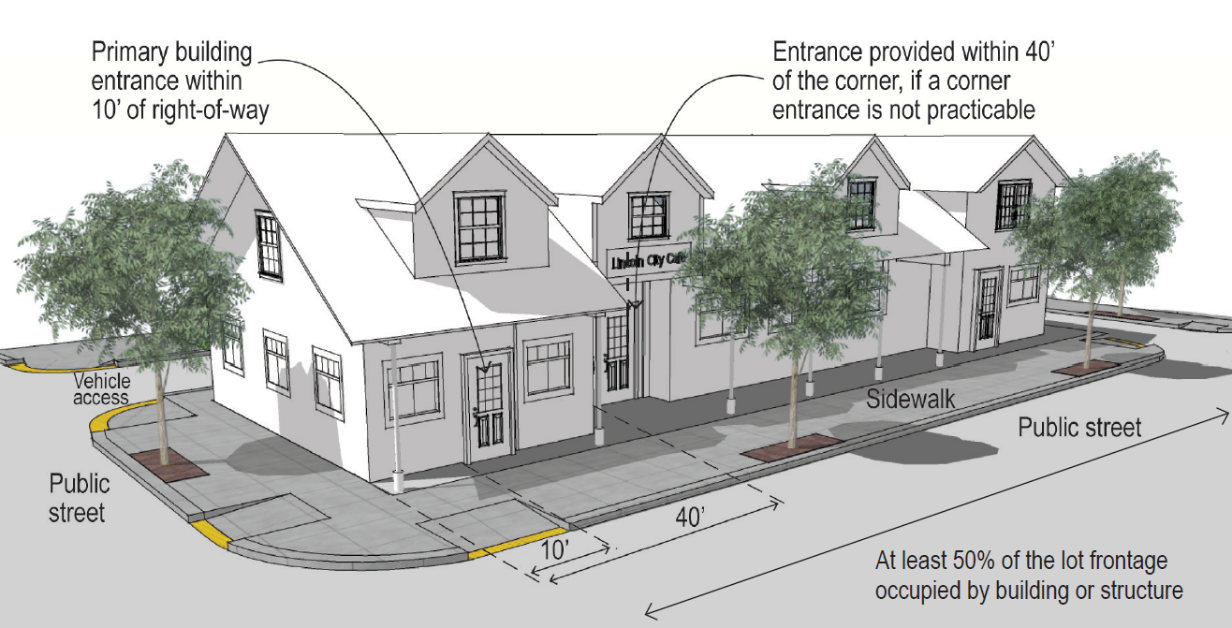
(Ord. 2020-10 § 14)
17.74.070 View protection.
A. Intent. To acknowledge existing key natural and scenic views of the Pacific Ocean, Siletz Bay, and Devils Lake, and leverage context-sensitive design to minimize impact to these views. Design solutions include changing height, bulk, setbacks, or orientation to frame or retain partial views.
B. Applicability. The view protection guidelines apply to all lots or parcels with frontage along streets with views of the Pacific Ocean, Siletz Bay, or Devils Lake, except for lots or parcels fronting Highway 101 which are exempt from these requirements.
C. Standard. Buildings shall be no more than 200 feet in width when constructed along streets
with views of the Pacific Ocean, Siletz Bay, or Devils Lake. There shall be a minimum distance of 25 feet between buildings on one site, lot, or parcel when siting multiple structures on the same site, lot, or parcel. See Figure 17.74.070-1.
Figure 17.74.070-1. View protection diagram.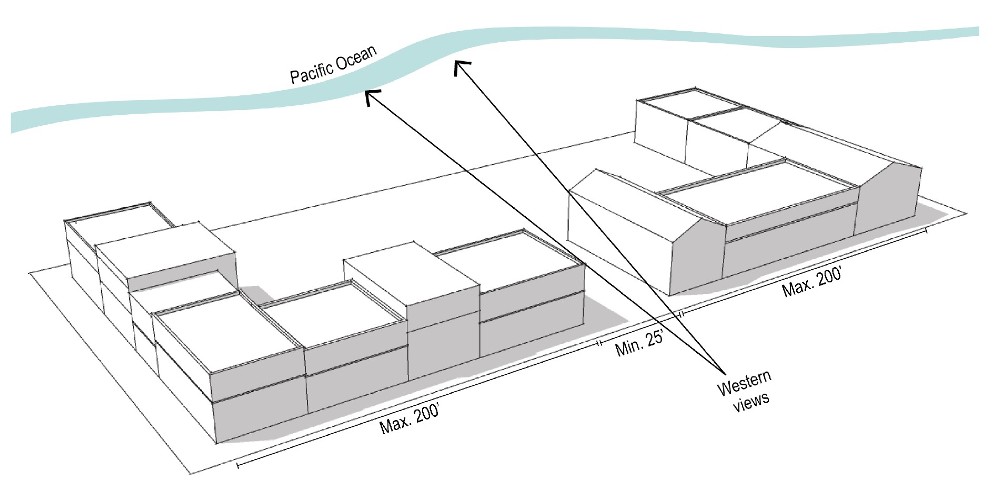
(Ord. 2020-10 § 14)
17.74.080 Pedestrian spaces.
A. Intent.
1. The increased development intensity, mixture of uses, pedestrian activity, close building orientation, and minimal private open space envisioned for the city should be offset by providing pedestrian spaces along building frontages and breaks between buildings.
2. Pedestrian spaces serve to provide visual relief, pedestrian resting areas, and opportunities for socialization.
3. Projects must contribute their proportionate share of pedestrian space. Pedestrian spaces count toward the required minimum landscape area.
B. Standards.
1. Required Area and Dimensions. At least three percent of every development site, excepting developments that are wholly residential, must be pedestrian space. Any pedestrian space must be at least eight feet across with a surface area of at least 64 square feet. See Figure 17.74.080-1.
2. In-Lieu Fee. The applicant may find that the creation of pedestrian space is not practicable. In such case, the review authority may approve an in-lieu fee equal to the assessed value of the land and improvements that would have otherwise been required. The assessed value shall be that shown on the most current property tax report from the Lincoln County assessor’s office. The in-lieu fee shall be paid to the city.
3. Preferred Location. The highest priority locations for pedestrian spaces are those areas with the highest pedestrian activity that have a western or southern exposure. Where no such area exists, then pedestrian space should be an extended sidewalk or walkway connecting multiple developments.
4. Access. All pedestrian spaces must be accessible from the public right-of-way or otherwise be connected to and visible from the public right-of-way by a sidewalk or pedestrian pathway. Connections between pedestrian spaces and the public right-of-way must be identified with a change in paving materials or paving treatment. Use of painted concrete is not an acceptable method of identifying such connections.
5. Weather Protection. Where a pedestrian space adjoins a building entrance, it should incorporate a canopy, awning, pergola, portico, or similar weather protection feature.
6. Site Features. Features such as trash/recycling receptacles, benches, planter boxes, and other similar items must be coordinated in color and design with each other, the site, and the buildings and structures on the site.
7. Pedestrian Amenities Required. Required pedestrian spaces must contain one or more pedestrian amenity within the designated pedestrian space as follows:
a. Tables, chairs, benches;
b. Water features;
c. Planters;
d. Plaza space;
e. Extra-wide sidewalk by at least six inches over and above the minimum width requirement;
f. Public art;
g. Pedestrian-scale lighting at street corners, along pedestrian pathways, or throughout the pedestrian space;
h. Dog stations;
i. Drinking fountains; or
j. Similar.
8. Repealed by Ord. 2022-38.
Figure 17.74.080-1. Pedestrian space diagram.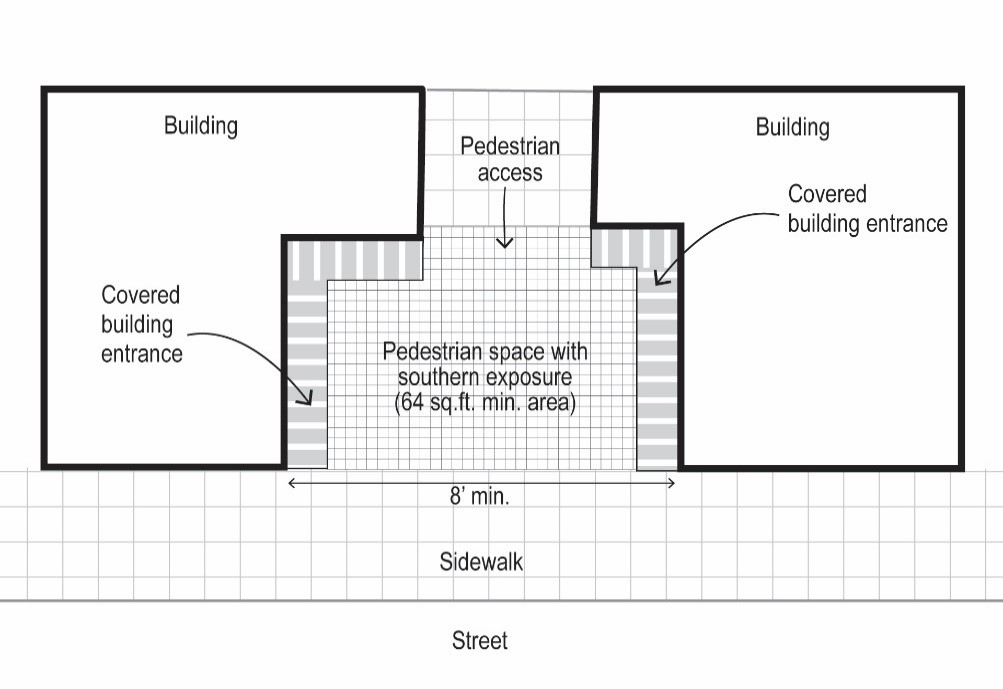
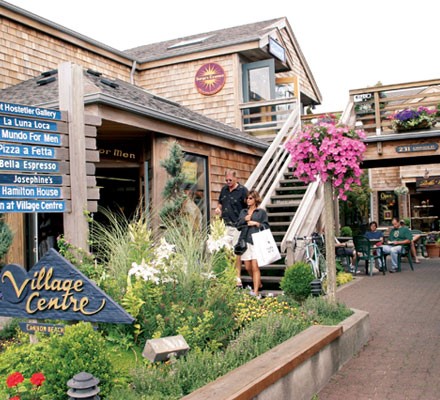
Figure 17.74.080-2. Examples of pedestrian spaces.
|
|
|
|
Extended sidewalk and plaza space near area of high pedestrian activity. |
Plaza space with seating, wayfinding signage, and connections to building entrances. |
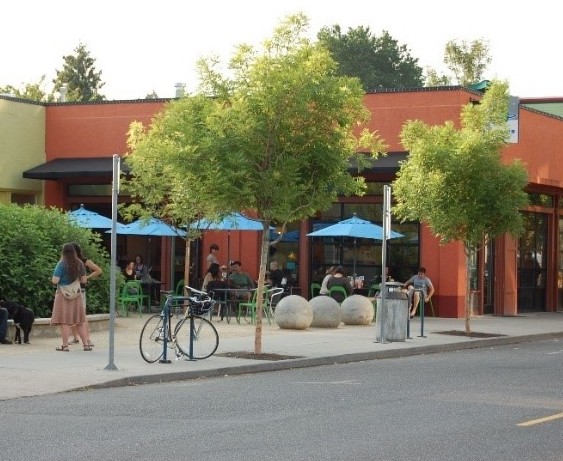
(Ord. 2022-38 §§ 21, 22; Ord. 2020-10 § 14)
17.74.090 Landscaping.
Landscaping shall be provided in accordance with Chapter 17.55 LCMC. (Ord. 2020-10 § 14)
17.74.100 Building design.
A. Intent. The building design standards reflect the following community values:
1. Context-sensitive and eclectic coastal architecture.
2. Articulated building facades to break up large volumes and promote human scale.
3. Contextually appropriate materials, textures, and colors.
4. Pedestrian-scale development through ground floors made active with windows, pedestrian amenities, and furnishings.
5. Corner buildings that serve as focal points with vertical building elements, furnishings, and/or public art.
6. Architecture that is consistent with the character of each pearl, balancing rhythm and continuity, yet creative in the design of building elevations, rooflines, and facade elements.
7. Design that increases environmental sustainability, softens the building’s edge, and provides visual interest for the pedestrian.
B. Specific Design Elements for Pearls. In addition to the other standards of this chapter, development in pearls must show conformance to the following pearl-specific design elements:
1. Wecoma. Building design must embrace the historic roadside commercial or small-scale cottage architecture found throughout Wecoma and continue architectural detail along all facades facing public right-of-way.
Figure 17.74.100-1. Wecoma design elements.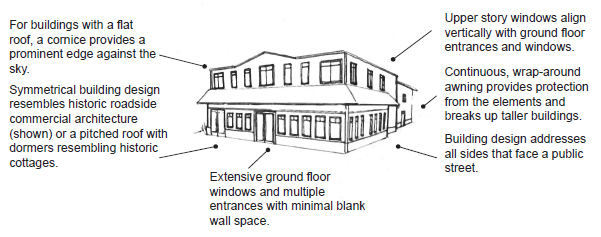
2. Oceanlake. The intent of the design standards for Oceanlake is to ensure:
a. Integration and Functionality of Land Uses. Connections between building entrances, sidewalks and associated pedestrian areas should be made to encourage visual and physical integration with a strong sense of place.
b. Connecting Oceanlake to the Ocean. Oceanlake has a well-developed network of east-west (numbered) streets providing visual and, in some cases, physical access to the beach. The skyline is not defined by skyscrapers but village-scale storefronts, beach cottages and hotels nestled between rolling hills, shore pines, and ocean bluffs. While the city recognizes that it is not possible or practical to preserve all views of the ocean, new projects should be designed to take advantage of ocean views while maintaining view corridors from adjacent rights-of-way and pedestrian spaces to the greatest extent practicable.
c. Respecting Neighborhood Transitions. Developments on the edge of the Oceanlake plan district should be made compatible with abutting single-unit dwellings outside the plan district, particularly the single-story bungalows and cottages in the R1-5 zone north of NW 19th Street.
d. Aesthetics and Context-Sensitive Design. Oceanlake’s aesthetic is rooted in the area’s eclectic mix of beach cottages, hotels, and main street storefronts nestled between rolling hills, shore pines, and ocean bluffs. The Oceanlake plan district encourages new development and redevelopment that honors the past while providing a contemporary interpretation of the area’s architecture and history.
3. DeLake. Building design must break up larger facades and repetitious design features to create an appearance of smaller-scale buildings to emphasize a human scale while prioritizing architectural detail along any street-facing facade of buildings or where portions of a facade are visible from public right-of-way.
Figure 17.74.100-2. DeLake design elements.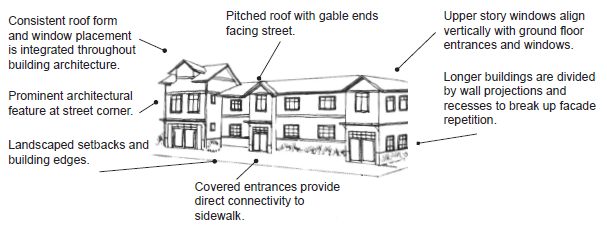
4. Nelscott. The intent of the design standards are to ensure:
a. Integration and Functionality of Land Uses. Connections between building entrances, sidewalks and associated pedestrian areas should be made to encourage visual and physical integration with a strong sense of place. Due to the small parcel sizes and limited right-of-way widths within Nelscott, developments should maximize the opportunity to consolidate and share parking, for example, by sharing driveways. Where such connections are not practicable, site plans should maximize the opportunity to provide shared parking serving multiple developments.
b. Connecting Nelscott to the Ocean. Nelscott has a network of east-west streets and alleys providing visual and, in some cases, physical access to the beach. The area is defined by village-scale storefronts, beach cottages and hotels nestled between rolling hills, shore pines, and the ocean. While the city recognizes that it is not possible or practical to preserve all views of the ocean, new projects should be designed to take advantage of ocean views while maintaining view corridors from adjacent rights-of-way and pedestrian spaces to the greatest extent practicable.
c. Respecting Neighborhood Transitions. Developments on the edge of the Nelscott plan district should be made compatible with abutting detached single-unit dwellings outside the plan district – particularly the detached single-unit dwellings and cottages to the north.
d. Aesthetics and Context-Sensitive Design. Nelscott’s aesthetic is rooted in the area’s eclectic mix of beach cottages, hotels, and the Nelscott Strip nestled between rolling hills, shore pines, and the ocean. The Nelscott plan district encourages new development and redevelopment that honors the past while providing a contemporary interpretation of the area’s architecture and history.
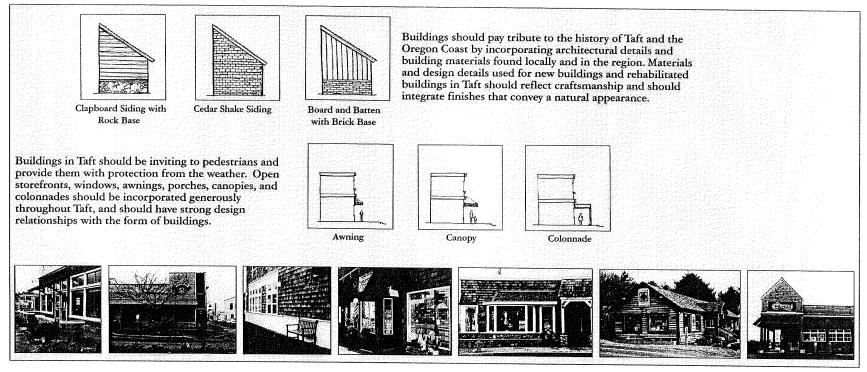
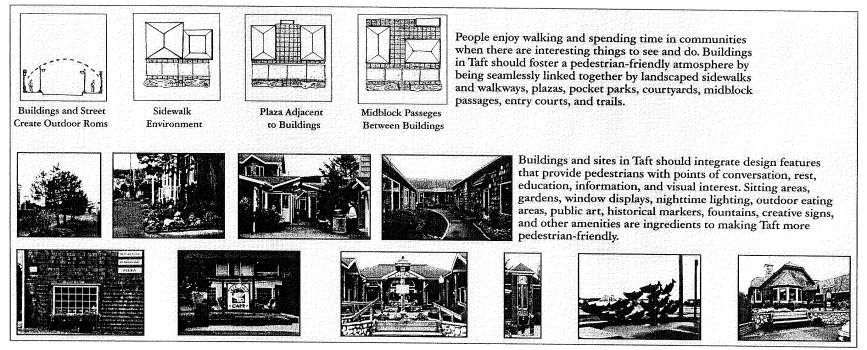
5. Taft. Design standards are intended to promote compatible and enhanced site and building design throughout the village of Taft core area.
Figure 17.74.100-3. Taft design elements.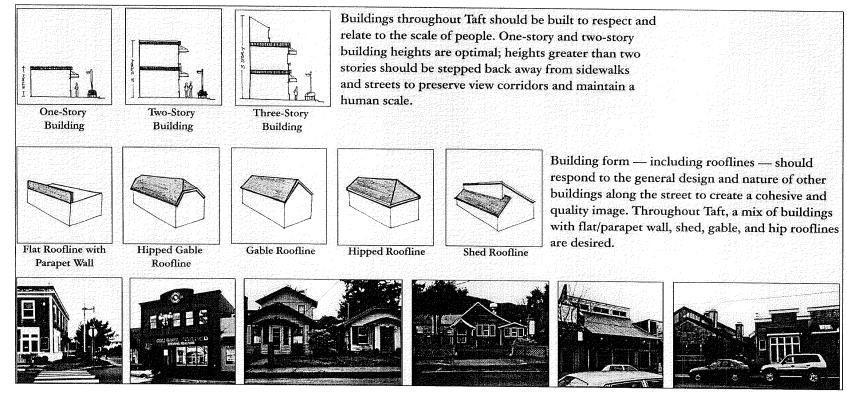
6. Cutler City. Building design must conform to a smaller scale and emphasize a residential character by incorporating elements such as a pitched roof form or wrap-around awning and integrate nature into the design scheme through use of natural or natural-looking exterior building materials.
Figure 17.74.100-4. Cutler City design elements.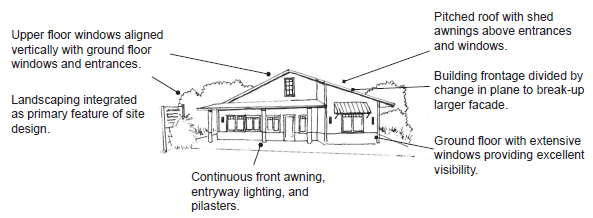
C. Development Standards.
|
Standard |
Required |
||
|---|---|---|---|
|
1. |
Building height. |
|
|
|
|
a. |
Minimum building height adjacent to public right-of-way. |
15 feet |
|
|
b. |
Maximum height. |
Established by the underlying zone and calculated according to LCMC 17.52.190 and 17.52.200 |
|
2. |
Ground floor windows. |
|
|
|
|
a. |
Minimum percentage of transparent windows adjacent to public right-of-way. |
60% |
|
3. |
Building entrances. |
|
|
|
|
a. |
Minimum number of entrances connected to street. |
One entrance, and at least one additional entrance for every 40 feet of building street frontage; or An average of at least one entrance for every 90 feet, if the internal building function prevents closer entrance spacing. |
|
4. |
Building articulation. |
|
|
|
|
a. |
Maximum individual wall plane size. |
800 square feet |
|
|
b. |
Minimum recess or projection of each wall plane. |
i. Facades less than 100 feet long: 3 feet ii. Facades 100 feet or longer: 6 feet |
|
|
c. |
Maximum length of individual wall plane. |
12 feet |
|
5. |
Pedestrian shelters. |
|
|
|
|
a. |
Minimum along street frontage. |
75% of building frontage length |
D. Building Form.
1. Upper Floor Stepback. Building facades must step back according to the following:
a. For buildings over two stories in height, the top floor must step back at least 10 feet; or
b. Progressive stepbacks on upper floors must be a total of at least 10 feet.
2. Street-Facing Facades. Architectural designs must address all sides of a building that are adjacent to or visible from a public right-of-way or pedestrian space.
3. Varied Height. Height must vary from building to building to avoid a homogenous appearance. This standard is met by using stepped parapets, gables, or different height from building to building.
4. Minimum Height. Single-story buildings must incorporate parapets, towers or other design elements to reach the minimum height.
5. Building Modulation. Vertical and horizontal building modulation must be used to add variety and to make large buildings appear to be an aggregation of smaller buildings. A roof plan and foundation footing plan are required at submittal to show compliance with this standard.
6. Relation to Shorter Buildings. Where a wall of a proposed building is 10 feet taller or more than the adjacent building, the taller building must follow the horizontal lines of the shorter building along the ground floor, and reference elements or detailing of the shorter building(s) on its upper stories.
7. Highway 101 Corner Buildings. New buildings that are constructed on a corner site that is located at the intersection of a street and Highway 101 must include at least a two-step hierarchy in the building height, with the tallest portion of the building at the corner, tapering down in height along each street frontage. Buildings must additionally include at least two of the following on building corners facing the public right-of-way:
a. Bay windows;
b. Roof decks or balconies on upper stories;
c. Corner entrance (also meet the requirements of subsection (H) of this section);
d. Crowning features to a tower form such as wide cornices, projecting parapets, or a pitched roof; and/or
e. Bevel, notch, or rounded corner.
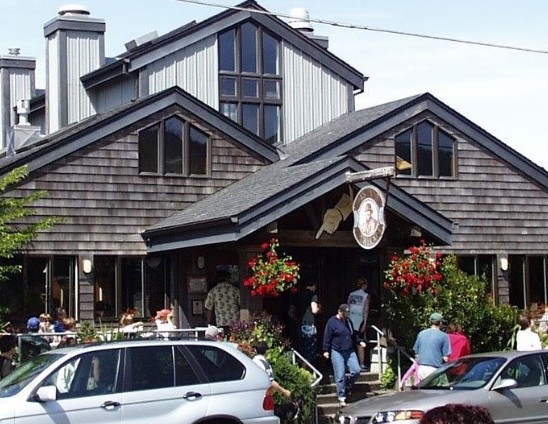
Figure 17.74.100-5. Examples of building form.
|
|
|
|
Upper floor stepback and varied height. |
Building design addresses all sides of street with parapet to reach minimum height. |

E. Roof Form.
1. Primary Roof Form. Buildings with a street-facing facade width less than 50 feet must have sloped roofs. Secondary roof forms may include towers, dormers, turrets or other features with rounded, shed, pyramidal, or crossing elevations.
2. Pitched Roofs. Roofs must be gabled or hipped. Sloped roofs should have a minimum pitch of at least 3:12.
a. The gable end of the roof must face the abutting street.
3. Flat Roofs. Buildings with flat roofs must have projecting cornices to create a prominent edge against the sky. Cornices must be made of a different material and color than the predominate siding of the building, except that brick siding may include matching brick cornices.
4. Decks and Balconies. Decks and balconies on upper stories should be designed so that they do not significantly increase the apparent mass of the building within the required upper story stepbacks. Mixed use building facades adjacent to streets and pedestrian spaces should provide balconies of a sufficient depth that are integrated into the structure and fully functional.
5. Prohibited Roofs. Dual-pitched or hipped “mansard” and A-frame roof forms are not permitted.
Figure 17.74.100-6. Examples of roof form.
|
|
|
|
Flat roof with projecting cornice of a different color. |
Sloped roof with gable end facing public street. |
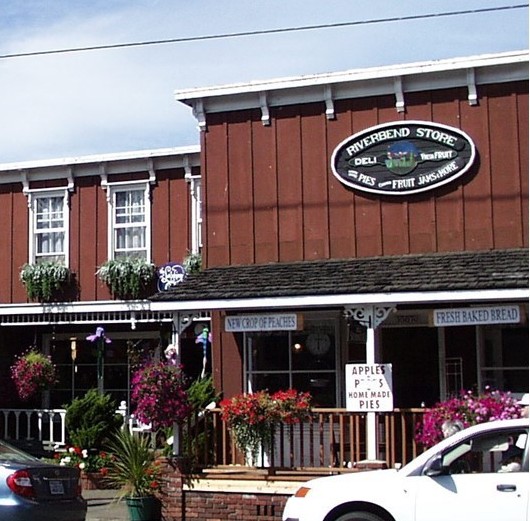
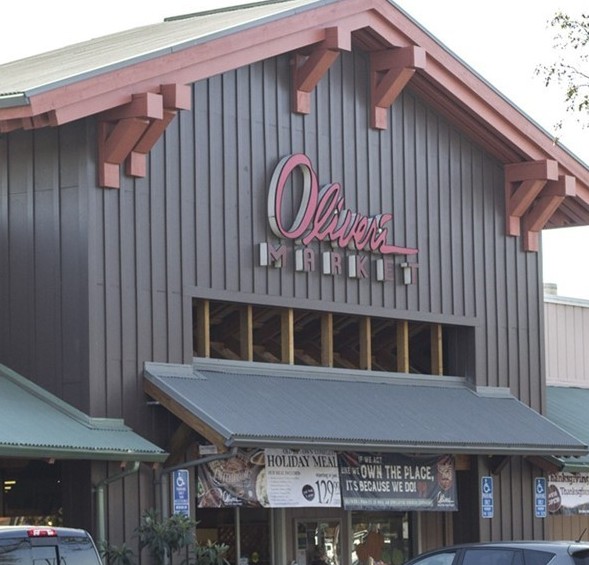
F. Building Articulation.
1. Changes in Plane. Building elevations must incorporate offsets or divisions to reduce the apparent building scale and to improve aesthetics of large buildings. Walls of a structure must be in distinct smaller areas or planes to minimize the appearance of bulk as viewed from any street, pedestrian space, or adjacent property. Changes in plane may include but are not limited to:
a. Recessed entries;
b. Bays;
c. Stepped parapets;
d. Secondary roof forms such as gables, lower roof sheds, dormers and towers;
e. Building bases;
f. Canopies;
g. Awnings;
h. Alcoves;
i. Pergolas;
j. Pediments;
k. Porticos;
l. Roof overhangs; and/or
m. Other features that are consistent with the overall composition of the building.
2. Vertical Elements. All architectural elevations of buildings over 25 feet in height visible from public right-of-way or pedestrian space must have a clearly discernible base, body, and cap. The base and cap must be clearly distinguishable from the body through changes in color, material, pattern, profile, or texture.
a. Base. The base must occupy the lowest portion of the elevation using articulation and weightier materials such as concrete and must have a height of at least three feet.
b. Body. The component described as the body must constitute a minimum of 50 percent of the total building height.
c. Cap. The cap must occupy the highest portion of the elevation, excluding the roof, and must have a dimension that does not exceed the height of the base. The cap must consist of a cornice, parapet, awning, canopy, eave, or other architectural treatment that visually performs in the same manner.
3. Horizontal Lines.
a. Multi-story buildings must have designs that establish prominent horizontal lines and avoid blank walls. Examples of such horizontal lines include: the base below a series of storefront windows; an existing awning or canopy line, or belt course between building stories; and/or an existing cornice or parapet line. It is not necessary for new lines to match existing lines.
b. Use of awnings, canopies, belt course, or similar detailing, materials and/or fenestration must distinguish between street level and upper floors.
Figure 17.74.100-7. Examples of building articulation.
|
|
|
|
A building base, body, and cap. |
Recessed entry, awning, and front porch. |

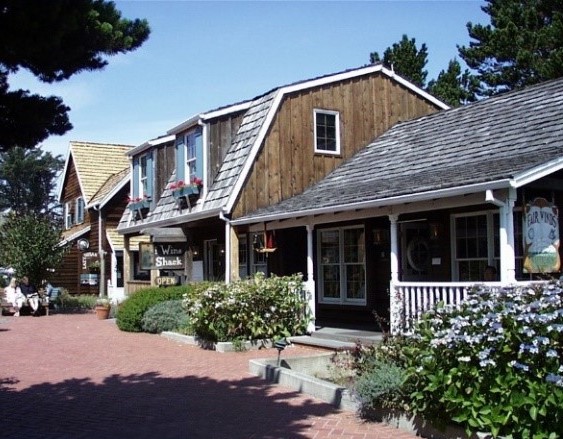
G. Entrances.
1. Primary Entrances. Buildings must have clearly defined primary entrances that provide a weather protection shelter for a depth of not less than five feet extending from the building.
2. Transparency. Ground level entrances must be at least partly transparent, accomplished with a window in the door, a transom window above the door, or sidelights beside the door.
3. Corner Entrances. Corner buildings that do not have at least one corner entrance must provide a corner plaza consistent with LCMC 17.74.080 or architectural features honoring the corner as a pedestrian space, such as an alcove with seating, public art, a vertical building element such as a tower, or other feature as approved by the review authority.
4. Accessibility. Accessibility must be consistent with Americans with Disabilities Act (ADA) standards and applicable building codes. Wheelchair ramp design must incorporate materials and detailing similar to the base of the building.
Figure 17.74.100-8. Examples of entrances.
|
|
|
|
Clearly defined building entry at corner. |
Transparent ground level entrance. |
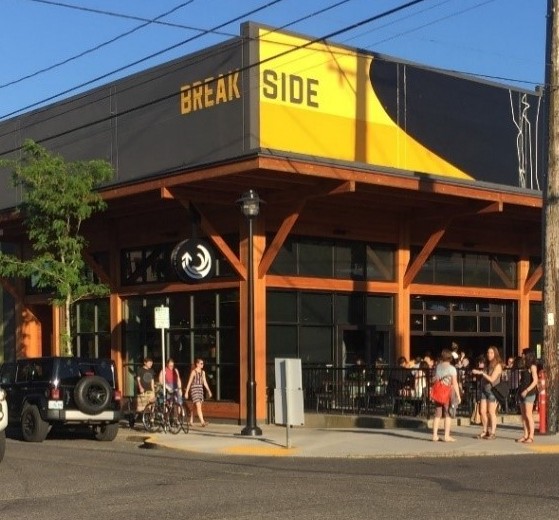
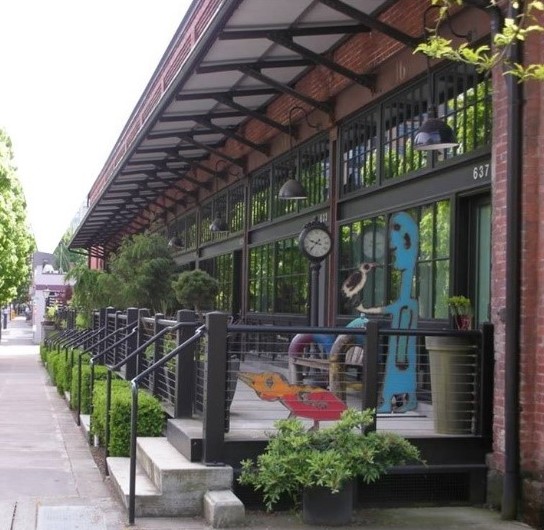
H. Windows/Transparency.
1. Ground Floor Windows.
a. Consistent with a desired storefront character, and to avoid blank walls, each individual wall plane must contain partial transparency in the form of windows, windowed doors, or transom windows.
b. The required percentage of ground floor transparency in the individual wall plane should be placed in the area of that wall plane that is between 30 and 80 inches above the sidewalk grade.
c. Ground-floor elevation windows should be framed by piers or pilasters at their sides; awnings, canopies, or trim/hoods at their top; and kick plates or bulkheads at their base.
d. Decorative detailing and ornamentation around windows is encouraged, but is not required.
2. Upper Floor Windows. Upper-floor window orientation must be vertical or have a width that is no greater than the width of the ground-floor window immediately below it. Upper-floor windows should follow the vertical lines of the lower-level piers and the horizontal definition of spandrels and any cornices.
3. Projecting Windows, Display Cases. For durability and aesthetic reasons, projecting windows and display cases must be integral to the building design and contain trim or other detailing consistent with the overall composition of the building.
4. ATMs and Service Windows. ATMs and service windows must be visible from the public right-of-way for security and have a canopy, awning, or other weather protection shelter.
5. Prohibited Windows. Highly tinted, opaque, or mirrored glass (except stained-glass windows) do not meet the intent of this section and are prohibited.
Figure 17.74.100-9. Examples of windows.
|
|
|
|
Large display windows along ground floor. |
Upper floor windows that follow the vertical lines of the lower level. |
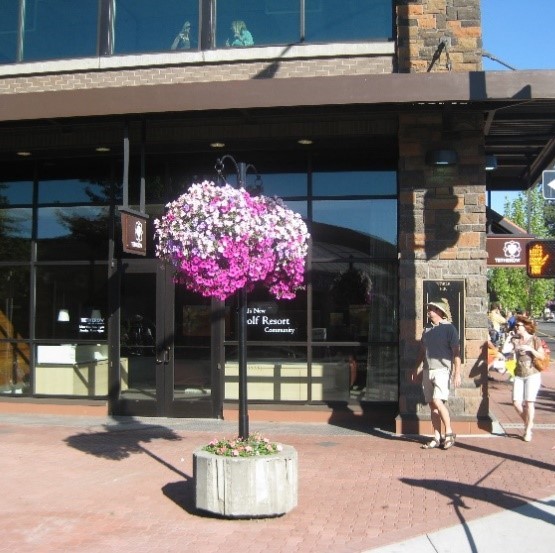
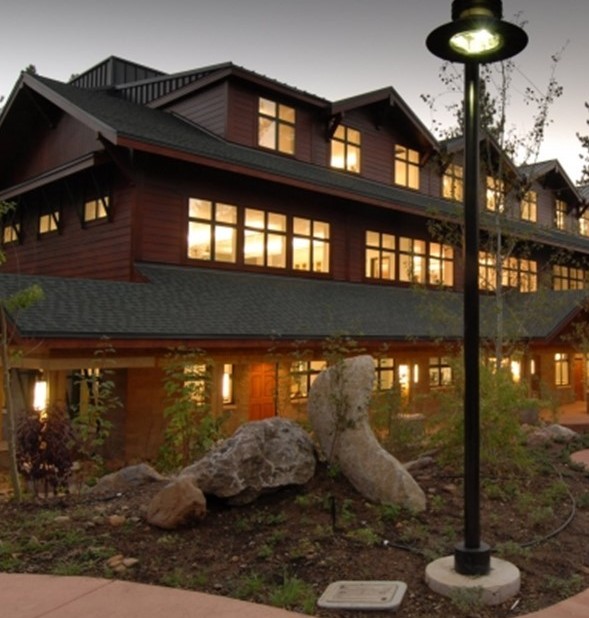
I. Pedestrian Shelters and Weather Protection.
1. Required pedestrian shelters must extend at least five feet over the pedestrian area, with a minimum clearance of eight feet between the shelter and sidewalk surface.
2. Required pedestrian shelters must shed rain away from building entrance(s), be proportionate to the building in their dimensions, not obscure the building’s architectural details, and be below any mezzanine or transom windows.
3. Pedestrian shelters must match the width of storefronts or window openings and be integral to the overall composition of the building. Designs must address the location and function of the shelter, building codes, architectural compatibility, durability, and right-of-way constraints, if any.
4. Pedestrian shelters must be made of glass, metal, wood, wood composite, or a combination of these or similar materials. Fabric awnings are not permitted.
5. Pedestrian shelters must be maintained and in good condition.
J. Materials and Color.
1. Primary Materials.
a. Exterior building materials must consist predominantly of unfinished wood, painted or natural-stained wood, fiber cement lap siding, stone, rusticated concrete block, or comparable cladding.
b. Rough-hewn wood, timbers, and metals may only be used as accents or secondary exterior materials, and not as the primary exterior cladding.
c. Corrugated metal, foam/synthetic stucco, vinyl, and similar materials shall not be allowed.
2. Secondary Materials.
a. Any of the materials listed as primary exterior building materials also may be used as secondary materials or accents.
b. Metals such as copper, steel, iron, bronze and similar-appearance metals may be used as trims or accents when compatible with the overall building design.
3. Change in Materials.
a. Elevations must incorporate changes in material that define a building’s base, middle, and top and create visual interest and relief.
b. Side and rear elevations that do not face a public right-of-way, street, public parking area, pedestrian space, or a public park may utilize changes in texture and/or color of materials in the interest of affordability; provided, that the design is consistent with the overall composition of the building.
4. Substitute Materials. Substitute materials that are equal in appearance and durability to those in this section may be requested as an adjustment or modification for review and approval by the review authority. The application must provide specifications from the manufacturer as part of the adjustment or modification request.
5. Contemporary Designs. Materials that provide a contemporary interpretation of local architecture styles, including arts and crafts, art deco, and vernacular (beach cottage) styles, are encouraged. Building designs that resemble suburban strip-malls or have been replicated in many suburbs and those that use highly reflective glass and/or similar nontraditional features are not permitted.
6. Sustainability. Where possible, use materials indigenous to the region and/or manufactured or supplied locally and that have minimal adverse impacts to the environment.
Figure 17.74.100-10. Examples of building materials.
|
|
|
|
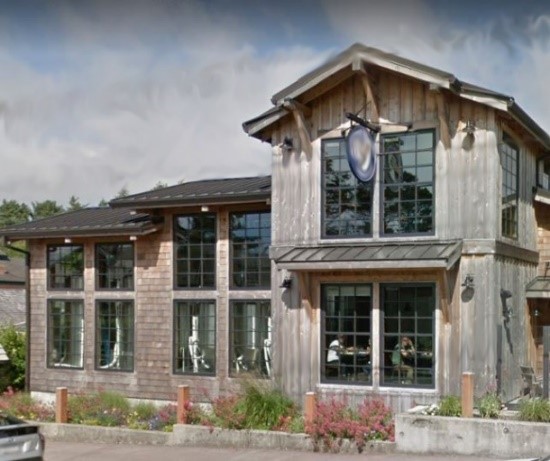
Natural wood for primary building material demonstrating local architectural style. |
Variations in wood siding, concrete base, and metal roof and awnings. |
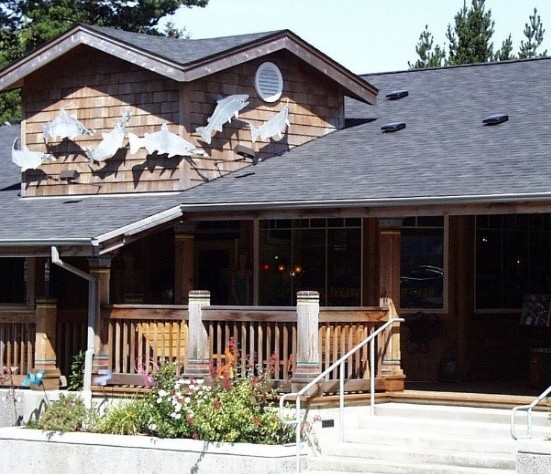
7. Color.
a. Muted and subtle earth tones or neutral colors, that are low-reflectance shades, are preferred as the primary colors of buildings. Natural wood finishes are encouraged.
b. Coordinated Color. Color schemes must be simple and coordinated over the entire building to establish a sense of overall composition. Color schemes must tie together signs, ornamentation, awnings, canopies and entrances. Color choices must address the following:
i. Base Color. Maximum of one base color for every 25 feet of the front elevation. One base color for the entire front elevation is preferred; and
ii. Accent Color. Up to two accent colors, except where precedent exists for using more than two colors with some architectural styles.
c. Metals. Metals must have a brushed finish or be painted in muted earth tones or neutral colors to minimize glare.
d. Prohibited Colors. Luminescent, sparkling, neon and “day-glow” colors are not acceptable, except that neon signs are allowed subject to applicable sign codes.
8. Restoration and Rehabilitation. Restoration and rehabilitation projects are encouraged to incorporate the building’s original materials and design elements to the extent practicable.
K. Sustainable Design.
1. When used, sustainable technologies must be an integral part of the building’s form and must be designed to include exterior elements visible from public right-of-way. The review body will make the final determination as to the design integration and appropriateness of sustainable elements.
2. Consider passive heating and cooling techniques during building design.
3. Control solar heat gain and glare using external shading devices.
4. Solar panel installations must minimize glare reflected onto adjacent properties.
5. All overhanging elements must be at least eight feet above the adjacent sidewalk or grade. (Ord. 2022-38 § 23; Ord. 2022-25 §§ 67 – 70; Ord. 2020-10 § 14)
Article III. Design Regulations for Multi-Unit Residential Structures
17.74.130 Building design.
A. Intent.
1. Lincoln City’s natural setting contributes to the area’s high quality of life. Exterior building materials and structural and architectural details reflect the city’s natural setting. The design of new development is durable and withstands the harsh coastal climate and provides protection from the elements.
2. Development has a human scale, balancing affordability with development that is harmonious with the surrounding context, especially in areas that are adjacent to detached single-unit dwellings. Exteriors of large buildings resemble smaller-scale buildings and offer common areas.
B. Building Form. All buildings must incorporate elements to preclude blank building elevations facing a public right-of-way (Figure 17.74.130-2). Along the facade of the structure, such features must occur at a minimum of every 100 lineal feet, with each floor containing at least one of the following features:
1. Roof line offset of at least two feet from the top surface of one roof to the top surface of the other;
2. An offset on the building face of at least eight inches from one exterior wall to the other;
3. A section of the facade, at least four feet in width, that is either recessed or bumped out by at least one foot deep from the front wall plane;
4. A recessed building entry at least two feet deep, as measured horizontally from the face of the main building facade, and at least four feet wide;
5. A balcony at least four feet deep and eight feet wide, that is accessible from at least one interior room;
6. A covered porch at least two feet deep (measured horizontally from the face of the main facade) and at least four feet wide;
7. Recess with a minimum depth of four feet; or
8. Extension projecting a minimum of two feet and running horizontally a minimum of four feet.
Figure 17.74.130-2. Building form.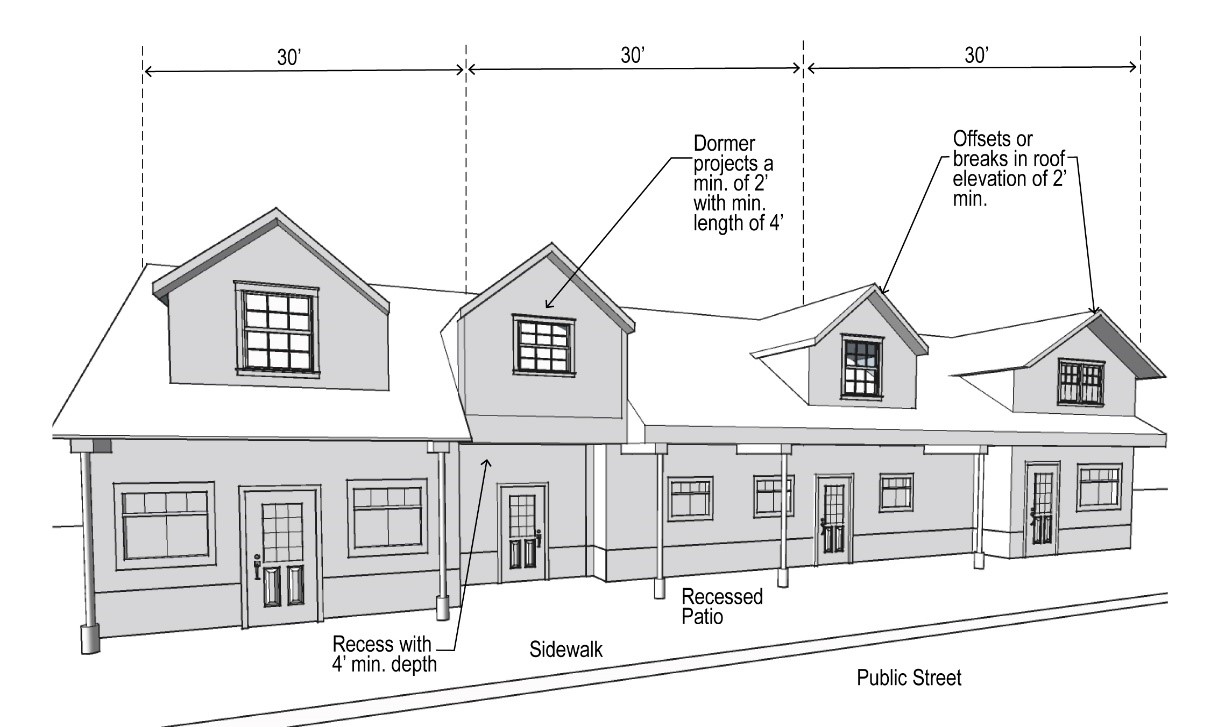
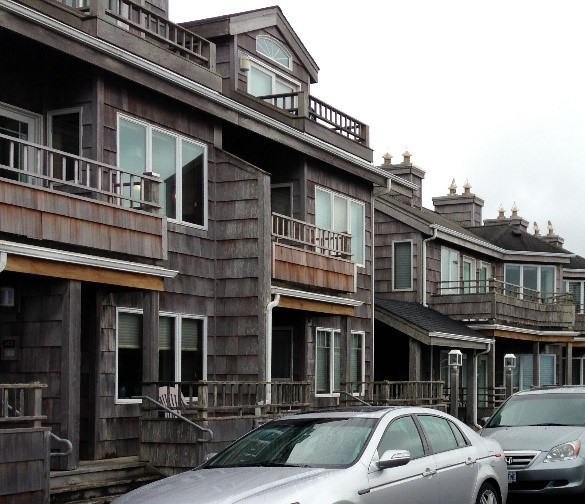
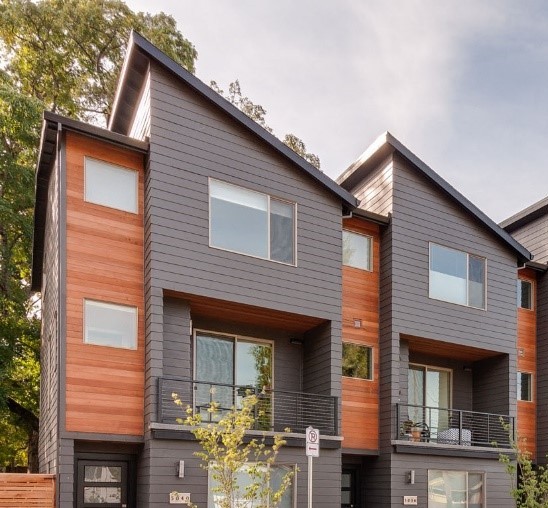
Figure 17.74.130-3. Examples of building form.
|
|
|
|
Recessed entries and balconies, and covered porches. |
Roof line and building face offsets, and recessed balconies. |
C. Roof Form.
1. Sloped roofs are the preferred form for buildings, and flat roofs should be avoided.
2. Sloped roofs must have a pitch between 3:12 and 12:12. Mono-pitch (shed roofs) must have a pitch of at least 2:12.
3. Dual-pitched or hipped “mansard” and A-frame roof forms are not permitted.
4. Sloped roofs are the preferred roof form for buildings with a front facade width 50 feet or greater.
D. Building Entrances.
1. Porches. Useable porches and stoops are recommended to form a predominant motif of the building design and should be located on the front and/or side of the building to respond to the climatic conditions and the character of nearby residential uses.
2. Primary Entrances. Buildings must have clearly defined primary entrances that provide a weather protection shelter for a depth of not less than five feet extending from the building entry.
3. Accessibility. Each building must have at least one ADA-compliant entrance connecting required parking to the building.
E. Building Windows.
1. Facades Facing a Public Right-of-Way. At least 15 percent of the area of each facade that faces a public right-of-way must have, and maintain, clear and transparent windows or main entrance doors. Windows or doors contributing to this standard must allow views from inside the building to the street. Glass block does not meet this standard. Windows in garage doors do not count toward meeting this standard, but windows in garage walls do count toward meeting this standard. Only transparency in doors at the main entrance and facing the street property line counts toward this standard.
2. Garage Windows. Garages with a side or rear wall that faces the street must have a window on the street-facing wall that is a minimum of six square feet in area.
F. Building Materials. Exterior walls of all buildings and structures, including accessory, must be primarily clad in wood clapboard, cementitious fiber board, wood shingle, wood drop siding, primed board, wood board and batten, brick, stone, or architectural-grade synthetic materials. Natural materials or natural stain or unfinished wood is the preferred primary cladding.
G. Building Colors. Facade colors must be low reflectance and be muted earth tones or neutral colors. Variations in color schemes and building material must be provided to articulate entryways so as to draw attention to these features.
H. Garage Requirements. Garage and carport design and construction must use the same architectural features and exterior materials and colors as the primary building. (Ord. 2022-25 §§ 72 – 75; Ord. 2020-10 § 14)